

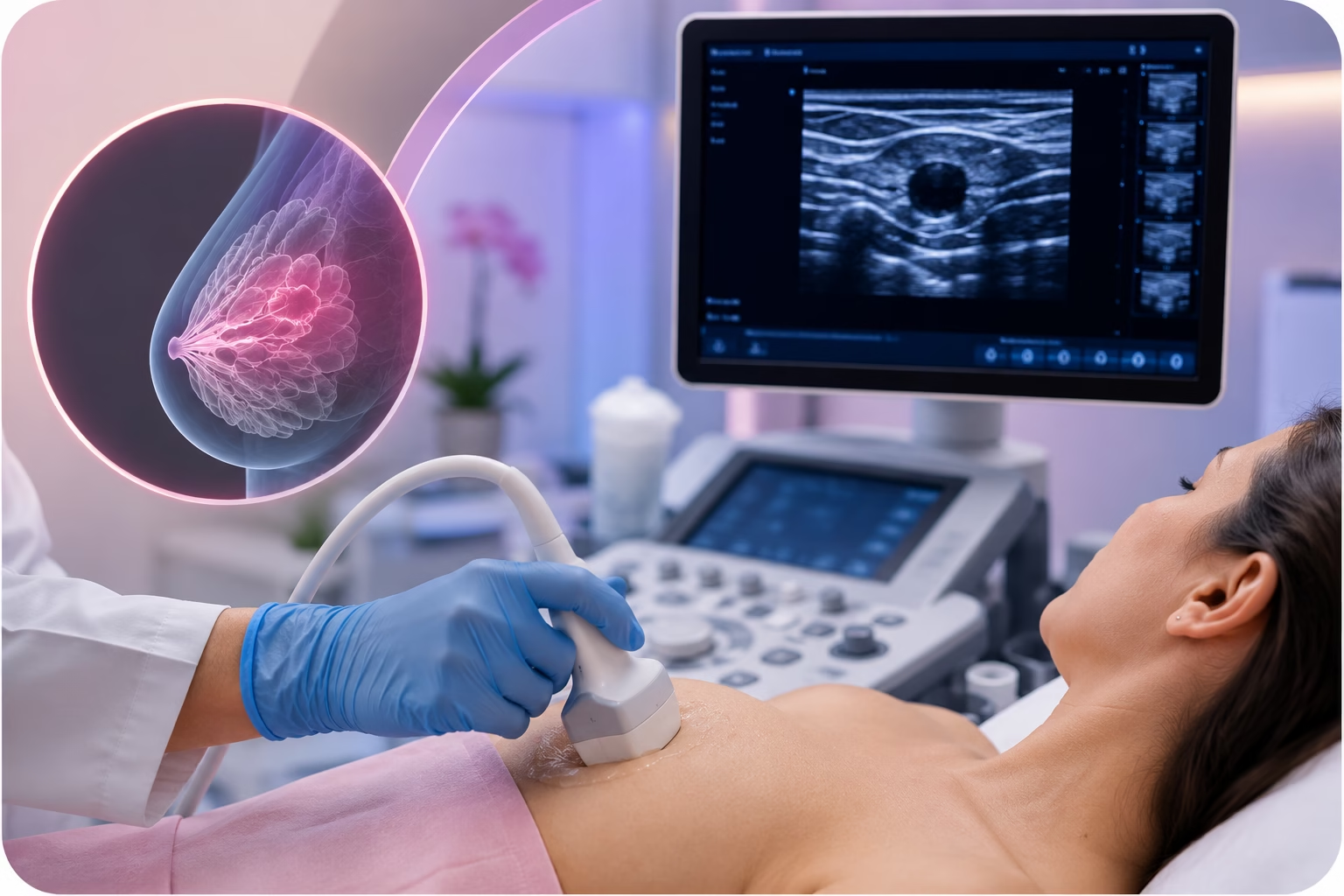
Finding out that your breast ultrasound shows an abnormality can be concerning. However, an abnormal result does not necessarily mean you have breast cancer. Many breast ultrasound findings are linked to harmless conditions such as cysts or fibroadenomas. A breast ultrasound helps doctors understand what is causing the abnormality and whether any additional tests are needed.
Read on to learn what an abnormal breast ultrasound means, the most common findings, possible next steps, and when you should seek further medical evaluation.
A breast ultrasound is an imaging test that uses high-frequency sound waves to produce detailed pictures of the breast tissue. Unlike a mammogram, it does not use radiation. Doctors commonly recommend a breast ultrasound to evaluate breast lumps, investigate breast pain, examine changes seen on a mammogram, or assess dense breast tissue.
A handheld device called a transducer is moved across the breast after a clear gel is applied to the skin. The sound waves bounce off the breast tissue and create images that help radiologists identify abnormalities.
A mammogram is primarily used to screen for breast cancer using low-dose X-rays, while a breast ultrasound provides additional information about abnormalities found during screening or physical examination. The two tests are often used together for a more accurate diagnosis.
For a detailed comparison of these two breast imaging tests, read Mammogram vs Breast USG: Differences You Need to Know.
A breast ultrasound may reveal an abnormality for several reasons. In many cases, the finding is related to a benign condition rather than breast cancer. The scan helps doctors understand the cause of the abnormality and determine whether additional tests are needed.
A breast lump is one of the most common reasons for having a breast ultrasound. The scan helps identify whether the lump is filled with fluid, contains solid tissue, or has features that require further evaluation.
To learn when a breast lump may require medical evaluation, read Breast Lump When to Worry vs Normal Changes: What Women Should Know.
Although breast pain is not usually a sign of cancer, persistent pain in one specific area may require imaging. An ultrasound can help identify cysts, infections, or other conditions that could be causing discomfort.
If a mammogram detects an unusual area, a breast ultrasound is often recommended for a closer look. It provides additional details that help radiologists better understand the finding.
To understand what happens during a mammogram and whether it’s painful, read Is Mammo Test Painful? What Really Happens During the Procedure.
Unexpected nipple discharge, especially if it is bloody or occurs from only one breast, should be evaluated. A breast ultrasound can help identify possible causes within the breast tissue.
Persistent or unusual nipple discharge should never be ignored. Explore Nipple Discharge Without a Lump: Why Diagnostic Mammography May Be Advised to learn about the diagnostic process and possible causes.
Dense breast tissue contains more glandular and fibrous tissue than fatty tissue. Since dense tissue can make mammogram results more difficult to interpret, ultrasound is often used as an additional imaging test.
If your doctor feels a lump or notices changes during a clinical breast examination, a breast ultrasound may be recommended to investigate the area further.
An abnormal breast ultrasound means that the radiologist has noticed an area that looks different from normal breast tissue. It does not automatically mean cancer.
Radiologists carefully examine several characteristics before making recommendations, including:
Many abnormalities turn out to be harmless. Depending on the appearance of the finding, your doctor may recommend routine monitoring, additional imaging, or a biopsy.
Several non-cancerous conditions can appear on a breast ultrasound. Understanding these findings can help reduce anxiety while waiting for further evaluation.
Simple cysts are fluid-filled sacs that commonly develop in the breast. They have smooth walls and appear dark on ultrasound because they contain only fluid. Most simple cysts are harmless and do not require treatment unless they become painful or unusually large.
Fibroadenomas are common benign breast tumours that often affect younger women. They usually appear as smooth, well-defined solid masses and often remain stable for many years. Small fibroadenomas may only require routine monitoring.
Although fibroadenomas are usually non-cancerous, they should still be evaluated by a healthcare professional. Explore Fibroadenoma Breast: Causes, Symptoms, and Diagnosis for a detailed overview.
Unlike simple cysts, complicated or complex cysts may contain debris or have thicker walls. Although many are still benign, they sometimes require follow-up imaging or a biopsy to rule out more serious conditions.
Dense breast tissue is not considered an abnormal disease. However, it can make breast imaging more challenging because abnormalities may be more difficult to detect on mammograms. Breast ultrasound provides additional detail and improves the evaluation of dense breasts.
A breast abscess is a pocket of infected fluid that can cause pain, redness, swelling, warmth, and fever. Ultrasound helps determine the size and location of the infection and may also guide drainage if needed.
Fat necrosis occurs when fatty breast tissue is damaged after surgery, injury, or radiation therapy. It can form firm lumps that may resemble breast cancer during a physical examination. Ultrasound helps doctors distinguish fat necrosis from other breast abnormalities.
Some solid breast masses have irregular borders or unusual features that require additional investigation. While these findings can be concerning, only a biopsy can determine whether the mass is cancerous.
Most breast ultrasound abnormalities are not cancer. Many are caused by benign conditions such as cysts, fibroadenomas, or normal variations in breast tissue.
However, certain ultrasound features may increase concern, including:
If these features are present, your doctor may recommend further evaluation through additional imaging or a breast biopsy. It is important to remember that early detection plays a significant role in successful treatment. Investigating an abnormal finding promptly allows doctors to diagnose the condition accurately and begin treatment if necessary.
An abnormal breast ultrasound does not always mean that extensive treatment is needed. The next step depends on the appearance of the abnormality, your symptoms, your medical history, and your doctor’s assessment. In many cases, additional imaging or a short-term follow-up is enough to confirm that the finding is benign.
Here are the most common next steps after an abnormal breast ultrasound.
Sometimes the radiologist may need a few more ultrasound images to examine the abnormality from different angles. This helps provide a clearer view of its size, shape, and internal features before making a diagnosis.
If the ultrasound identifies an area that requires further evaluation, your doctor may recommend a diagnostic mammogram. Unlike a routine screening mammogram, this examination captures more detailed images of a specific part of the breast. Using both mammography and ultrasound together often improves diagnostic accuracy.
Learn how routine mammogram screening supports early breast cancer detection in Mammogram Screening: Early Detection of Breast Cancer.
A breast MRI may be recommended if more detailed imaging is required. It is commonly used for women who have a high risk of breast cancer, complex imaging findings, breast implants, or newly diagnosed breast cancer that requires further assessment. MRI provides detailed images of breast tissue and helps doctors evaluate the extent of an abnormality.
Breast MRI is a valuable imaging tool for detecting and evaluating breast abnormalities. Learn more in Breast MRI Scan: Procedure, Preparation, Results & Detection.
Some breast abnormalities appear probably benign and do not require immediate treatment. In these cases, your doctor may recommend another ultrasound after about six months to monitor the area. If the finding remains unchanged over time, no further treatment may be necessary.
If the abnormality appears suspicious, a breast biopsy is usually recommended. A biopsy is the only way to determine with certainty whether a breast abnormality is benign or cancerous. Although the word “biopsy” can sound intimidating, most breast biopsies are minimally invasive procedures performed using local anesthesia.
A breast biopsy involves removing a small sample of breast tissue so it can be examined under a microscope. The procedure helps doctors make an accurate diagnosis and determine the most appropriate treatment if needed. Most breast biopsies are completed as outpatient procedures and patients can return home the same day.
A needle biopsy is the most common type of breast biopsy. After numbing the area with a local anesthetic, the doctor inserts a thin or hollow needle into the abnormality to collect small tissue samples. The procedure usually takes less than 30 minutes.
If the abnormality is clearly visible on ultrasound, the biopsy is often performed using ultrasound guidance. Real-time images help the doctor accurately position the needle and obtain tissue from the correct area. Ultrasound-guided biopsies are precise, minimally invasive, and generally well tolerated.
Before the biopsy begins, the skin is cleaned and a local anesthetic is injected to numb the area. Using ultrasound guidance, the doctor inserts the biopsy needle and removes several small tissue samples. The samples are then sent to a laboratory where a pathologist examines them for abnormal or cancerous cells.
Recovery is usually quick. Most patients experience mild soreness, bruising, or swelling for a few days. Applying an ice pack and avoiding strenuous activities for 24 to 48 hours can help reduce discomfort. Your doctor will explain when your biopsy results will be available and discuss the next steps if further treatment is required.
Not every breast symptom is caused by cancer, but certain changes should always be evaluated by a healthcare professional. Early assessment helps identify the cause and allows treatment to begin promptly if necessary.
Seek medical attention if you notice:
Even if these symptoms are caused by a benign condition, timely evaluation provides reassurance and appropriate care.
Breast ultrasound is an effective imaging tool that helps doctors evaluate many breast abnormalities. It is particularly useful for distinguishing fluid-filled cysts from solid masses and examining dense breast tissue. Some of the main advantages of breast ultrasound include:
Breast ultrasound is often used alongside mammography because each test provides different information. Together, they improve the accuracy of breast cancer detection. Although ultrasound is highly valuable, it also has limitations. It may not detect tiny calcium deposits that are visible on mammograms, which is why mammography remains the standard screening test for many women.
Preparing for a breast ultrasound is simple and usually requires very little advance planning.
Before your appointment, consider the following tips:
Unlike some imaging tests, breast ultrasound does not usually require fasting. The examination typically takes around 20 to 30 minutes, and you can return to your normal activities immediately afterward.
Taking care of your breast health involves regular screening, awareness, and healthy lifestyle choices. While not all breast conditions can be prevented, early detection greatly improves treatment outcomes.
You can support your breast health by:
At MVR Diagnostic Clinic, we provide high-quality breast ultrasound examinations using advanced imaging technology to help detect and evaluate breast abnormalities accurately. Our experienced radiologists work closely with referring physicians to deliver detailed diagnostic reports that support timely medical decisions.
Whether you need a breast ultrasound after a mammogram, evaluation of a breast lump, or assessment of breast pain or other symptoms, our team is committed to providing compassionate care
Receiving an abnormal breast ultrasound result can be stressful, but it is important to remember that most breast abnormalities are not cancerous. Many findings are linked to benign conditions that can be monitored or treated successfully.
Additional imaging or a breast biopsy may be recommended to determine the exact cause of the abnormality. These tests provide valuable information that helps your doctor develop the most appropriate care plan.
If you notice a breast lump, persistent pain, nipple discharge, or any unusual changes in your breasts, do not delay seeking medical advice. Early evaluation and timely diagnosis remain the best way to protect your breast health and improve treatment outcomes.
Does an abnormal breast ultrasound always mean cancer?
No. Most abnormal breast ultrasound findings are caused by non-cancerous conditions such as cysts, fibroadenomas, or dense breast tissue.
Can ultrasound distinguish between a cyst and a tumour?
Yes. Ultrasound is very effective at determining whether a breast lump is fluid-filled or solid. However, some solid masses may still require a biopsy for a definitive diagnosis.
What is the difference between a mammogram and a breast ultrasound?
A mammogram uses low-dose X-rays to screen for breast cancer, while a breast ultrasound uses sound waves to examine breast tissue and investigate abnormalities in greater detail.
Is a breast biopsy painful?
Most breast biopsies cause only mild discomfort because local anesthesia is used to numb the area before the procedure.
How long does it take to receive breast ultrasound results?
Many imaging centers provide results within one to three working days. Your doctor will discuss the findings and recommend any further tests if needed.
Can dense breasts affect ultrasound results?
Dense breast tissue can make mammograms more difficult to interpret. Breast ultrasound is often used alongside mammography to provide a more detailed assessment of dense breast tissue.
WhatsApp us