

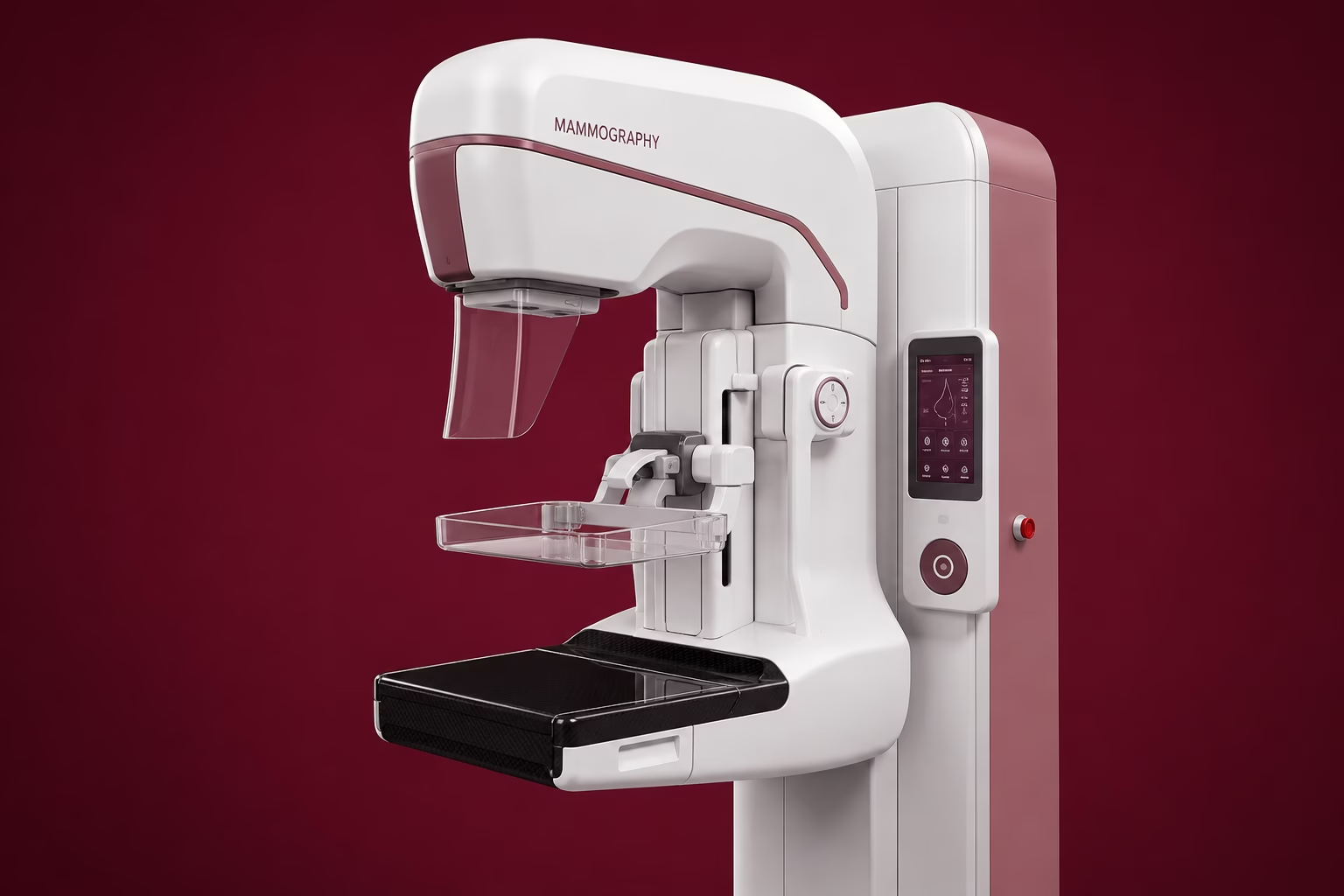
Nipple discharge without a lump is relatively common and does not always mean breast cancer. It can happen because of hormonal changes, certain medications, pregnancy, breastfeeding, or other breast conditions. The color, amount, and pattern of the discharge help doctors decide whether diagnostic mammography or other breast imaging tests are needed. Read on to learn which symptoms need medical attention, why early breast imaging is important, and how doctors identify the exact cause for timely treatment.
What Nipple Discharge Without a Lump Can Indicate
The cause of nipple discharge depends on its color, frequency, and whether it affects one or both breasts. These details help doctors decide if the discharge is harmless or needs further investigation.
Physiological and pathological nipple discharge: Physiological nipple discharge usually comes from both breasts, appears only after nipple stimulation, and is often linked to hormonal changes, pregnancy, or breastfeeding. Pathological nipple discharge usually affects one breast, comes from a single duct, occurs without squeezing, and may need diagnostic mammography or breast ultrasound.
Common causes of nipple discharge: Many cases are caused by harmless conditions such as hormonal imbalance, medication use, duct ectasia, pregnancy, breastfeeding, or an intraductal papilloma. Less commonly, persistent or bloody nipple discharge may be associated with ductal carcinoma in situ or other breast cancers, making timely breast imaging important.
Doctors evaluate the appearance of nipple discharge because it offers valuable clues about the possible cause. Although color alone cannot confirm a diagnosis, it helps decide whether additional breast imaging is recommended.
Milky discharge: Often linked to pregnancy, breastfeeding, hormonal changes, or increased prolactin levels.
Clear discharge: May occur naturally, but spontaneous discharge from one breast requires medical evaluation.
Yellow discharge: Commonly associated with benign breast conditions or mild duct changes.
Green discharge: Frequently seen with duct ectasia, especially in women approaching menopause.
Brown discharge: Usually related to old blood or changes within the milk ducts.
Bloody discharge: Always needs prompt evaluation because it may be linked to intraductal papilloma or, less commonly, breast cancer.
Certain symptoms increase the chance that nipple discharge needs further investigation. Doctors pay close attention to these warning signs before recommending diagnostic mammography or additional imaging.
One breast only: Discharge from a single breast deserves closer clinical assessment.
Single duct: Fluid coming from one milk duct needs careful evaluation.
Occurs without squeezing: Spontaneous discharge is more concerning than discharge after nipple stimulation.
Persistent discharge: Ongoing discharge should never be ignored, even without pain.
Associated skin changes: Redness, thickening, scaling, or sores around the nipple require assessment.
New nipple inversion: A recently inverted nipple may indicate an underlying breast condition.
To better understand which breast lumps may need medical evaluation, explore Breast Lump When to Worry vs Normal Changes: What Women Should Know.
For a detailed guide to identifying potentially concerning breast changes, read Early Signs of Breast Cancer: Common Changes, Symptoms and Awareness Tips.
Discharge Feature | Usually Less Concerning | Needs Prompt Evaluation |
Breast involved | Both breasts | One breast |
Milk ducts | Multiple ducts | Single duct |
Trigger | After squeezing | Happens naturally |
Duration | Occasional | Persistent |
Color | Milky, green, yellow | Bloody, clear from one breast |
Skin changes | None | Thickening, rash, nipple inversion |
Associated symptoms | No other symptoms | Pain, swelling, lump, fever |
Diagnostic mammography provides detailed breast images when symptoms such as nipple discharge need further evaluation. It helps doctors identify abnormalities that may not be felt during a physical examination.
A screening mammogram is performed for women without breast symptoms as part of routine breast cancer screening. A diagnostic mammogram is recommended when symptoms such as nipple discharge, breast pain, nipple changes, or an abnormal screening result require a closer examination. It includes additional breast images that help radiologists evaluate the affected area in greater detail.
Not sure why your doctor recommended a mammogram instead of an ultrasound? Explore Mammogram vs Breast USG: Differences You Need to Know for a detailed comparison.
Doctors may recommend diagnostic mammography even when there is no breast lump because some conditions develop inside the milk ducts before a lump forms. Tiny calcifications, duct changes, and early breast abnormalities may only be visible on imaging. Early breast imaging helps identify both benign and serious conditions while supporting timely treatment.
Digital Breast Tomosynthesis, also called three dimensional mammography, provides multiple thin breast images that improve the visibility of overlapping breast tissue. This technology may increase the detection of certain breast abnormalities and reduce unnecessary follow up imaging in suitable patients.
Breast ultrasound is commonly performed together with diagnostic mammography, especially in younger women or those with dense breast tissue. Ultrasound provides additional information about the milk ducts and surrounding soft tissue. If mammography and ultrasound do not explain persistent suspicious nipple discharge, breast MRI may be considered in selected patients.
If your breast ultrasound reveals an abnormal finding after a mammogram, our guide on What Happens If a Breast Ultrasound Finds an Abnormality? explains the possible causes, next steps, and what to expect.
For a detailed overview of the procedure and what your results may indicate, explore Breast MRI Scan: Procedure, Preparation, Results & Detection.
During a diagnostic mammography appointment, several breast images are taken from different angles. The radiologist may request additional spot compression or magnification views to examine a specific area more closely. A breast ultrasound may also be performed during the same visit, depending on your age, breast density, and clinical symptoms.
Your diagnostic mammogram may show normal breast tissue, duct ectasia, intraductal papilloma, calcifications, or another breast abnormality. If imaging identifies a suspicious area, your doctor may recommend breast MRI, image guided biopsy, or specialist consultation to confirm the diagnosis and plan appropriate treatment.
Symptom → Clinical breast examination → Diagnostic mammography → Breast ultrasound → Breast MRI, in selected patients → Image guided biopsy, if required
Some types of nipple discharge need prompt medical attention because they may indicate an underlying breast condition. Early evaluation helps doctors identify the cause and begin the right treatment without unnecessary delays.
Doctors begin by asking about your symptoms, medical history, medications, pregnancy, breastfeeding, and family history of breast disease. They also perform a clinical breast examination to check for nipple changes, skin abnormalities, breast lumps, or enlarged lymph nodes. This information helps determine whether diagnostic mammography or additional breast imaging is appropriate.
Diagnostic mammography is often combined with breast ultrasound to examine the breast tissue and milk ducts more closely. If the findings remain unclear and suspicious nipple discharge continues, breast MRI may be recommended in selected patients. When imaging detects an abnormal area, an image guided biopsy confirms the diagnosis. It is important to remember that nipple discharge alone does not confirm breast cancer.
Test | Purpose | When It May Be Used |
Clinical breast examination | Assess symptoms and breast changes | First medical evaluation |
Diagnostic mammography | Detect breast abnormalities | Women with suspicious nipple discharge |
Breast ultrasound | Examine ducts and soft tissue | Dense breasts or additional assessment |
Breast MRI | Evaluate unclear imaging findings | Selected high risk or complex cases |
Image guided biopsy | Confirm abnormal tissue diagnosis | Suspicious imaging findings |
If a mammogram is recommended to investigate your symptoms, explore Is Mammo Test Painful? What Really Happens During the Procedure to know what to expect.
Most cases of nipple discharge without a lump are caused by non cancerous breast conditions. However, spontaneous discharge from one breast, bloody discharge, or persistent symptoms should never be ignored. Diagnostic mammography focuses on investigating breast symptoms, while breast ultrasound often provides additional information for a more complete evaluation. Seeking medical advice early helps doctors identify the cause accurately and begin appropriate treatment without unnecessary delays. If you notice persistent or suspicious nipple discharge, schedule a breast evaluation as soon as possible.
To learn how routine screening supports early diagnosis and better outcomes, read Mammogram Screening: Early Detection of Breast Cancer.
MVR provides trusted breast imaging services in Dubai using advanced diagnostic technology and experienced medical professionals. From diagnostic mammography and breast ultrasound to specialized breast imaging, every examination is performed with accuracy, patient comfort, and clinical excellence in mind. We offer affordable screening and diagnostic packages, timely reports, and compassionate care to help patients receive reliable answers and appropriate medical guidance.
Yes. Nipple discharge without a lump is relatively common and may occur because of hormonal changes, pregnancy, breastfeeding, medications, duct ectasia, or intraductal papilloma. However, some cases require further evaluation.
You should consult a doctor if the discharge is bloody, clear from one breast, persistent, occurs without squeezing, comes from a single duct, or is associated with pain, skin changes, or nipple inversion.
No. Most cases are caused by benign breast conditions. However, certain symptoms increase the need for diagnostic mammography and additional breast imaging to rule out serious conditions.
A diagnostic mammogram is performed when breast symptoms are present. It includes additional images that allow radiologists to closely examine the area causing concern.
Many patients also undergo a breast ultrasound, especially younger women or those with dense breast tissue. Ultrasound provides additional details that complement diagnostic mammography.
Bloody discharge, spontaneous clear discharge from one breast, discharge from a single duct, and persistent nipple discharge usually require prompt medical evaluation.
Your doctor may recommend breast ultrasound, breast MRI in selected cases, or an image guided biopsy if symptoms continue despite normal mammography findings.
WhatsApp us