

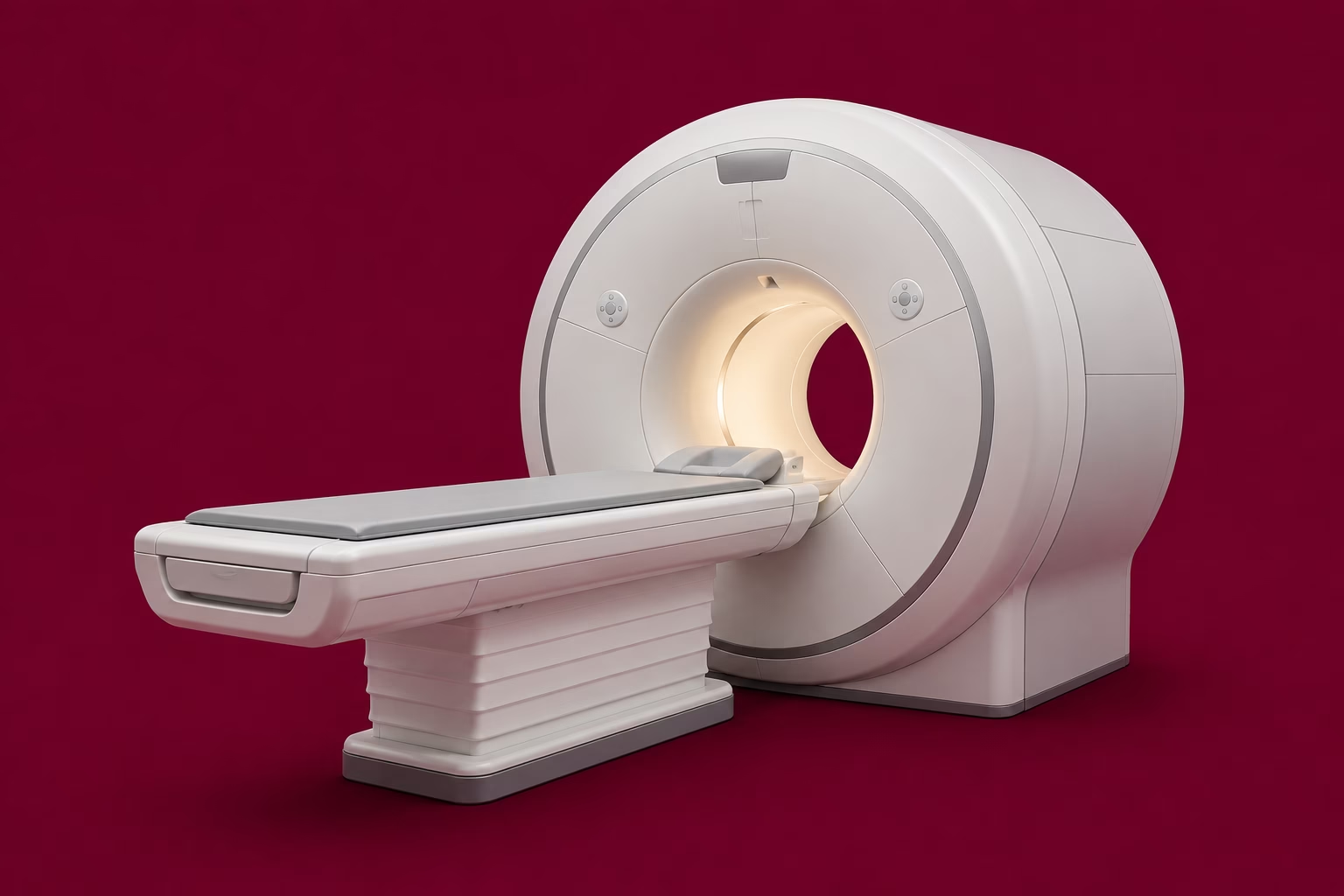
An MRI scan is one of the most advanced medical imaging tests available. It helps doctors see detailed images of organs, tissues, nerves, joints, and blood vessels inside the body without surgery. MRI scans are widely used to diagnose medical conditions, investigate symptoms, and monitor treatment progress. Whether you have been advised to undergo a brain MRI, spine MRI, or joint MRI, knowing how the test works can help you feel more confident and prepared.
What Is an MRI Scan?
MRI scans play an important role in modern diagnosis because they provide highly detailed images of soft tissues and internal structures. They are commonly used in hospitals and diagnostic centers to evaluate a wide range of medical conditions.
MRI stands for Magnetic Resonance Imaging. It is a diagnostic imaging technique that produces detailed images of organs, muscles, nerves, joints, blood vessels, and other internal body structures. Doctors use MRI scans to identify abnormalities, detect diseases early, and support treatment planning without exposing patients to radiation.
MRI scanners use powerful magnets and radio waves to generate detailed images of the body. The magnetic field aligns hydrogen atoms inside body tissues, while radio signals temporarily alter their position. A computer then processes these signals and creates highly detailed cross sectional images that doctors can evaluate.
Unlike CT scans and X rays, MRI does not use ionizing radiation. This makes it a preferred imaging option for many patients who require repeated examinations. Most people can safely undergo MRI scans, although additional precautions may be needed for those with certain implants or medical devices.
MRI scans help doctors investigate symptoms, confirm diagnoses, and monitor various medical conditions. Their ability to produce detailed soft tissue images makes them valuable across many medical specialties.
MRI scans are commonly used to evaluate neurological conditions affecting the brain. They can help detect tumors, infections, bleeding, structural abnormalities, and other disorders that may cause symptoms such as headaches, dizziness, weakness, or changes in mental function.
Doctors often order MRI scans to assess spinal health. MRI can identify herniated discs, spinal stenosis, nerve compression, spinal cord abnormalities, and degenerative changes that may contribute to chronic neck pain, back pain, numbness, or weakness in the limbs.
MRI provides detailed views of ligaments, tendons, cartilage, muscles, and bones. This makes it particularly useful for diagnosing sports injuries, torn ligaments, cartilage damage, tendon injuries, and joint inflammation affecting the knees, shoulders, hips, ankles, and other joints.
If pain continues despite treatment, read our guide on Persistent Joint Pain: When Is an MRI Necessary to understand when advanced imaging may be recommended.
Cardiac MRI helps doctors evaluate heart structure, heart muscle function, blood flow, and congenital abnormalities. MRI can also assess blood vessels throughout the body and identify aneurysms, blockages, inflammation, and other vascular conditions that require treatment.
MRI is often used to examine internal organs such as the liver, kidneys, pancreas, uterus, ovaries, prostate, and bladder. Detailed imaging helps doctors investigate masses, infections, inflammation, congenital abnormalities, and other conditions affecting organ function.
MRI plays an important role in cancer diagnosis and follow up care. It helps detect tumors, determine their size and location, assess whether cancer has spread, monitor treatment response, and support surgical or radiation therapy planning.
Brain MRI scans provide detailed images of brain tissues, nerves, blood vessels, and surrounding structures. They help doctors investigate neurological symptoms and identify underlying causes that may not be visible through other imaging methods.
Persistent headaches, severe migraines, or headaches accompanied by neurological symptoms may require MRI evaluation. Brain MRI can help rule out tumors, vascular abnormalities, inflammation, and other structural causes that may contribute to recurring or unexplained headaches.
MRI is highly effective for detecting stroke related changes in brain tissue. It can identify areas of reduced blood flow, evaluate the extent of damage, and help doctors determine the most appropriate treatment and rehabilitation strategies.
Brain MRI is one of the most accurate imaging methods for detecting tumors. It helps identify tumor size, location, and characteristics while providing valuable information that supports treatment planning, surgical decisions, and ongoing monitoring after treatment.
Patients experiencing unexplained seizures may undergo MRI to identify possible abnormalities within the brain. MRI can reveal scar tissue, developmental abnormalities, tumors, infections, or other structural changes that may contribute to seizure activity.
MRI is considered one of the most important tools for diagnosing multiple sclerosis. It helps detect lesions within the brain and spinal cord, monitor disease progression, and evaluate how well treatment is controlling disease activity.
Memory loss, confusion, and cognitive decline sometimes require detailed brain imaging. MRI can help doctors investigate conditions affecting brain structure, including neurodegenerative disorders, vascular changes, and other abnormalities that may impact memory and thinking abilities.
Doctors may recommend MRI scans when symptoms require more detailed investigation than standard imaging tests can provide. MRI often helps identify the cause of symptoms and supports accurate diagnosis.
Symptoms such as chronic headaches, persistent pain, numbness, weakness, dizziness, joint injuries, seizures, vision changes, or unexplained swelling may prompt a doctor to order an MRI scan. The detailed images help reveal abnormalities that may not appear on physical examination.
MRI scans are also used to monitor existing conditions, assess disease progression, evaluate treatment effectiveness, and guide surgical planning. In many cases, MRI provides essential information that helps healthcare providers make informed treatment decisions.
The MRI procedure is non invasive and generally straightforward. Most patients complete the examination comfortably and return to normal activities shortly afterward.
Before the scan, patients are usually asked to remove jewelry, watches, hearing aids, and other metal objects. Depending on the type of MRI, some patients may receive instructions regarding eating, drinking, medications, or contrast material administration.
Proper preparation can help ensure a smooth MRI experience. Learn more in our MRI Preparation Guide: How to Prepare for an MRI Scan.
The patient lies on a motorized table that moves into the MRI scanner. Remaining still is important because movement can affect image quality. During the examination, patients may hear loud tapping sounds while images are being captured.
Some MRI scans require contrast material to improve image clarity. Contrast helps highlight blood vessels, tumors, inflammation, and certain tissues more clearly. It is usually administered through a small intravenous injection before or during the procedure.
Most patients can resume normal activities immediately after the scan. A radiologist reviews the images, prepares a detailed report, and sends the findings to the referring physician, who discusses the results and next steps with the patient.
To understand how MRI procedures differ for breast imaging, read our guide on Breast MRI Scan: Procedure, Preparation, Results & Detection.
The duration of an MRI scan depends on the body part being examined, the number of images required, and whether contrast material is used during the study.
A standard MRI scan usually takes between 20 and 60 minutes. Simple examinations may be completed more quickly, while complex scans involving multiple body regions or advanced imaging sequences may take longer.
Factors affecting scan time include patient movement, scan complexity, use of contrast material, image quality requirements, and the specific medical condition being investigated. Following instructions carefully can help reduce unnecessary delays.
MRI scans are generally very safe and well tolerated. Most patients experience little or no discomfort during the procedure.
MRI does not expose patients to radiation and is considered safe for most individuals. However, people with certain implanted devices, metal fragments, or electronic medical equipment may require additional assessment before undergoing the scan.
Contrast related side effects are uncommon and usually mild. Some patients may experience temporary nausea, headache, dizziness, or discomfort at the injection site. Serious allergic reactions are rare but can occur in exceptional cases.
Some patients feel anxious when lying inside the MRI scanner. Open MRI systems, relaxation techniques, or mild sedation may be recommended for individuals who experience significant claustrophobia during imaging procedures.
MRI machines produce loud tapping and knocking sounds while images are acquired. Ear protection is usually provided to improve comfort. Some patients may also experience mild discomfort from remaining in one position for an extended period.
MRI and CT scans are both valuable diagnostic tools, but they use different technologies and are suited for different medical situations.
MRI Scan | CT Scan |
Uses magnetic fields and radio waves | Uses X ray technology |
Excellent for soft tissues | Excellent for bones and trauma |
No radiation exposure | Uses radiation exposure |
Better for brain, nerves, joints | Better for emergencies |
Longer scan duration | Faster scan duration |
MRI is generally preferred when detailed imaging of soft tissues, nerves, muscles, and organs is required.
For a more detailed comparison, read our guide on the Difference Between MRI and CT Scan, including their uses, benefits, and limitations.
MRI scan costs vary depending on the body area examined, facility type, use of contrast material, and reporting requirements.
Brain MRI, spine MRI, joint MRI, abdominal MRI, and cardiac MRI often have different pricing because they require different imaging protocols and examination times. More complex studies generally involve higher costs.
Insurance coverage may reduce out of pocket expenses when the MRI scan is medically necessary and approved under the patient’s health insurance policy. Coverage details vary between providers and plans.
MRI scan prices in Dubai and across the UAE vary according to the healthcare facility, scanner technology, radiologist expertise, and type of examination being performed.
Average MRI scan prices commonly range from AED 900 to AED 3,500.
Brain MRI: AED 900 to AED 2,000
Spine MRI: AED 1,200 to AED 2,500
Joint MRI: AED 900 to AED 2,000
Abdomen or Pelvis MRI: AED 1,500 to AED 3,000
Contrast MRI: Additional AED 300 to AED 1,000
Factors influencing pricing include the body part scanned, scan complexity, use of contrast material, reporting requirements, facility accreditation, and specialist interpretation services.
MRI scans have transformed modern healthcare by allowing doctors to view detailed images of internal structures without surgery or radiation exposure. From diagnosing neurological disorders and joint injuries to monitoring cancer and evaluating organ health, MRI provides valuable information that supports accurate medical decisions. By offering exceptional image quality and broad diagnostic capabilities, MRI remains one of the most trusted imaging technologies available to patients and healthcare professionals.
When you need accurate medical answers, MVR offers trusted MRI scans and advanced diagnostic imaging services in Dubai. Using high quality imaging technology and experienced medical professionals, MVR delivers reliable results that support early detection and effective treatment planning. Patient comfort, safety, and diagnostic accuracy remain a priority throughout every examination. With affordable screening and diagnostic packages available, individuals and families can access comprehensive imaging services with confidence and convenience.
What is an MRI scan used for?
MRI scans are used to diagnose and monitor conditions affecting the brain, spine, joints, muscles, blood vessels, heart, and internal organs. They help doctors identify abnormalities, evaluate symptoms, and guide treatment planning.
What are the side effects of an MRI scan?
Most patients experience no side effects from MRI scans. Some individuals may notice temporary discomfort from lying still, scanner noise, claustrophobia, or mild reactions to contrast material when it is used.
How long will an MRI scan take?
Most MRI examinations take between 20 and 60 minutes. The exact duration depends on the body part being scanned, the complexity of imaging, and whether contrast material is required.
Why would a doctor order an MRI?
Doctors order MRI scans to investigate symptoms, confirm diagnoses, monitor disease progression, assess treatment effectiveness, and obtain detailed images that cannot be achieved through routine examinations or basic imaging.
Is MRI painful?
MRI scans are not painful. Patients simply lie still while images are acquired. Some people may experience temporary discomfort from remaining in one position or from the confined space.
Can I eat before an MRI?
Most MRI scans do not require fasting. However, certain examinations, particularly those involving contrast material or abdominal imaging, may require specific preparation instructions before the appointment.
Is MRI safe during pregnancy?
MRI is generally considered safe during pregnancy when medically necessary. Doctors carefully assess the benefits and timing of the examination before recommending MRI for pregnant patients.
WhatsApp us