
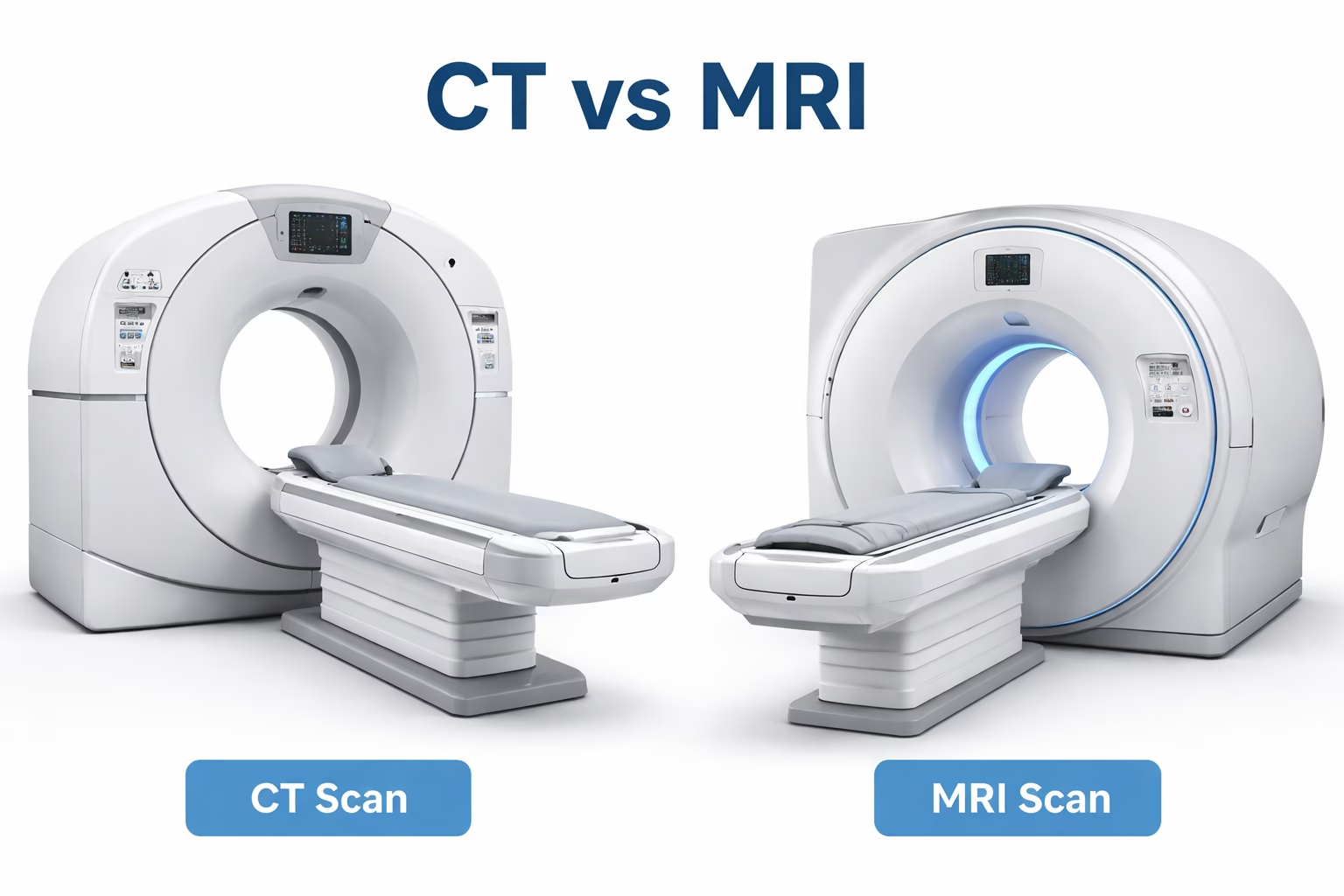
MRI and CT scans are not interchangeable tests. They use completely different technologies, show different types of body structures, and are selected based on the clinical situation. Choosing the wrong scan can lead to missed findings or unnecessary cost.Read on to know the difference between a CT and MRI scan clearly, including use cases, safety, and real diagnostic value.
Feature | CT Scan | MRI Scan |
Technology | Uses ionizing X ray radiation to create images | Uses magnetic fields and radio waves |
Duration | Fast, usually completed within 5 to 10 minutes | Longer, typically 30 to 60 minutes |
Best For | Bones, lungs, bleeding, trauma cases | Brain, spine, muscles, soft tissues |
Emergency Use | First choice in emergencies and trauma | Used for planned detailed imaging |
Cost | More affordable and widely available | Higher cost due to complex technology |
Machine Noise | Quiet and less disturbing | Loud tapping or thumping sounds |
Comfort | Open structure, less claustrophobic | Narrow tunnel, can feel enclosed |
Radiation | Uses controlled radiation exposure | No radiation involved |
Metal Safety | Safe for most implants | Not suitable with some metal devices |
MRI scan is a non invasive imaging test that uses a strong magnetic field and radio waves to generate high resolution images of internal organs and soft tissues. It does not use radiation and is commonly used for brain, spine, joints, and nerve related conditions where detailed tissue contrast is required.
MRI aligns hydrogen atoms in the body using a magnetic field, then sends radiofrequency pulses to disturb this alignment. The returning signals are captured and converted into detailed cross sectional images, allowing clear visualization of internal structures without exposing the patient to radiation.
MRI detects soft tissue abnormalities with high precision, including brain tumors, spinal cord injuries, ligament tears, nerve compression, and internal organ changes. It is especially useful for conditions where subtle tissue differences need to be identified for accurate diagnosis.
To get a complete overview, explore our guide on whole body MRI and what you need to know.
CT scan is a diagnostic imaging test that uses multiple X ray beams and computer processing to create detailed cross sectional images of the body. It is fast, widely available, and commonly used in emergency situations to detect injuries, bleeding, and structural damage.
CT scan rotates an X ray source around the body, capturing multiple images from different angles. These images are processed by a computer to form detailed slices of bones, organs, and blood vessels, providing quick and clear internal views.
CT scan detects fractures, internal bleeding, lung diseases, infections, tumors, and abdominal injuries. It is highly effective for rapid diagnosis, especially in trauma cases, where immediate imaging is required to guide urgent medical treatment.
MRI uses magnetic fields and radio waves, while CT scan uses ionizing X rays. This core difference affects safety, image type, and clinical application, making MRI better for soft tissues and CT scan better for structural and emergency imaging.
MRI does not use radiation, making it suitable for repeated scans and long term monitoring. CT scan uses controlled radiation exposure, which is safe when used appropriately but is generally limited to necessary situations.
MRI produces high contrast images of soft tissues such as brain, muscles, and ligaments. CT scan produces clearer images of bones, lungs, and acute bleeding, making it more suitable for trauma and internal injuries.
MRI scans take longer because they capture detailed tissue images and require patient stillness. CT scans are completed quickly, often within minutes, which makes them ideal for emergency and time sensitive situations.
MRI scan costs in UAE vary by body part and complexity, with basic scans like brain or knee starting from AED 600 to AED 900, common scans such as spine or abdomen ranging between AED 1500 to AED 3500, and whole body MRI costing around AED 3000 to AED 7000, while CT scans are more affordable, with brain CT around AED 400 to AED 900, general scans starting from AED 499 to AED 699, and advanced or multi region CT going up to AED 1500 to AED 3000 depending on contrast and urgency.
Doctors recommend MRI or CT scan based on the condition, urgency, and required image detail, choosing between soft tissue clarity or fast structural imaging for accurate and timely diagnosis.
Which is Safer MRI or CT Scan
MRI, or Magnetic Resonance Imaging, is generally considered safer than a CT scan because it does not use ionizing radiation. Instead, it uses strong magnetic fields and radio waves to create detailed images, making it suitable for repeated scans, especially in children and soft tissue evaluation. CT scans use radiation, which carries a small cumulative cancer risk over time, but they remain safe when used appropriately for necessary and urgent medical diagnosis.
Different medical conditions require specific imaging methods based on diagnostic accuracy, speed, and tissue visibility. MRI and CT scan are chosen based on whether soft tissue detail or rapid structural assessment is needed.
MRI provides highly detailed images of brain tissues, making it the preferred choice for detecting tumors, nerve disorders, inflammation, and structural abnormalities. It offers better contrast resolution than CT scan, helping identify subtle changes that are critical for accurate neurological diagnosis.
CT scan is preferred for chest and lung evaluation because it clearly shows airways, lung tissue, and blood vessels. It helps detect infections, pulmonary conditions, tumors, and blockages with high accuracy, making it essential for diagnosing respiratory and thoracic conditions quickly.
MRI is the best choice for spine and joint imaging as it provides clear visualization of discs, ligaments, nerves, and soft tissues. It helps diagnose conditions like herniated discs, ligament injuries, and nerve compression with high precision and detailed anatomical clarity.
CT scan is widely used in emergency situations because it provides rapid imaging results. It helps detect internal bleeding, fractures, organ injuries, and trauma related conditions quickly, allowing doctors to make immediate treatment decisions and stabilize critical patients effectively.
Choosing the right scan depends on the medical condition, urgency, and type of detail required for diagnosis. MRI is preferred for detailed soft tissue evaluation, while CT scan is ideal for fast imaging in emergencies and structural assessment. Doctors consider symptoms, clinical findings, and safety factors before recommending the most suitable scan, ensuring accurate diagnosis and effective treatment planning without unnecessary procedures or delays.
MVR offers trusted MRI and CT scan services in Dubai using advanced imaging technology and experienced medical professionals. Every scan is performed with precision to ensure accurate results while maintaining patient comfort throughout the process. With a focus on quality care and efficiency, MVR also provides affordable diagnostic packages, making reliable imaging accessible for early detection, proper evaluation, and confident medical decision making.
6. How long does MRI and CT scan take
MRI usually takes twenty to forty minutes depending on the area. CT scan is much faster and is often completed within a few minutes.
WhatsApp us