

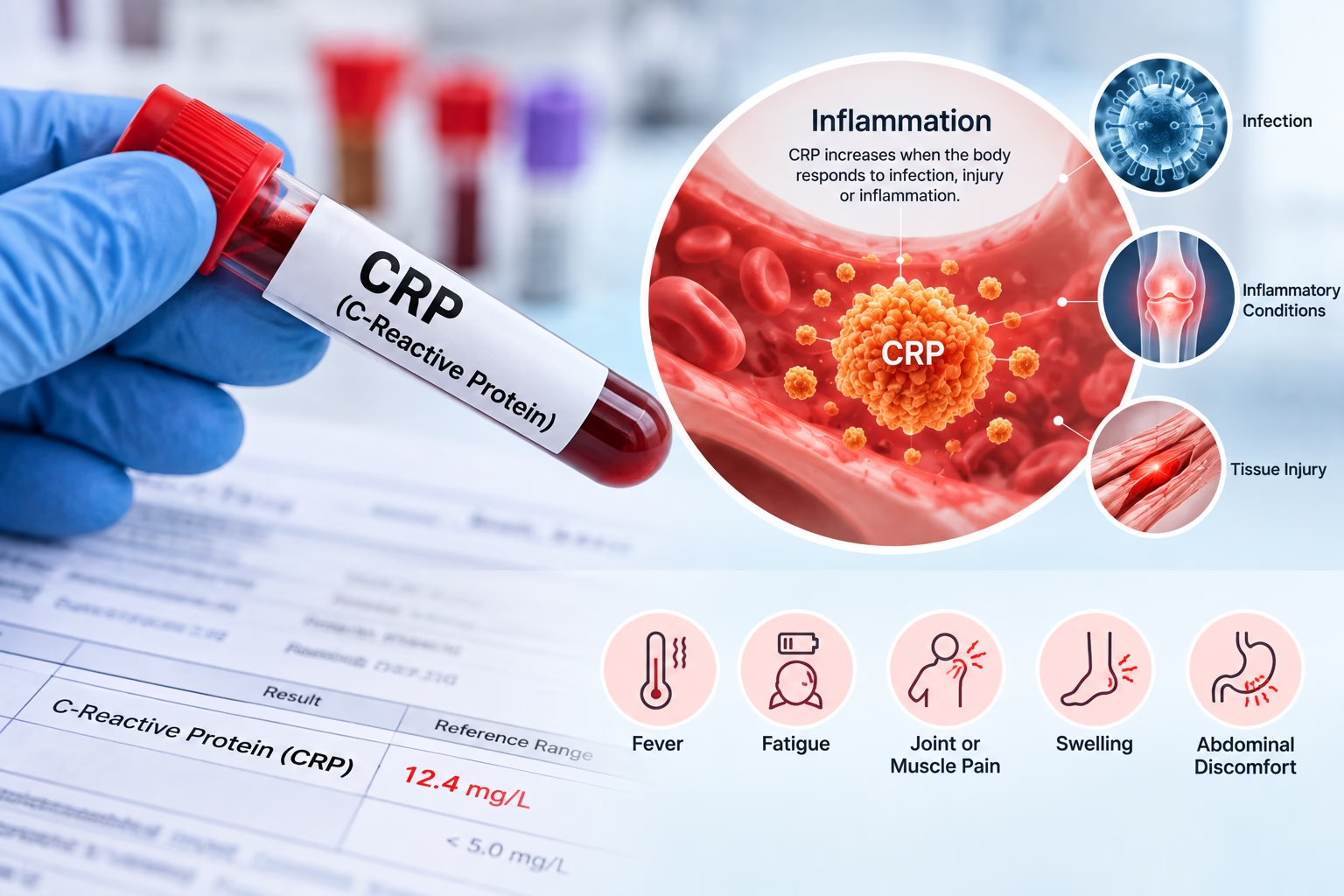
C-reactive protein (CRP) is a protein produced by the liver when the body responds to inflammation. A high CRP level can occur with infections, inflammatory conditions, autoimmune disorders, tissue injury, and several other health conditions. However, CRP is a nonspecific marker, which means it can indicate that inflammation is present without identifying its exact cause or location.
The symptoms associated with a high CRP level usually come from the underlying condition rather than from CRP itself. Depending on the cause, a person may experience fever, pain, swelling, fatigue, or other symptoms.
If your doctor has recommended a CRP blood test because of unexplained symptoms or suspected inflammation, check your CRP levels and discuss the results with a healthcare professional.
Book Your Blood TestRead this guide to know more about high CRP causes, symptoms, blood test results, normal ranges, and what an elevated CRP level may mean.
C-reactive protein, commonly called CRP, is a protein made by the liver. Its levels can increase when the body's immune system responds to infection, injury, or inflammation.
A CRP blood test measures the amount of CRP in a blood sample. It is commonly used to help detect inflammation and monitor how inflammation changes over time. CRP does not identify a specific disease on its own. A high result needs to be interpreted together with your symptoms, medical history, physical examination, and other laboratory or imaging tests.
A high CRP level generally means that there is inflammation somewhere in the body. The inflammation may be caused by an infection, an inflammatory disease, tissue injury, or another condition.
Importantly, high CRP does not tell you exactly what is causing the inflammation or where it is located. Additional tests may be needed to determine the underlying cause.
A temporary increase can also occur after certain situations, such as an injury or strenuous physical activity. Factors including smoking, obesity, pregnancy, and some chronic conditions may also influence CRP levels.
There are many possible causes of an elevated CRP level. Some of the common causes include:
Bacterial and viral infections can cause CRP levels to rise as part of the body's inflammatory response. CRP may be particularly elevated during significant infections, although the result alone cannot determine whether an infection is bacterial or viral.
Conditions such as rheumatoid arthritis, lupus, and vasculitis can cause ongoing inflammation and may be associated with elevated CRP levels.
If joint pain and swelling keep coming back, this guide on persistent joint pain and MRI explains what further evaluation may involve.
Inflammatory bowel diseases such as Crohn's disease and ulcerative colitis can cause inflammation in the digestive tract and may increase CRP levels.
Physical injury, surgery, or significant tissue damage can trigger an inflammatory response and cause CRP to increase temporarily.
Some chronic conditions can cause persistent or recurrent inflammation. In these situations, CRP may be used alongside other tests to monitor disease activity or response to treatment.
Obesity, smoking, insomnia, pregnancy, and certain other factors can be associated with higher CRP levels. A mildly elevated result therefore does not necessarily indicate a serious illness.
High CRP itself usually does not cause symptoms. Instead, symptoms are generally related to the condition causing inflammation.
Depending on the underlying cause, symptoms may include:
For example, a person with an infection may have fever and chills, while someone with an inflammatory joint condition may experience pain, stiffness, and swelling.
Yes. Infections can cause CRP levels to increase. However, CRP alone cannot confirm that you have an infection or identify the type of infection. Doctors may consider CRP alongside symptoms, examination findings, complete blood count (CBC) results, cultures, imaging, and other tests when investigating a suspected infection.
A particularly high CRP can occur with significant infections, but the actual result must always be interpreted in the context of the individual patient.
Yes. Autoimmune conditions such as rheumatoid arthritis, lupus, and vasculitis can cause inflammation and may result in elevated CRP levels.
However, CRP cannot diagnose an autoimmune disease by itself. Doctors may use additional blood tests, such as specific antibody tests, along with symptoms and examination findings. Tests like uric acid and creatinine are also commonly used when joint pain and fatigue are being investigated.
CRP is commonly reported in milligrams per liter (mg/L) or milligrams per deciliter (mg/dL). The reference range can vary between laboratories, so your report's stated range should be considered when interpreting your result.
For standard CRP testing, Mayo Clinic notes that results of approximately 8 to 10 mg/L or higher may be considered elevated, although laboratory reference ranges differ.
Some sources use broader categories to describe the degree of elevation. For example, Cleveland Clinic describes CRP levels of 1 to 10 mg/dL as moderately elevated and levels above 10 mg/dL as markedly elevated. These categories should not be used as a diagnosis because the significance of a result depends on the clinical situation.
The degree of elevation can provide useful information about the level of inflammation, but it does not identify the underlying condition.
For example, a mildly elevated CRP may occur with relatively minor or temporary inflammation, while substantially higher levels can occur with significant infections, major injury, or other inflammatory conditions.
Your healthcare professional may repeat the test or request additional investigations depending on your symptoms and medical history.
There is no single universal CRP value that applies to every laboratory and every patient. Reference ranges can vary between laboratories and testing methods.
MedlinePlus notes that healthy CRP levels are generally low, while Mayo Clinic states that results at or above approximately 8 to 10 mg/L may be considered high depending on the laboratory.
Always compare your result with the reference range printed on your laboratory report rather than relying on a general number from another source.
Standard CRP and high-sensitivity CRP (hs-CRP) both measure C-reactive protein, but they are used for different purposes. A standard CRP test is commonly used when evaluating inflammation associated with infection, injury, or inflammatory disease.
An hs-CRP test is more sensitive and can detect smaller changes in CRP. It may be used as one part of assessing cardiovascular risk in selected people. Therefore, the result of an hs-CRP test should not automatically be interpreted using the same approach as a standard CRP test.
An elevated CRP can occur in people with certain cancers because cancer and its associated processes can cause inflammation. However, high CRP does not mean that a person has cancer.
CRP is a nonspecific inflammatory marker, so many other conditions can increase it, including infections, autoimmune disorders, injury, and chronic inflammatory diseases.
If your CRP is elevated without an obvious explanation, your healthcare professional may recommend additional tests based on your symptoms and medical history, such as a tumor and cancer marker profile or imaging like diffusion MRI for early cancer detection .
It is important to distinguish between a standard CRP test and an hs-CRP test. High hs-CRP levels have been associated with cardiovascular risk and may be used as one part of an overall heart disease risk assessment, often alongside a lipid profile and cholesterol blood test .
To understand why cholesterol matters, read about the risks of high cholesterol . However, hs-CRP does not show whether inflammation is coming from the heart or another part of the body.
A high standard CRP result should not be interpreted as proof of heart disease.
A CRP test may be recommended when a healthcare professional suspects inflammation or wants to monitor an existing inflammatory condition.
It may be used to:
CRP is often interpreted alongside other blood tests and clinical findings rather than as an isolated result. Our preventive health tests guide shows how inflammation markers fit into a wider health check.
Depending on the suspected cause, your healthcare professional may recommend additional tests such as:
The exact tests depend on your symptoms and the condition being investigated.
A CRP test requires a small blood sample, usually taken from a vein in the arm. The procedure generally takes only a few minutes.
For a standard CRP test, special preparation is often not required. However, preparation requirements can vary if CRP is being tested alongside other blood tests. Some medicines and supplements may also affect results, so inform your healthcare professional about what you are taking.
The time required to receive CRP results varies depending on the laboratory and testing process. Some laboratories may provide results within a day or two, while others may take longer.
Once the result is available, your healthcare professional can interpret it alongside your symptoms and other test findings.
A high CRP result does not automatically mean that treatment is required. The next step depends on why the CRP is elevated.
Review your symptoms and medical history.
Perform a physical examination.
Review other blood or urine test results.
Recommend imaging if appropriate.
Repeat the CRP test to monitor changes.
Treat the underlying condition if one is identified.
CRP levels can rise and fall as inflammation changes. A decreasing level may indicate that inflammation is resolving or that treatment is having an effect, although the result still needs to be interpreted alongside the overall clinical picture.
You should discuss an elevated CRP result with a healthcare professional, particularly if you also have unexplained or persistent symptoms.
Medical evaluation may be especially important if you have:
Seek urgent medical attention if you have severe symptoms such as difficulty breathing, confusion, severe chest pain, or signs of a serious infection.
A CRP blood test may be useful when your healthcare professional needs to investigate unexplained inflammation, suspected infection, or an existing inflammatory condition.
Because CRP cannot identify the exact cause of inflammation on its own, the result should always be interpreted alongside your symptoms, medical history, examination, and other test results.
If you have been advised to check your inflammation markers or have symptoms that may require further evaluation, book your CRP blood test at MVR Diagnostic Clinic and discuss your results with a qualified healthcare professional.
Book Your CRP Blood TestA high CRP level is a marker of inflammation rather than a disease itself. Its significance depends on how high the level is and what is causing the inflammation.
Yes. Some people can have elevated CRP without obvious symptoms, particularly with mild or chronic inflammation. The result should be interpreted with other health information.
CRP can be influenced by several factors, but an elevated result should not automatically be attributed to psychological stress. Your healthcare professional can help determine whether further evaluation is needed.
Intense physical activity can temporarily increase CRP levels. This is one reason your healthcare professional may provide specific preparation instructions before certain CRP or hs-CRP tests.
No. Infection is one possible cause, but CRP can also rise with autoimmune diseases, inflammatory disorders, tissue injury, and other conditions.
Yes. CRP levels can decrease when the underlying inflammation improves or resolves. The trend can sometimes help healthcare professionals monitor a condition or response to treatment.
WhatsApp us