
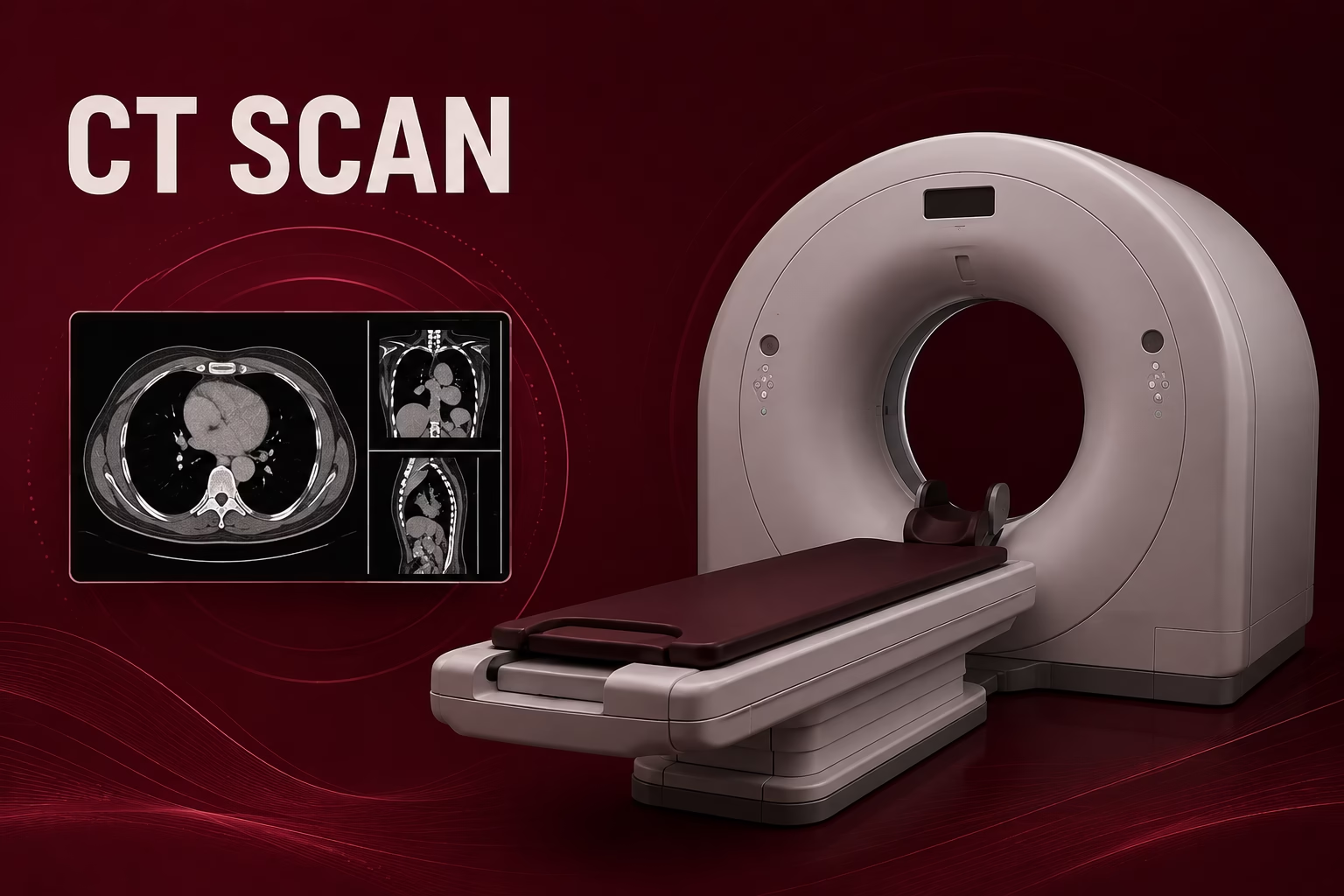
A CT scan is one of the most commonly used medical imaging tests for diagnosing a wide range of health conditions. It helps doctors view detailed images of internal organs, bones, blood vessels, and soft tissues without surgery. Whether you are preparing for a scan or comparing it with an MRI, knowing how a CT scan works can make the process easier. Read on to learn about CT scan uses, procedure steps, costs in Dubai, and key differences from MRI.
What Is a CT Scan?
A CT scan is a medical imaging test that combines X-rays and computer technology to create detailed images of structures inside the body. It is widely used to diagnose injuries, diseases, and abnormalities affecting different organs and tissues.
A CT scan provides cross-sectional images that offer more detail than standard X-ray images. Doctors often recommend it when they need a clearer view of internal structures for accurate diagnosis and treatment planning.
CT scans play an important role in diagnosing many medical conditions and injuries. They help doctors quickly assess internal structures and identify abnormalities that may require treatment or further investigation.
Because the images are highly detailed, CT scans are used in emergency care, cancer evaluation, infection diagnosis, and monitoring ongoing health conditions.
CT scans can detect a wide variety of diseases affecting different parts of the body. The detailed images help doctors identify both common and serious health conditions at an early stage.
Early diagnosis through CT imaging often improves treatment planning and helps healthcare providers monitor disease progression more effectively.
CT imaging plays a crucial role in brain diagnostics. Read our guide on CT Brain Scan for Detecting Stroke and Head Injuries to understand its importance in emergency care and diagnosis.
Both CT scans and MRI scans are advanced imaging tests used to diagnose medical conditions. However, they use different technologies and are often chosen for different diagnostic purposes.
For a more detailed comparison, explore our guide on the Difference Between MRI and CT Scan, including their uses, advantages, and limitations.
The choice between CT scan and MRI depends on the body area being examined, the condition being investigated, and the type of detail required by the doctor.
CT Scan | MRI Scan |
Uses X rays to create detailed images | Uses magnetic fields and radio waves |
Usually takes 5 to 15 minutes | Usually takes 20 to 60 minutes |
Best for bones, lungs, and trauma | Best for soft tissues and nerves |
Commonly used in emergency situations | Often used for detailed neurological imaging |
Produces fast diagnostic results | Provides detailed soft tissue contrast |
Widely used for injury assessment | Commonly used for spine evaluations |
Suitable for many urgent conditions | Often chosen for complex tissue analysis |
The CT scan procedure is simple and usually completed within a short period. Most patients can return to normal activities soon after the examination unless additional instructions are provided.
Knowing the steps involved can help reduce anxiety and make the experience more comfortable for first time patients.
The duration of a CT scan depends on the body part being examined and whether contrast dye is required. Most scans are completed quickly compared to many other imaging tests.
Although scanning time is usually short, preparation and report generation may add additional time to the overall process.
Some CT scans require a contrast dye to improve image clarity and highlight specific structures inside the body. This is often referred to as a contrast CT scan.
Contrast dye helps doctors evaluate blood vessels, organs, and certain diseases with greater accuracy than a standard CT scan.
CT scan costs in Dubai vary depending on the type of scan, body area being examined, and whether contrast dye is required. Specialized imaging studies may cost more than routine examinations.
Patients should always confirm pricing with the healthcare provider, as final costs can differ based on urgency and reporting requirements.
CT scans are considered safe when performed for appropriate medical reasons. The benefits of accurate diagnosis usually outweigh the small risks associated with radiation exposure.
Healthcare professionals follow safety guidelines to ensure radiation doses remain as low as possible while still producing high quality diagnostic images.
CT scans and PET scans serve different purposes in medical diagnosis. While CT scans show body structure, PET scans provide information about metabolic activity within tissues and organs.
Doctors may combine both technologies to obtain a more complete picture of certain diseases, especially cancer related conditions.
CT Scan | PET Scan |
Shows detailed body structures | Shows metabolic and functional activity |
Uses X rays for imaging | Uses radioactive tracer substances |
Helps detect structural abnormalities | Helps identify abnormal cell activity |
Commonly used for injuries and diseases | Frequently used in cancer evaluation |
Provides anatomical information | Provides functional information |
Faster imaging procedure | Usually takes longer to complete |
Often combined with PET for accuracy | Often combined with CT for diagnosis |
CT scans remain one of the most valuable diagnostic tools in modern healthcare. They provide fast, detailed images that help doctors detect injuries, diseases, infections, and many other medical conditions. Whether comparing CT scan vs MRI, learning about CT scan uses, or evaluating CT scan costs in Dubai, knowing the purpose and benefits of each test can help you make informed healthcare decisions with greater confidence.
When you need reliable diagnostic imaging, choosing an experienced provider can make a significant difference. MVR offers trusted diagnostic services in Dubai, combining advanced imaging technology with skilled radiologists and healthcare professionals to deliver accurate and timely results. Patient comfort, safety, and quality care remain central to every examination. With affordable screening and diagnostic packages, MVR helps individuals access high quality CT scans, MRI scans, ultrasound imaging, and other essential diagnostic services with confidence and convenience.
Do I need a doctor’s referral for a CT scan?
In most cases, a doctor will recommend a CT scan based on your symptoms, medical history, or clinical findings. Following professional medical advice helps ensure the scan is appropriate and provides useful diagnostic information.
Can I eat or drink before a CT scan?
Preparation requirements depend on the type of CT scan being performed. Some scans require fasting for several hours, especially when contrast dye is used. Always follow the instructions provided by your healthcare provider.
Is a CT scan painful?
A CT scan is generally painless. You will need to lie still during the procedure while images are captured. If contrast dye is used, some people may briefly experience a warm sensation during injection.
How long does it take to receive CT scan results?
The timing varies by healthcare facility and scan type. A radiologist reviews the images before preparing a report. Results are often available within one to two days, although urgent cases may be prioritized.
Are CT scans safe for children and older adults?
CT scans can be safely performed when medically necessary. Healthcare providers carefully consider the benefits and potential risks before recommending imaging, especially for children and individuals who may require repeated examinations.
What should I tell my doctor before a CT scan with contrast dye?
Inform your doctor about allergies, kidney conditions, pregnancy, medications, or previous reactions to contrast material. Sharing this information helps healthcare professionals determine the safest approach for your examination.
When is a CT scan preferred over other imaging tests?
A CT scan may be recommended when doctors need fast, detailed images of bones, organs, blood vessels, or injuries. The most suitable imaging test depends on your symptoms, medical condition, and diagnostic requirements.
WhatsApp us