

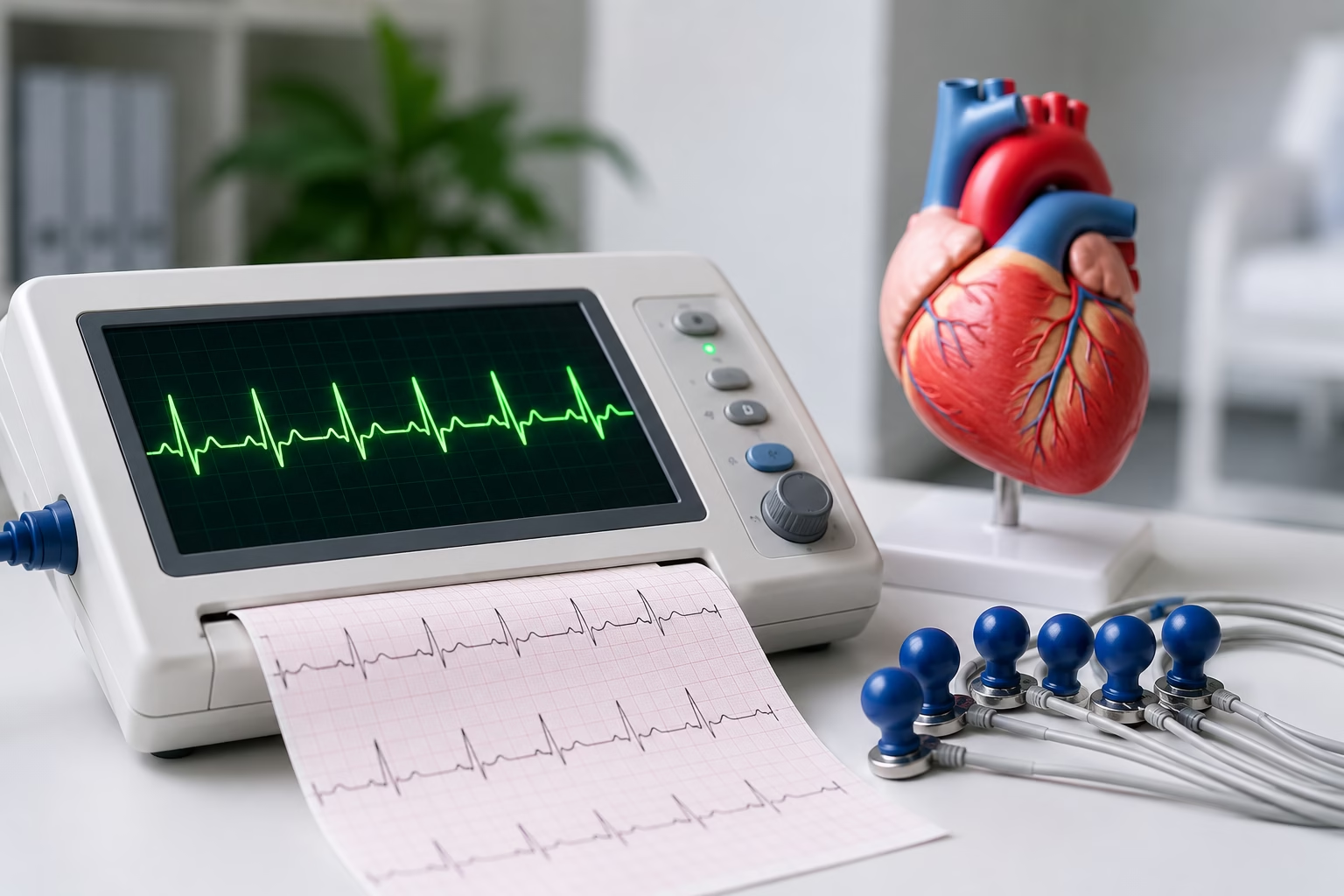
Your heart works continuously to pump blood throughout your body, supplying oxygen and nutrients to every organ. When your heart’s electrical activity changes, it may indicate an underlying heart condition that requires medical attention. An Electrocardiogram (ECG) is one of the simplest, quickest, and most effective tests used to evaluate heart rhythm and detect various cardiac problems.
Whether you’re experiencing chest pain, palpitations, dizziness, or simply undergoing a routine health check-up, an ECG provides valuable information about how your heart is functioning. Since it is non-invasive, painless, and takes only a few minutes, it is often the first test doctors recommend when assessing heart health.
At MVR Diagnostic Clinic, we provide accurate ECG testing using modern equipment and experienced healthcare professionals to help detect heart conditions early. Read on to understand what an ECG is, why it is performed, how the procedure works, and what your results may indicate.
An Electrocardiogram (ECG), also called an EKG, is a diagnostic test that records the electrical activity of the heart. Every heartbeat is triggered by electrical impulses that travel through the heart muscle. An ECG captures these signals and displays them as waves on a monitor or printed graph.
By studying these wave patterns, doctors can determine whether the heart is beating normally or if there are signs of abnormal rhythms, heart damage, or other cardiac conditions.
Unlike imaging tests such as MRI or CT scans, an ECG does not create pictures of the heart. Instead, it measures the heart’s electrical signals, making it an essential tool for evaluating heart function.
Because the test is quick, painless, and does not involve radiation, it is widely used in hospitals, clinics, emergency departments, and routine health screenings.
Doctors recommend an ECG for many different reasons. It can help diagnose heart problems, monitor existing heart conditions, or evaluate symptoms that may be related to abnormal heart function.
An ECG may be recommended if you experience:
The test is also commonly performed:
Since many heart conditions develop without obvious symptoms, an ECG can sometimes detect problems before serious complications occur.
As part of a comprehensive health check-up, your doctor may also recommend routine blood tests to assess cholesterol, blood sugar, kidney function, and other factors that can affect heart health. Read our complete guide on Blood Test: Types, Results, Normal Ranges & Common Tests.
An ECG provides important information about your heart’s electrical activity and rhythm. While it cannot diagnose every heart condition, it is an excellent first-line investigation that helps doctors decide whether additional testing is needed.
An ECG measures how fast or slow your heart is beating.
It can identify:
One of the primary purposes of an ECG is to determine whether the heart is beating in a regular rhythm.
The test can detect abnormal rhythms known as arrhythmias, which may require further evaluation or treatment.
An ECG can reveal changes that suggest a current or previous heart attack.
In emergency situations, it is often one of the first investigations performed for patients with chest pain because it helps doctors begin treatment as quickly as possible.
The heart relies on electrical signals to coordinate each heartbeat.
An ECG can identify delays or blockages in these electrical pathways, helping diagnose conduction disorders such as heart block.
Changes in the ECG tracing may suggest enlargement or thickening of different chambers of the heart.
Additional imaging, such as an echocardiogram, is often recommended to confirm these findings.
If further evaluation is needed, your doctor may recommend additional imaging tests depending on your symptoms. Learn more about Ultrasound Scan: Types, Uses, Procedure & Complete Medical Guide to understand how ultrasound supports the diagnosis of various medical conditions.
Many people worry that an ECG may be uncomfortable, but the procedure is simple, painless, and usually takes less than 10 minutes.
Generally, no special preparation is required.
Before your appointment:
You will be asked to lie comfortably on an examination table.
Small adhesive electrodes are placed on your:
These electrodes are connected to the ECG machine using thin wires.
The machine records your heart’s electrical activity while you remain still and breathe normally.
The recording itself usually takes only a few seconds.
The test is completely painless. You will not feel any electrical current entering your body because the electrodes only record electrical signals generated naturally by your heart.
Once the recording is complete, the electrodes are removed, and you can immediately return to your normal activities.
A doctor or cardiologist reviews the ECG tracing and prepares a report that explains the findings.
Different types of ECG examinations are available depending on the symptoms being investigated. Your doctor will recommend the most appropriate option based on your medical history and clinical condition.
A resting ECG is the most commonly performed type of electrocardiogram.
It records your heart’s electrical activity while you are lying quietly on an examination table.
This test is commonly used during routine health check-ups, emergency evaluations, and pre-operative assessments.
Also known as an exercise ECG or treadmill test, a stress ECG records the heart’s activity while you walk on a treadmill or pedal a stationary bicycle.
It helps doctors evaluate how your heart performs during physical activity and may identify heart problems that are not visible while resting.
A Holter monitor is a portable ECG device that continuously records heart activity over 24 to 48 hours or longer.
Doctors recommend this test when symptoms such as palpitations, dizziness, or fainting occur intermittently and may not appear during a standard ECG performed in the clinic.
A 12-lead ECG is the standard ECG performed in most healthcare facilities.
Despite its name, it uses 10 electrodes placed on the body to produce 12 different views of the heart’s electrical activity.
This comprehensive assessment allows doctors to evaluate different regions of the heart and detect abnormalities with greater accuracy.
After your ECG is completed, the recording is reviewed by a doctor or cardiologist who interprets the electrical activity of your heart. Your ECG report helps determine whether your heart is functioning normally or if additional investigations are needed.
A normal ECG generally shows:
An abnormal ECG does not always mean you have heart disease. Sometimes the changes may be temporary or related to factors such as stress, dehydration, electrolyte imbalance, certain medications, or intense physical activity. Your doctor will interpret the findings along with your symptoms, medical history, and other test results.
Depending on the report, additional tests such as an echocardiogram, blood tests, Holter monitoring, stress testing, or cardiac imaging may be recommended.
Although an ECG report contains several technical measurements, understanding a few basic components can help you better understand your results.
The ECG calculates how many times your heart beats each minute.
A slower or faster heart rate is not always abnormal and depends on factors such as age, physical fitness, medications, and overall health.
A healthy heart usually beats in a regular pattern known as normal sinus rhythm.
The ECG can identify irregular rhythms, including:
The P wave represents the electrical activity of the upper chambers of the heart (atria).
Abnormal P waves may suggest enlargement of the atria or rhythm disorders.
The QRS complex represents the electrical activity responsible for the contraction of the lower chambers (ventricles).
Changes in the QRS complex may indicate conduction abnormalities, enlarged heart chambers, or previous heart damage.
These parts of the ECG help doctors assess how the heart muscle recovers after each heartbeat.
Abnormal ST segments or T waves may suggest:
Although these terms may appear on your ECG report, they should always be interpreted by a qualified healthcare professional.
The cost of an ECG varies depending on several factors. Since it is a quick and commonly performed test, it is generally one of the most affordable cardiac investigations.
Factors that may affect the cost include:
Rather than choosing a provider based only on price, it is important to select a trusted diagnostic centre that offers experienced healthcare professionals, quality equipment, and accurate reporting.
Advances in medical technology have made ECG monitoring more convenient than ever before.
For patients who have difficulty travelling, home ECG services allow trained healthcare professionals to perform the test in the comfort of the patient’s home.
Home ECG testing may be recommended for:
Portable ECG devices and wearable monitors have become increasingly popular.
Some smartwatches and handheld ECG devices can record basic heart rhythm information and help detect irregular heartbeats. However, these devices do not replace a standard clinical ECG performed by healthcare professionals.
If a portable device detects an abnormal rhythm, a complete medical evaluation is still necessary.
An ECG helps identify many different heart conditions, although additional tests are sometimes required for confirmation.
Irregular heart rhythms are among the most common abnormalities detected on an ECG.
Examples include:
An ECG is one of the most important tests used to diagnose a heart attack.
Characteristic changes in the ECG help doctors identify whether a heart attack is occurring or has occurred in the past.
Heart block occurs when electrical signals travel more slowly or become blocked as they move through the heart.
Different degrees of heart block require different types of treatment.
Changes in ECG wave patterns may suggest enlargement of the heart chambers caused by long-standing high blood pressure or other cardiac conditions.
Abnormal levels of potassium, calcium, or magnesium can affect the heart’s electrical activity and may produce characteristic ECG changes.
In some situations, doctors may recommend advanced imaging alongside an ECG to evaluate other medical conditions. Read our guide on Why Diffusion MRI Is Changing the Way Cancer Is Detected Early to learn how modern imaging supports accurate diagnosis.
At MVR Diagnostic Clinic, we provide reliable ECG testing using modern diagnostic equipment to evaluate heart rhythm and electrical activity accurately. Whether you require an ECG as part of a routine health check-up, before surgery, or for symptoms such as chest pain, palpitations, dizziness, or shortness of breath, our experienced healthcare professionals are committed to delivering high-quality cardiac diagnostic services.
We understand that timely diagnosis is essential for effective heart care. That’s why we focus on accurate testing, prompt reporting, and compassionate patient care in a comfortable clinical environment. Our team works closely with referring physicians to support informed treatment decisions and better cardiovascular health.
Your heart works around the clock to keep your body functioning, making regular heart health assessments an important part of preventive care. An ECG is a simple, painless, and effective test that can identify heart rhythm abnormalities, detect signs of heart disease, and support early diagnosis before serious complications develop.
If your doctor recommends an ECG or you experience symptoms such as chest pain, dizziness, irregular heartbeat, or unexplained shortness of breath, seeking prompt medical evaluation can make a significant difference. Early detection and timely treatment are key to protecting your heart and maintaining your overall health.
At MVR Diagnostic Clinic, we’re committed to providing dependable cardiac diagnostics to help you take control of your heart health with confidence.
What is an ECG test used for?
An ECG records the electrical activity of the heart to help diagnose abnormal heart rhythms, heart attacks, conduction disorders, and other cardiac conditions.
Is an ECG painful?
No. An ECG is completely painless. The electrodes only record your heart’s electrical signals and do not send electricity into your body.
How long does an ECG take?
A standard resting ECG usually takes between 5 and 10 minutes, including preparation.
Can an ECG detect a heart attack?
Yes. An ECG is one of the primary tests used to identify a current or previous heart attack. However, additional blood tests and imaging may also be required.
Do I need to fast before an ECG?
No. Most ECG tests do not require fasting unless your doctor has given specific instructions.
Can an ECG detect all heart problems?
No. While an ECG is excellent for evaluating the heart’s electrical activity, some heart conditions may require additional investigations such as an echocardiogram, stress test, Holter monitor, blood tests, CT scan, or MRI.
Is an ECG safe during pregnancy?
Yes. An ECG is completely safe during pregnancy because it only records electrical signals from the heart and does not use radiation.
How often should I have an ECG?
The frequency depends on your age, symptoms, medical history, and risk factors. Your doctor will recommend ECG testing when it is clinically appropriate or as part of routine health monitoring.
WhatsApp us