

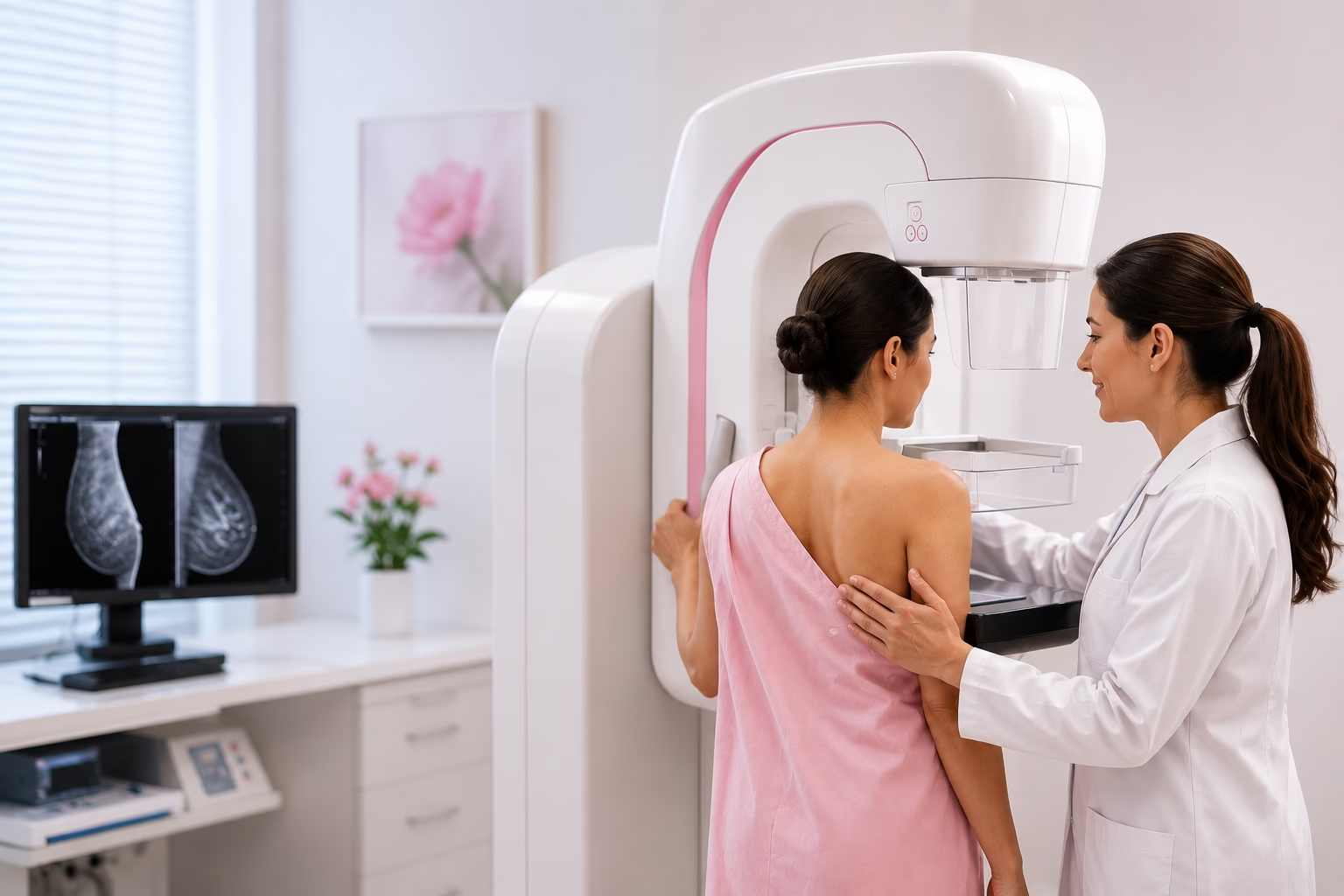
A mammogram is one of the most effective screening tools for detecting breast cancer at an early stage, often before symptoms appear. Regular mammogram screening can help identify small changes in breast tissue, giving doctors the opportunity to diagnose and treat breast conditions as early as possible. While many women associate mammograms with breast cancer screening, the test is also used to investigate breast lumps, pain, nipple discharge, and other unusual breast changes.
Whether you’re preparing for your first mammogram or want to understand how the procedure works, having the right information can make the experience much less stressful. At MVR Diagnostic Clinic, we offer advanced mammography services with experienced radiologists and modern imaging technology to support accurate breast health assessment.
Read on to learn about mammogram screening, recommended age guidelines, the procedure, costs, results, different types of mammograms, and when you may also need a breast ultrasound.
A mammogram is a low-dose X-ray examination of the breast that helps detect abnormal changes in breast tissue. It is considered the gold standard for breast cancer screening because it can identify tiny abnormalities that may not be felt during a physical examination.
You may also hear the term mammography. While the two terms are closely related, a mammogram refers to the X-ray image itself, whereas mammography is the imaging procedure used to create those images.
Doctors recommend mammograms to:
Since breast cancer often develops without noticeable symptoms in its early stages, routine mammogram screening plays a vital role in early detection.
Knowing when to start mammogram screening depends on your age, family history, and overall risk of breast cancer.
Women with an average risk of breast cancer are generally advised to begin regular mammogram screening from the age of 40. Depending on your healthcare provider’s recommendation, screening may be performed every one to two years.
Women with a higher risk, such as those with a strong family history of breast cancer or certain genetic mutations, may need to start screening earlier and undergo additional imaging, such as breast MRI.
Regular mammograms become increasingly important as women age because the risk of breast cancer rises over time.
If you’re planning your screening, you may also find our guide on Mammogram Screening in Dubai: Early Detection & Cost helpful. It explains the benefits of routine screening, available services, and what to expect during your appointment.
If you’ve never had a mammogram before, knowing what to expect can help you feel more comfortable.
Before the examination, you’ll be asked to remove clothing from the waist up and wear a medical gown. It’s best to avoid applying deodorant, perfume, lotions, or powders on your chest or underarms, as these products can affect image quality.
During the procedure, each breast is placed between two plates on the mammogram machine. The plates gently compress the breast for a few seconds while X-ray images are taken.
Although compression may feel slightly uncomfortable, it is necessary to produce clear images while using the lowest possible radiation dose.
The examination usually takes about 15 to 20 minutes, and the compression lasts only a few seconds for each image.
There are two main types of mammograms:
Screening Mammogram
A screening mammogram is performed as part of routine breast cancer screening in women who do not have breast symptoms.
Diagnostic Mammogram
A diagnostic mammogram is recommended when a woman has symptoms such as a breast lump, pain, nipple discharge, or an abnormal finding on a screening mammogram. Additional images are taken to examine the area in greater detail.
One of the most common concerns women have is whether a mammogram is painful.
Most women experience only mild discomfort during breast compression. The level of discomfort varies depending on breast sensitivity, hormonal changes, and individual pain tolerance.
Scheduling your mammogram about one week after your menstrual period may help reduce tenderness if you are still menstruating.
Although the compression may feel uncomfortable, it lasts only a few seconds and is an important part of obtaining high-quality images.
Mammography is considered a safe examination. The radiation dose is very low, and the benefits of early breast cancer detection far outweigh the minimal risks associated with the procedure.
To understand what to expect during a mammogram and whether it is painful, read Is Mammo Test Painful? What Really Happens During the Procedure.
After your mammogram, a radiologist carefully examines the images and prepares a report for your doctor.
A normal mammogram means no suspicious abnormalities were found, and you can continue routine screening according to your doctor’s recommendation.
An abnormal mammogram does not necessarily mean cancer. Many abnormal findings are caused by harmless conditions such as cysts, fibroadenomas, or dense breast tissue.
If additional evaluation is needed, your doctor may recommend:
Radiologists often use the BI-RADS classification system to describe mammogram findings and recommend appropriate follow-up.
Modern mammography includes several techniques designed to improve breast imaging and diagnostic accuracy.
2D Mammogram
A traditional 2D mammogram captures two X-ray images of each breast. It remains widely used for routine breast cancer screening.
3D Mammogram
Also called digital breast tomosynthesis, a 3D mammogram creates multiple thin images of the breast from different angles. This provides a more detailed view and improves the detection of small cancers, particularly in women with dense breast tissue.
Mammogram for Women with Breast Implants
Women with breast implants can safely undergo mammography. Additional images may be taken to ensure that as much breast tissue as possible is visible during the examination.
Contrast-Enhanced Mammography
Contrast-enhanced mammography combines mammography with an intravenous contrast agent to highlight areas with increased blood supply. It may be recommended in selected cases where additional imaging is needed.
Although both tests evaluate breast tissue, they serve different purposes.
|
Mammogram |
Breast Ultrasound |
|
Uses low-dose X-rays |
Uses sound waves |
|
Best for routine breast cancer screening |
Often used to investigate specific breast abnormalities |
|
Detects tiny calcium deposits |
Differentiates cysts from solid masses |
|
Recommended for routine screening |
Frequently used as a follow-up examination |
Women with dense breast tissue may benefit from having both a mammogram and a breast ultrasound, as the two tests provide complementary information.
To understand when each test is recommended, read our detailed guide on Mammogram vs Breast USG: Differences You Need to Know.
The cost of a mammogram can vary depending on several factors.
These include:
Rather than focusing solely on price, it is important to choose a diagnostic centre that offers modern equipment, experienced radiologists, and high-quality imaging to ensure accurate results.
At MVR Diagnostic Clinic, we provide comprehensive mammography services using advanced digital imaging technology to support early breast cancer detection and accurate diagnosis. Our experienced radiologists perform both screening and diagnostic mammograms in a comfortable, patient-focused environment.
We understand that breast imaging can feel overwhelming, especially if it’s your first mammogram. Our compassionate team is committed to making your experience as comfortable as possible while delivering timely and reliable results.
Whether you’re attending a routine breast cancer screening or require further evaluation for breast symptoms, MVR Diagnostic Clinic offers the expertise and technology you can trust for your breast health.
Regular mammogram screening is one of the most effective ways to detect breast cancer early, often before symptoms appear. Early diagnosis not only improves treatment options but also increases the chances of successful outcomes.
If you’re approaching the recommended screening age, have a family history of breast cancer, or notice any unusual breast changes, don’t delay seeking medical advice. Routine screening, combined with timely follow-up when needed, plays an important role in maintaining long-term breast health.
Taking a proactive approach today can make a significant difference tomorrow.
What is the right age for a mammogram?
Women at average risk are generally advised to begin routine mammogram screening from the age of 40. Your doctor may recommend earlier screening if you have a higher risk of breast cancer.
How often should you get a mammogram?
Many women are advised to have a mammogram every one to two years, depending on their age, medical history, and healthcare provider’s recommendation.
Does a mammogram detect all breast cancers?
Mammograms are highly effective but cannot detect every breast cancer. In some cases, additional imaging such as breast ultrasound or MRI may be required.
Is mammography painful?
Most women experience only mild discomfort during breast compression. The compression lasts only a few seconds and helps produce clear diagnostic images.
Can I have a mammogram if I have breast implants?
Yes. Women with breast implants can safely undergo mammography. Additional views may be taken to ensure adequate visualization of the breast tissue.
Should I get a mammogram or a breast ultrasound?
A mammogram is the primary screening test for breast cancer, while a breast ultrasound is often used to evaluate specific breast abnormalities or complement mammography, especially in women with dense breasts.
How long does a mammogram take?
The entire examination usually takes about 15 to 20 minutes, although the breast compression itself lasts only a few seconds for each image.
What happens if my mammogram is abnormal?
An abnormal mammogram does not automatically mean breast cancer. Your doctor may recommend additional mammogram images, a breast ultrasound, MRI, or a biopsy to determine the exact cause of the finding.
WhatsApp us