
Finding a thyroid nodule can be worrying, especially when you do not know whether it is harmless or something that needs further investigation. The good news is that most thyroid nodules are benign, but some need additional testing to understand what they are.
Thyroid nodules can be discovered during a routine examination, when you notice a swelling in your neck, or incidentally during an imaging test done for another reason. Read this guide to know more about the causes, symptoms, ultrasound findings, diagnosis, and treatment of thyroid nodules.
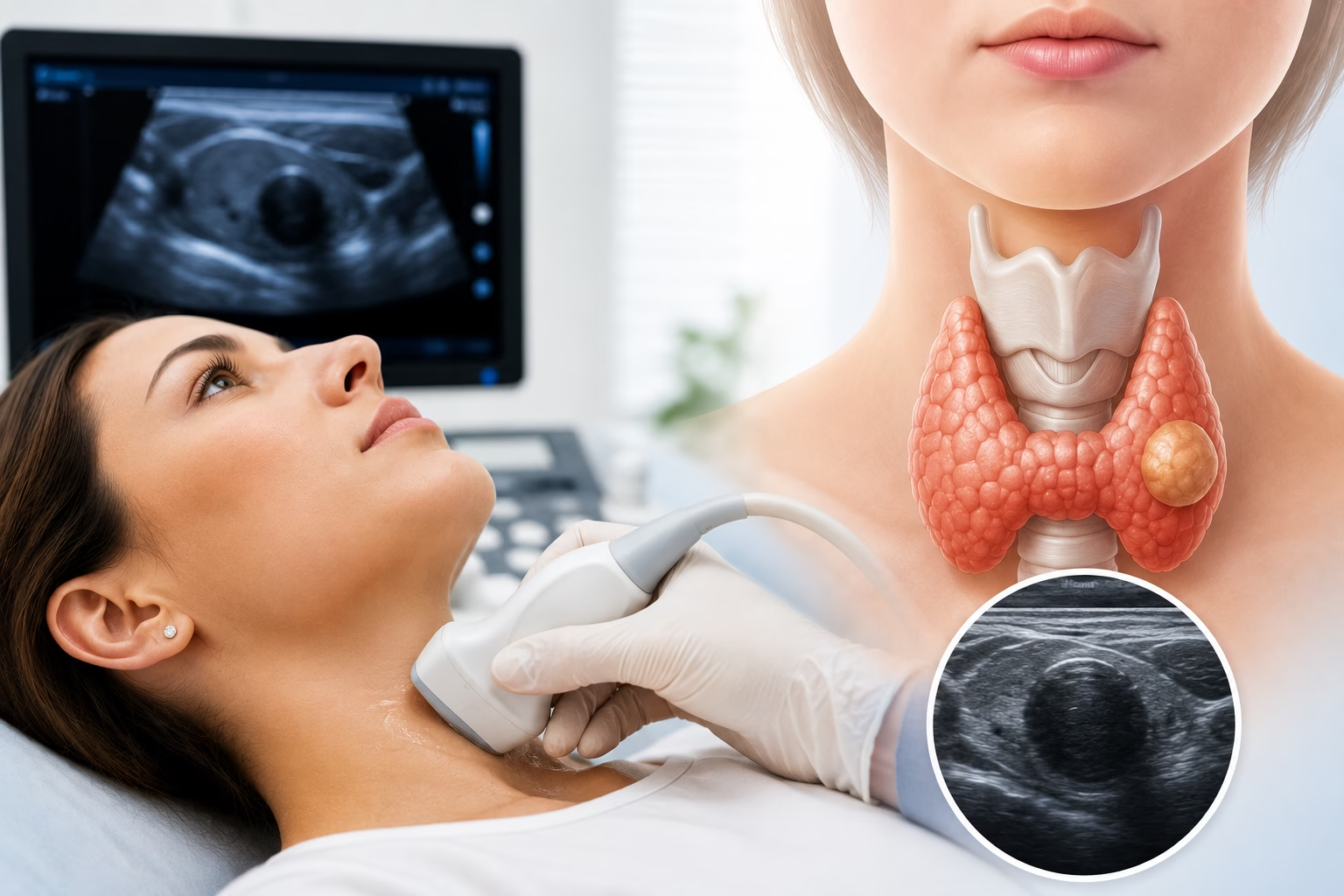
A thyroid nodule is a growth or abnormal area within the thyroid gland. The thyroid is a butterfly-shaped gland located at the front of the neck. It produces hormones that help regulate metabolism, energy use, body temperature, heart rate, and other important functions.
A nodule can be:
Some nodules produce thyroid hormones, while others do not affect thyroid function. Importantly, having a thyroid nodule does not automatically mean that you have thyroid cancer. Most thyroid nodules are noncancerous, but their appearance, size, growth, and clinical context determine whether further evaluation is needed.
There is not always one identifiable cause. Thyroid nodules can develop because of several conditions or changes within the thyroid gland.
Some nodules are benign growths of thyroid tissue. These may remain stable for years without causing symptoms.
Some nodules contain fluid or are predominantly cystic. Thyroid cysts are often benign, although their appearance on ultrasound helps determine whether additional evaluation is required.
Some people develop several nodules within an enlarged thyroid gland. This is known as a multinodular goiter.
Inflammation of the thyroid can cause changes in the gland that may sometimes appear nodular on imaging.
Changes in iodine intake can influence thyroid health and may contribute to certain thyroid conditions.
Previous radiation exposure involving the head or neck can increase the risk of thyroid abnormalities, including thyroid cancer.
A family history of thyroid cancer or certain inherited conditions can increase the risk of developing a concerning thyroid nodule.
Many thyroid nodules cause no symptoms at all. They may be discovered during a routine examination or incidentally during an imaging test.
When symptoms occur, they may include:
Larger nodules are more likely to cause pressure-related symptoms, although symptoms alone cannot determine whether a nodule is benign or malignant.
Usually, a thyroid nodule itself does not cause weight gain or weight loss. Weight changes are more closely associated with thyroid hormone imbalance. A small number of nodules can produce excess thyroid hormone, potentially contributing to symptoms of hyperthyroidism such as:
A thyroid nodule can therefore exist alongside either normal or abnormal thyroid function.
Most thyroid nodules are painless. However, some thyroid conditions can cause neck discomfort or pain, particularly when there is inflammation, bleeding into a cyst or nodule, or another associated thyroid problem. Sudden swelling or significant neck pain should be assessed by a healthcare professional.
A thyroid nodule may be found in several ways. A doctor may notice it during a physical examination. You may also notice a lump yourself when looking in the mirror or touching the front of your neck.
Some nodules are discovered incidentally during imaging of the neck performed for another reason. Once a nodule is suspected, ultrasound is one of the main imaging tests used to evaluate it.
A thyroid ultrasound uses high-frequency sound waves to create detailed images of the thyroid gland.
It can help determine:
MVR's thyroid ultrasound service specifically evaluates the thyroid gland for nodules, enlargement, cystic changes, and tissue abnormalities using ultrasound imaging.
If you want to understand ultrasound scans in more detail, read our Ultrasound Scan guide to know more about the different types of ultrasound, what they are used for, and what to expect during a scan.
Thyroid nodules can have very different appearances on ultrasound. The radiologist may assess features such as:
The nodule may be:
The brightness of the nodule compared with the surrounding thyroid tissue can provide useful information.
The shape of the nodule is assessed as part of its overall ultrasound appearance.
Radiologists examine whether the borders appear smooth and well-defined or have features that may warrant closer evaluation.
Certain types of calcifications may increase suspicion and are therefore considered when assessing a thyroid nodule.
The internal structure, vascularity, and relationship with surrounding tissues may also be evaluated. No single ultrasound feature can determine whether a nodule is cancerous. Radiologists consider the overall pattern of findings when assessing risk.
Radiologists may use a standardized classification system called TI-RADS, or Thyroid Imaging Reporting and Data System, to categorize thyroid nodules according to their ultrasound appearance.
The system considers several characteristics, including:
The resulting category helps estimate the level of concern and can guide whether follow-up ultrasound or tissue sampling should be considered. The exact management recommendation depends on the classification system used, the size of the nodule, clinical risk factors, and the individual patient's circumstances.
Not every thyroid nodule needs a biopsy. Whether a fine-needle aspiration biopsy is recommended depends on factors such as:
A suspicious-looking nodule may require sampling even if it is relatively small, while a low-risk nodule may simply be monitored.
A fine-needle aspiration, or FNA, uses a thin needle to collect cells from a thyroid nodule. The sample is then examined by a laboratory to determine whether the cells appear benign, suspicious, or malignant.
Ultrasound may be used to guide the needle accurately into the target area. The procedure is generally minimally invasive and is commonly performed when imaging indicates that tissue sampling is appropriate.
Blood tests do not determine whether a thyroid nodule is benign or cancerous. However, thyroid blood tests are useful for assessing thyroid function.
A doctor may order:
A TSH test is commonly used as an initial assessment of thyroid function. MVR's thyroid testing service includes TSH, T3, T4, Free T3, and Free T4 evaluation.
Important distinction: Ultrasound evaluates the structure of the thyroid, while blood tests evaluate thyroid function. You may need both depending on your symptoms and clinical findings.
It can, but not every nodule changes thyroid hormone levels. Some nodules are functioning nodules, meaning they produce thyroid hormones. These can sometimes contribute to an overactive thyroid and a low TSH level. Many other thyroid nodules do not produce excess hormones, so TSH and other thyroid hormone levels may remain normal.
Therefore, a normal thyroid blood test does not mean that a thyroid nodule does not exist.
If you are wondering when thyroid testing may be useful even when you do not have obvious symptoms, read our guide to know more about when to take a TSH test .
The next step depends on the ultrasound findings, size, symptoms, and risk factors.
Your doctor may recommend:
Not every nodule needs immediate treatment.
Certain clinical and ultrasound characteristics can increase concern.
These may include:
Having one of these features does not mean that the nodule is cancerous. It means that further assessment may be appropriate.
Yes. Some thyroid nodules remain stable for many years, while others can increase in size. Growth alone does not prove that a nodule is cancerous. However, significant growth may prompt repeat ultrasound or additional investigation.
This is why follow-up recommendations should be followed even when the initial nodule appears low risk.
Some cystic thyroid nodules can decrease in size or resolve, particularly when fluid is involved. Solid nodules are less likely to disappear completely.
If a previously identified nodule changes significantly, follow-up imaging can help determine what has changed and whether additional evaluation is necessary.
Most benign thyroid nodules do not require immediate treatment. Depending on their size and symptoms, management may involve:
Small, low-risk nodules may simply be monitored through periodic ultrasound.
If the nodule is associated with abnormal thyroid hormone production, treatment may be directed toward the underlying thyroid dysfunction.
Surgery may be considered when a benign nodule:
The decision should be made with an appropriate specialist.
If a biopsy indicates thyroid cancer, treatment depends on the type, size, location, and stage of the cancer.
Treatment may include:
Not all thyroid cancers require the same treatment, and some small, low-risk cancers can be monitored under specialist care.
A thyroid nodule is a localized abnormal area within the gland. Thyroid enlargement, or goiter, refers to an enlarged thyroid gland overall.
A person can have:
Ultrasound can help distinguish these structural patterns.
A thyroid ultrasound may be considered when:
MVR's thyroid ultrasound service describes the examination as non-invasive and radiation-free, with assessment of thyroid nodules, gland enlargement, cystic changes, and tissue abnormalities.
If you have been advised to investigate a neck swelling or thyroid nodule, you can consider a thyroid ultrasound for focused imaging of the thyroid gland.
No. This is one of the most common misconceptions. Many thyroid nodules are benign and can be managed through observation and follow-up rather than immediate treatment.
The decision depends on the nodule's ultrasound appearance, size, symptoms, risk factors, thyroid function, and any biopsy results.
Arrange a medical evaluation if you notice:
Seek prompt medical assessment if a neck swelling grows quickly or causes significant difficulty breathing or swallowing.
The radiologist reviews the images and prepares a report describing the thyroid gland and any nodules identified.
The report may include:
Your doctor then combines the imaging findings with your symptoms, examination, blood test results, and risk factors to decide what should happen next.
Remember: Discovering a thyroid nodule does not automatically mean something is seriously wrong. Ultrasound, thyroid blood tests, follow-up imaging, and biopsy can each provide different information when further evaluation is needed.
Discovering a thyroid nodule does not automatically mean something is seriously wrong. At the same time, ignoring a new or changing neck lump is not advisable.
Ultrasound provides a detailed, non-invasive way to assess the thyroid and identify features that may require monitoring or further testing. Blood tests can provide additional information about thyroid function, while biopsy may be recommended for selected nodules.
Need a thyroid ultrasound in Dubai?
If you have noticed a thyroid or neck lump, contact MVR Diagnostic Clinic to arrange appropriate diagnostic evaluation and discuss whether thyroid ultrasound and thyroid function testing may be suitable for you.
No. Most thyroid nodules are benign. However, some nodules have ultrasound or clinical features that require further assessment.
Yes. Ultrasound is one of the main imaging methods used to detect and characterize thyroid nodules. It can assess their size, composition, shape, margins, and other features.
TSH is commonly used to assess thyroid function. Depending on the result and clinical situation, additional tests such as Free T4, Free T3, or thyroid antibodies may be recommended.
No. A thyroid nodule does not automatically indicate cancer. Ultrasound risk assessment and, when appropriate, fine-needle aspiration help determine whether further investigation is necessary.
Some cystic nodules can decrease in size or resolve, while solid nodules are more likely to remain. Follow-up depends on the individual nodule and its ultrasound characteristics.
There is no single follow-up schedule for every nodule. The recommended interval depends on the nodule's size, ultrasound appearance, risk classification, previous changes, and clinical factors.
A thyroid nodule itself does not usually cause weight gain. Weight changes may occur when there is an associated thyroid hormone imbalance.
Thyroid ultrasound is generally non-invasive and does not involve radiation. A technician moves an ultrasound probe over the neck using gel. Most people tolerate the examination well.
WhatsApp us