

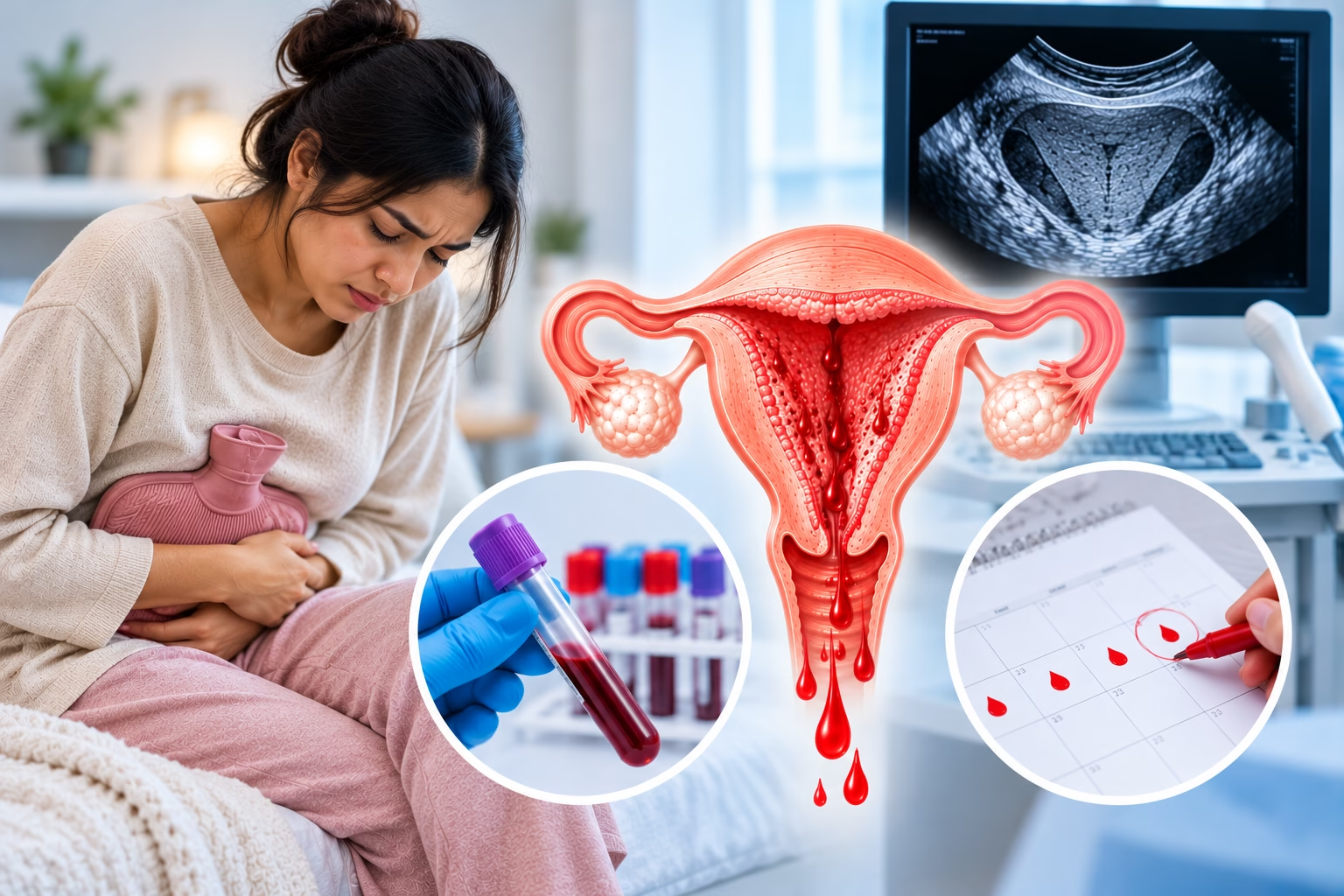
Heavy menstrual bleeding, also known as menorrhagia, is one of the most common gynecological concerns affecting women. While some variation in menstrual flow is normal, bleeding that is excessive, prolonged, or disrupts daily life should not be ignored, since it can sometimes point to an underlying condition that needs treatment.
If your periods are heavier than usual or lasting longer than normal, book your pelvic ultrasound at MVR Diagnostic Clinic to help identify the cause. Read this guide to understand heavy period causes, symptoms, the blood tests and ultrasound used in diagnosis, and treatment options.
What Are Heavy Periods?
Heavy periods are generally defined as menstrual bleeding that involves unusually large blood loss, soaking through pads or tampons more frequently than normal, passing large clots, or bleeding that lasts longer than seven days. What feels normal can vary between individuals, so the key signs are a noticeable change from your usual pattern or bleeding heavy enough to interfere with daily activities.
Heavy periods can occur as an isolated issue or alongside other symptoms such as pain, fatigue, or irregular cycles.
What Causes Heavy Periods?
There are many possible causes of heavy menstrual bleeding, ranging from hormonal imbalances to structural conditions within the uterus.
Hormonal Imbalance
An imbalance between estrogen and progesterone can cause the endometrial lining to build up excessively, leading to heavier bleeding when it sheds. This is a common cause, particularly around the start of menstruation or when approaching menopause.
Uterine Fibroids
Fibroids are noncancerous growths in the uterine wall that can significantly increase menstrual blood loss, especially when they distort the uterine cavity. Read our guide on uterine fibroids: causes, symptoms, and ultrasound findings.
Adenomyosis
When endometrial-like tissue grows into the uterine muscle, it can cause heavy and painful periods. Our guide on adenomyosis causes, symptoms, and ultrasound findings explains this condition in more detail.
Endometrial Polyps
Growths of the endometrial lining can cause irregular or heavy bleeding. An ultrasound or other assessment may be recommended to investigate suspected polyps.
Thyroid Disorders
Both an underactive and overactive thyroid can disrupt the hormonal balance needed for a regular cycle, sometimes leading to heavier bleeding.
Bleeding or Clotting Disorders
Certain inherited or acquired conditions that affect blood clotting can result in unusually heavy menstrual bleeding.
Intrauterine Devices
Some types of IUDs, particularly non-hormonal copper IUDs, can be associated with heavier periods, especially in the first few months of use.
Certain Medications
Blood-thinning medications and some other drugs can increase menstrual blood loss.
Rarely, Cancer
In a small number of cases, heavy or abnormal bleeding can be related to endometrial or cervical cancer. This is one reason why persistent or unusual bleeding should always be medically evaluated.
What Are the Risk Factors for Heavy Periods?
Certain factors may increase the likelihood of experiencing heavy periods:
- Approaching menopause, also called perimenopause
- Adolescence, when hormonal cycles are still regulating
- Obesity
- Thyroid disorders
- Family history of fibroids or bleeding disorders
- Use of certain IUDs or medications
- Previous diagnosis of fibroids, adenomyosis, or polyps
However, heavy periods can also occur in women without any of these risk factors.
What Are the Symptoms of Heavy Periods?
In addition to the bleeding itself, heavy periods can cause a range of related symptoms.
Common symptoms include:
- Soaking through a pad or tampon every hour for several hours
- Needing to use double protection to control flow
- Passing blood clots larger than a quarter
- Bleeding that lasts longer than seven days
- Needing to change protection during the night
- Restricting daily activities because of heavy flow
- Fatigue or shortness of breath, which can suggest anemia
- Pelvic pain or pressure, depending on the underlying cause
If you are noticing other changes in your cycle alongside heavy flow, our guide on abnormal menstruation and the types of irregular periods explains the different patterns worth paying attention to.
Can Heavy Periods Cause Anemia?
Yes. Losing a significant amount of blood each cycle can gradually deplete the body's iron stores, leading to iron-deficiency anemia. Symptoms of anemia can include fatigue, weakness, pale skin, dizziness, and shortness of breath.
If you have heavy periods along with any of these symptoms, your doctor may recommend blood tests to check for anemia. Learn more about the anemia profile and iron studies test.
How Are Heavy Periods Diagnosed?
Diagnosis usually starts with a detailed history of your menstrual pattern, including how often you change protection, whether you pass clots, and how the bleeding affects your daily life. This is followed by a physical examination and, often, further testing.
Common diagnostic steps include:
- Reviewing menstrual and medical history
- Pelvic examination
- Blood tests
- Pelvic ultrasound
- Further imaging or procedures in selected cases
What Blood Tests Are Used for Heavy Periods?
Blood tests play an important role in identifying the cause and effects of heavy menstrual bleeding.
Complete Blood Count (CBC)
A CBC checks for anemia caused by blood loss. Learn more in our CBC test guide.
Iron Studies and Anemia Profile
These tests assess your body's iron stores if anemia is suspected or confirmed. Explore the anemia profile and iron studies test.
Thyroid Function Test
This test checks whether a thyroid disorder may be contributing to your symptoms. Read about the thyroid function test.
Women's Health Profile
Hormone testing may form part of an assessment of hormonal balance. Learn more about the women's health profile blood test.
Coagulation or clotting studies may also be recommended in selected cases if a bleeding disorder is suspected. Your doctor will determine which tests are appropriate for your symptoms and medical history.
Why Is Ultrasound Used for Heavy Periods?
Pelvic ultrasound, often including a transvaginal ultrasound for more detailed imaging, is commonly used to look for structural causes of heavy bleeding. It does not use ionizing radiation and provides images of the uterus, endometrial lining, and ovaries.
Ultrasound can help identify:
- Uterine fibroids and their size and location
- Signs of adenomyosis
- Endometrial polyps
- Endometrial thickening
- Ovarian cysts or other abnormalities
Explore our ultrasound services to learn more about available scans.
What Does Ultrasound Show in Heavy Periods?
Ultrasound findings vary depending on the underlying cause.
Fibroids
Fibroids typically appear as well-defined, rounded masses within the uterine wall. Their size and location can help the doctor assess whether they may contribute to bleeding.
Adenomyosis
Adenomyosis often shows diffuse thickening of the uterine wall with small cyst-like areas.
Polyps
Polyps may appear as a focal thickened area or a well-defined mass within the uterine cavity.
Thickened Endometrial Lining
A thickened endometrial lining may be seen in women with hormonal imbalance. Our guide on thickened uterine lining explains possible causes and assessment.
Normal Ultrasound Findings
A structurally normal uterus can also be seen. In such cases, a hormonal or systemic cause may be more likely, depending on the clinical assessment.
What Other Tests May Be Needed?
Depending on your symptoms and initial findings, your doctor may recommend:
- Saline infusion sonohysterography: Provides a more detailed view of the uterine cavity.
- Endometrial biopsy: May be recommended for women with risk factors for endometrial cancer or those approaching or past menopause.
- Hysteroscopy: Allows a doctor to directly visualize the inside of the uterus.
What Is the Treatment for Heavy Periods?
Treatment depends on the underlying cause, your age, whether you want to preserve fertility, and the severity of your symptoms.
Medication
- Hormonal treatments, such as certain birth control methods, to help regulate bleeding
- Tranexamic acid to reduce blood loss during periods
- Anti-inflammatory medication to help with pain and reduce flow
- Iron supplements if anemia is present
Treating the Underlying Cause
If a specific cause such as fibroids, polyps, adenomyosis, or a thyroid disorder is identified, treatment is directed at that condition.
Minimally Invasive Procedures
In some cases, procedures that target the uterine lining or a specific fibroid may be recommended to reduce bleeding.
Surgical Options
For severe or persistent cases that do not respond to other treatments, surgical options, including hysterectomy, may be considered, depending on individual circumstances and future fertility plans.
When Should You Worry About Heavy Periods?
Seek prompt medical evaluation if you have:
- Bleeding that soaks through protection every hour for several consecutive hours
- Signs of anemia, such as severe fatigue, dizziness, or shortness of breath
- Bleeding lasting significantly longer than usual
- Bleeding after menopause
- Severe pelvic pain alongside heavy bleeding
When Should You See a Doctor?
See a doctor if you experience:
- A noticeable change in your usual bleeding pattern
- Heavy bleeding that restricts your daily activities
- Passing large blood clots regularly
- Fatigue or other symptoms of anemia
- Heavy periods along with pelvic pain or pressure
Early evaluation can help identify the cause of heavy bleeding and guide appropriate treatment.
Get Your Blood Tests and Pelvic Ultrasound at MVR Diagnostic Clinic in Dubai
At MVR Diagnostic Clinic in Al Garhoud, Dubai, pelvic and transvaginal ultrasounds are performed by experienced professionals. Women's health blood tests are also available, with reports reviewed by DHA-licensed consultant radiologists and delivered digitally within 24 hours.
Book your pelvic ultrasound or blood test at MVR Diagnostic Clinic to investigate your symptoms.
Book a Pelvic Ultrasound Explore Blood Tests All Ultrasound Services Book on WhatsAppFrequently Asked Questions
What is considered a heavy period?
A heavy period generally involves soaking through pads or tampons every hour for several hours, passing large clots, or bleeding that lasts longer than seven days. Any significant change from your usual pattern is also worth evaluating.
What blood tests are done for heavy periods?
Common tests include a complete blood count to check for anemia, iron studies, thyroid function tests, and hormone levels. Clotting studies may be added in selected cases.
Can heavy periods cause anemia?
Yes. Significant blood loss over repeated cycles can lead to iron-deficiency anemia, causing fatigue, weakness, and other symptoms.
Is an ultrasound needed for heavy periods?
Ultrasound is often recommended to check for structural causes such as fibroids, adenomyosis, or polyps, especially if bleeding is persistent, severe, or associated with pain.
What is the main cause of heavy periods?
Hormonal imbalance is one of the common causes, but structural conditions such as fibroids, adenomyosis, and polyps are also frequent causes, particularly in women over 30.
When should I see a doctor for heavy periods?
See a doctor if your bleeding pattern changes noticeably, restricts your daily activities, causes symptoms of anemia, or is accompanied by pelvic pain.