

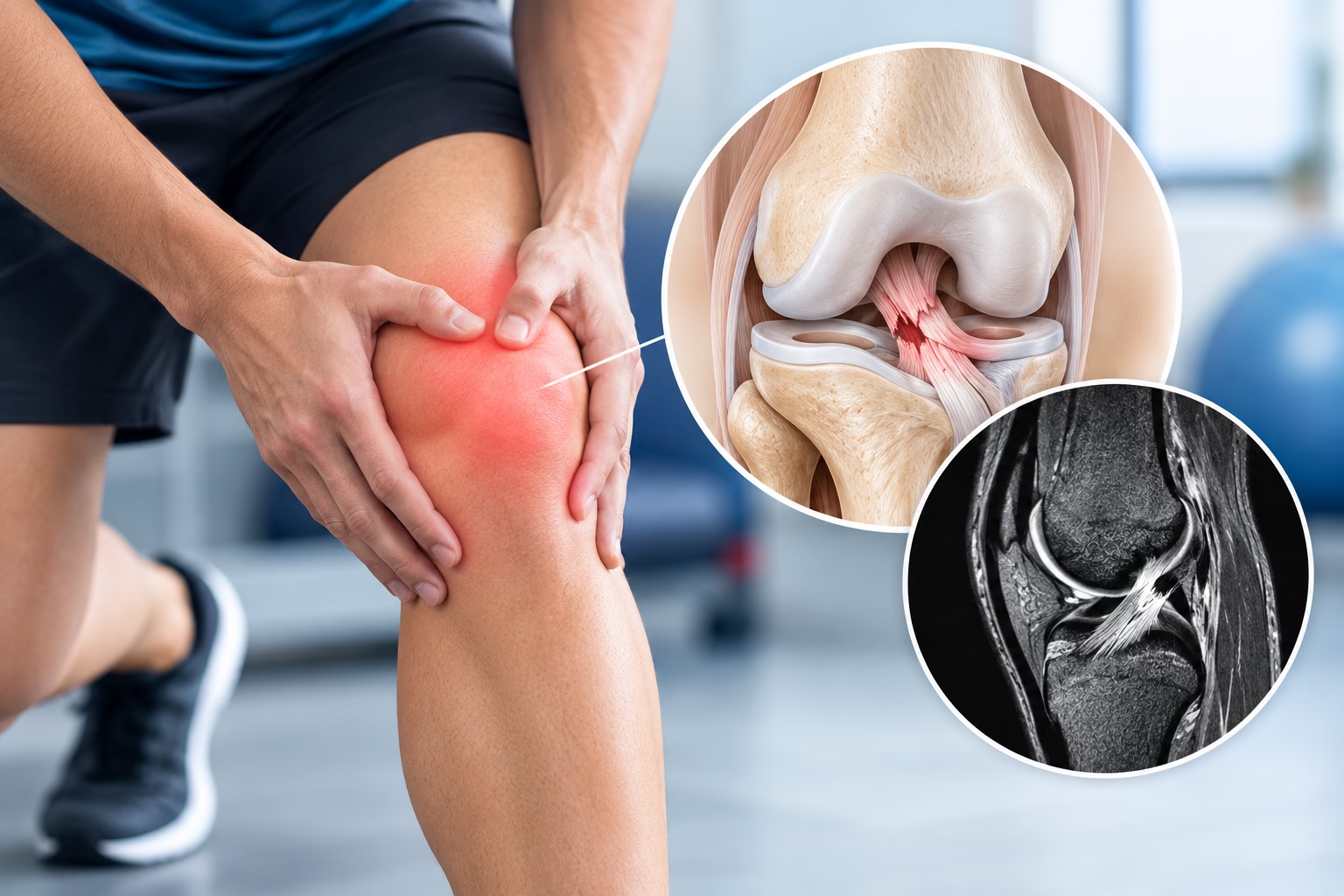
An ACL tear is one of the most common serious knee injuries, particularly among people who participate in sports involving running, jumping, sudden stops, or changes in direction. However, an ACL injury can also happen during a fall, road accident, or everyday activity.
A torn ACL may cause a sudden popping sensation, pain, swelling, and difficulty putting weight on the affected leg. In some cases, the knee may continue to feel unstable even after the initial pain improves. Read this guide to know more about ACL tear causes, symptoms, MRI findings, diagnosis, treatment, and recovery.
If you have recently injured your knee and are experiencing pain, swelling, or instability, book your knee MRI to help assess possible ligament, meniscus, or other soft-tissue injuries.
Book Your Knee MRIThe anterior cruciate ligament, commonly called the ACL, is one of the major ligaments inside the knee. It connects the thigh bone, or femur, to the shin bone, or tibia. Along with other structures in the knee, the ACL helps maintain stability and controls excessive forward movement and rotation of the tibia. An ACL tear occurs when the ligament is overstretched or damaged.
The injury can range from:
A mild injury in which the ligament is stretched but remains intact.
Part of the ACL is damaged while some normal ligament fibers remain.
The ACL is completely ruptured and may significantly affect knee stability.
A complete rupture can significantly affect knee stability, particularly during movements that involve turning or changing direction.
ACL injuries commonly occur when the knee is exposed to a sudden force or movement.
Rapidly changing direction while running can place considerable stress on the ACL. This is particularly common in sports such as:
Stopping suddenly while running can cause the knee to rotate or move in a way that places excessive stress on the ligament.
Landing from a jump with the knee in an unfavorable position can result in an ACL injury.
A strong blow to the knee can also damage the ACL, particularly when other structures around the knee are affected at the same time.
ACL tears are not limited to athletes. Falls, cycling accidents, road traffic accidents, and other traumatic injuries can also damage the ligament.
Certain factors may increase the likelihood of an ACL injury. These include:
However, an ACL tear can happen even when there are no obvious risk factors.
Symptoms can appear immediately after the injury or become more noticeable over the following hours. Common symptoms include:
The severity of symptoms does not always indicate the extent of the ligament injury. Some people with significant ACL injuries may experience less pain after the initial injury but continue to have instability.
Many people describe an ACL injury as a sudden event rather than gradual knee pain. You may feel or hear a pop at the moment of injury. The knee may then become painful and swollen, sometimes quite quickly.
After the initial swelling decreases, you may notice that the knee feels unstable, especially when:
Persistent instability after a knee injury should be assessed rather than ignored.
Rapid swelling after a knee injury can occur because of bleeding inside the joint, known as a hemarthrosis. Significant swelling within a few hours of an injury can be an important clinical finding, although it does not by itself confirm an ACL tear.
Other knee injuries, including certain fractures or meniscal injuries, can also cause swelling.
Some people can walk after an ACL tear, particularly once the initial pain and swelling settle. Being able to walk does not mean that the ACL is intact.
A complete ACL tear can sometimes allow normal walking on flat surfaces while causing instability during running, pivoting, jumping, or sports activities.
If you have ongoing instability after a knee injury, medical assessment and appropriate imaging may be recommended.
Diagnosis usually starts with a medical history and physical examination. A doctor may ask:
How the injury happened.
Whether you heard or felt a pop.
How quickly swelling developed.
Whether you can put weight on the leg.
Whether the knee feels unstable.
Whether you have had previous knee injuries.
During examination, the doctor may perform specific tests to assess knee stability and determine whether the ACL or other structures may be injured. Imaging may then be recommended depending on the clinical findings.
An X-ray does not usually show the ACL itself because ligaments are soft tissues. However, an X-ray can be useful after a knee injury to check for fractures, dislocations, or certain bone abnormalities.
If a ligament injury is suspected, an MRI may provide much more detailed information about the soft tissues of the knee.
MRI is one of the most useful imaging tests for evaluating suspected ACL injuries. It provides detailed images of the knee's soft tissues and can help assess:
An MRI can therefore help determine not only whether the ACL is injured but also whether other structures were damaged at the same time.
For more on how MRI is used to evaluate ongoing knee and joint pain, see our guide on persistent joint pain and MRI .
The MRI appearance depends on whether the injury is partial or complete and how recently it occurred.
A partially torn ACL may show:
The ligament may still retain some of its normal fibers.
A complete rupture may show:
MRI findings should always be interpreted together with the clinical examination.
An ACL injury may occur together with damage to other knee structures. MRI can help identify associated injuries involving:
Meniscal tears are relatively common alongside ACL injuries and can contribute to pain, locking, or catching.
Read more in our guide on meniscus tear causes, symptoms and MRI findings .
Bone marrow edema or bone bruising can occur following the force that caused the ACL injury.
The medial collateral ligament and other supporting structures may also be injured, particularly after significant trauma.
Articular cartilage damage may occur in some knee injuries and can be important when planning treatment.
MRI can show excess fluid within the knee joint. This ability to evaluate multiple structures is one reason MRI can be valuable when a significant knee injury is suspected.
ACL and meniscus injuries can cause overlapping symptoms, but they involve different structures.
| Feature | ACL Tear | Meniscus Tear |
|---|---|---|
| Structure injured | Ligament | Cartilage-like structure |
| Common mechanism | Pivoting, sudden stopping, awkward landing | Twisting or forceful rotation |
| Popping sensation | Can occur | Can occur |
| Swelling | Often develops rapidly | May occur |
| Instability | Common with significant ACL injury | Less typical |
| Locking/catching | Possible with associated injury | More characteristic |
| MRI | Useful | Useful |
Some patients have both an ACL tear and a meniscus injury , which is why a complete assessment of the knee can be important.
Treatment depends on several factors, including:
Treatment generally falls into two broad categories: non-surgical management and surgical reconstruction.
Not every ACL injury requires surgery. Non-surgical treatment may be considered for selected people, particularly those who have good knee stability and do not participate in activities requiring frequent pivoting.
Reducing activities that worsen pain or instability can help during the early stages of recovery.
A structured rehabilitation program can help improve knee movement, muscle strength, balance, stability, and functional ability. Physiotherapy may be important whether or not surgery is eventually required.
Your doctor may recommend appropriate measures to manage pain and swelling.
A knee brace may sometimes be recommended depending on the injury and level of instability.
ACL reconstruction may be considered when the knee remains unstable or when a person wants to return to sports involving pivoting and rapid direction changes. Surgery may also be considered when an ACL tear occurs alongside significant injuries to other knee structures.
ACL reconstruction generally involves replacing the damaged ligament with a graft. The decision is individualized and should be discussed with an orthopedic specialist.
The ACL has limited healing capacity compared with some other tissues. Some partial injuries may be managed without surgery and can become functionally stable with rehabilitation.
A completely ruptured ACL does not reliably return to its original structure and function without reconstruction. Whether surgery is needed depends on the individual's symptoms, stability, activity level, and associated injuries.
Recovery varies significantly depending on the severity of the injury and the treatment approach. For people undergoing ACL reconstruction, rehabilitation commonly takes several months and involves progressive strengthening, mobility, balance, and sport-specific training.
Returning to high-demand sports should not be based only on the passage of time. Strength, movement control, knee stability, and functional recovery are important considerations. Your orthopedic and rehabilitation team can provide individualized guidance.
It depends on the injury and the type of exercise. High-impact activities involving pivoting, jumping, or rapid direction changes may increase the risk of instability or further injury.
A physiotherapist or orthopedic specialist can recommend exercises appropriate for your stage of recovery. Do not return to competitive sports simply because pain has improved.
The consequences vary. Some people can function well without surgical reconstruction, particularly if the knee remains stable and their activities do not place high demands on the ACL.
For others, ongoing instability can make certain activities difficult and may contribute to repeated episodes of the knee giving way. Recurrent instability can also be associated with additional damage to structures such as the menisci and cartilage.
This is why persistent instability after an ACL injury deserves proper assessment.
MRI may be considered when there is a significant knee injury or when symptoms persist despite initial treatment. Your doctor may recommend MRI when there is:
When an ACL injury is suspected after trauma.
When knee pain continues without adequate improvement.
Especially when swelling occurs after an injury.
When the knee repeatedly feels unstable or gives way.
When a meniscal injury is suspected.
When the knee cannot move normally.
When the knee catches or locks during movement.
When cartilage damage needs evaluation.
When symptoms continue despite conservative treatment.
If your knee pain continues without a clear cause, read our guide on persistent joint pain and when an MRI may help to understand when further imaging may be considered.
Preparation depends on whether contrast is required and on the specific MRI protocol.
Before the examination, tell the MRI team if you:
Remove metal objects such as jewellery, watches, and other items as instructed.
If contrast is planned, our guide on MRI contrast agent safety explains what to expect and follow the preparation instructions provided by the imaging center.
You will usually lie on your back on the MRI table, with the affected knee positioned appropriately. The table moves into the MRI scanner, and images are obtained using a dedicated knee coil.
The scan involves loud knocking or tapping sounds, so hearing protection is generally provided. It is important to remain still during the examination because movement can reduce image quality.
A knee MRI is non-invasive and does not use ionizing radiation.
If you are wondering how long the examination takes, read our guide on how long a knee MRI takes to understand the typical scan time and what you can expect during the procedure.
Seek medical assessment if you experience:
Prompt assessment can help determine whether the ACL or another knee structure has been injured.
An ACL tear can affect knee stability, movement, exercise, and sports participation. While symptoms such as swelling, pain, and a popping sensation can raise suspicion, they do not confirm the diagnosis on their own.
A clinical examination can assess knee stability, while MRI can provide detailed information about the ACL and associated injuries involving the menisci, cartilage, ligaments, and bone.
If you have persistent knee pain, swelling, or instability after an injury, book your knee MRI at MVR Diagnostic Clinic or explore our full range of MRI scan services in Dubai.
Book Your Knee MRIA popping sensation at the time of injury followed by rapid swelling, pain, and knee instability are common features of an ACL injury.
Yes. MRI can provide detailed images of the ACL and help identify partial or complete tears as well as associated injuries.
Yes. Some people can walk after an ACL tear, particularly once the initial pain and swelling improve. However, walking normally does not rule out an ACL injury.
No. Some people can be managed without surgery through rehabilitation and activity modification. Surgery may be considered when there is significant instability, a high demand for pivoting activities, or associated knee injuries.
Recovery depends on the severity of the injury and the treatment approach. Recovery following ACL reconstruction commonly requires several months of structured rehabilitation.
Some partial ACL injuries may be managed successfully without surgery. A completely ruptured ACL does not reliably restore its original structure and function without reconstruction.
No, but rapid swelling after a knee injury is a common feature of significant internal knee injuries, including ACL tears.
WhatsApp us