

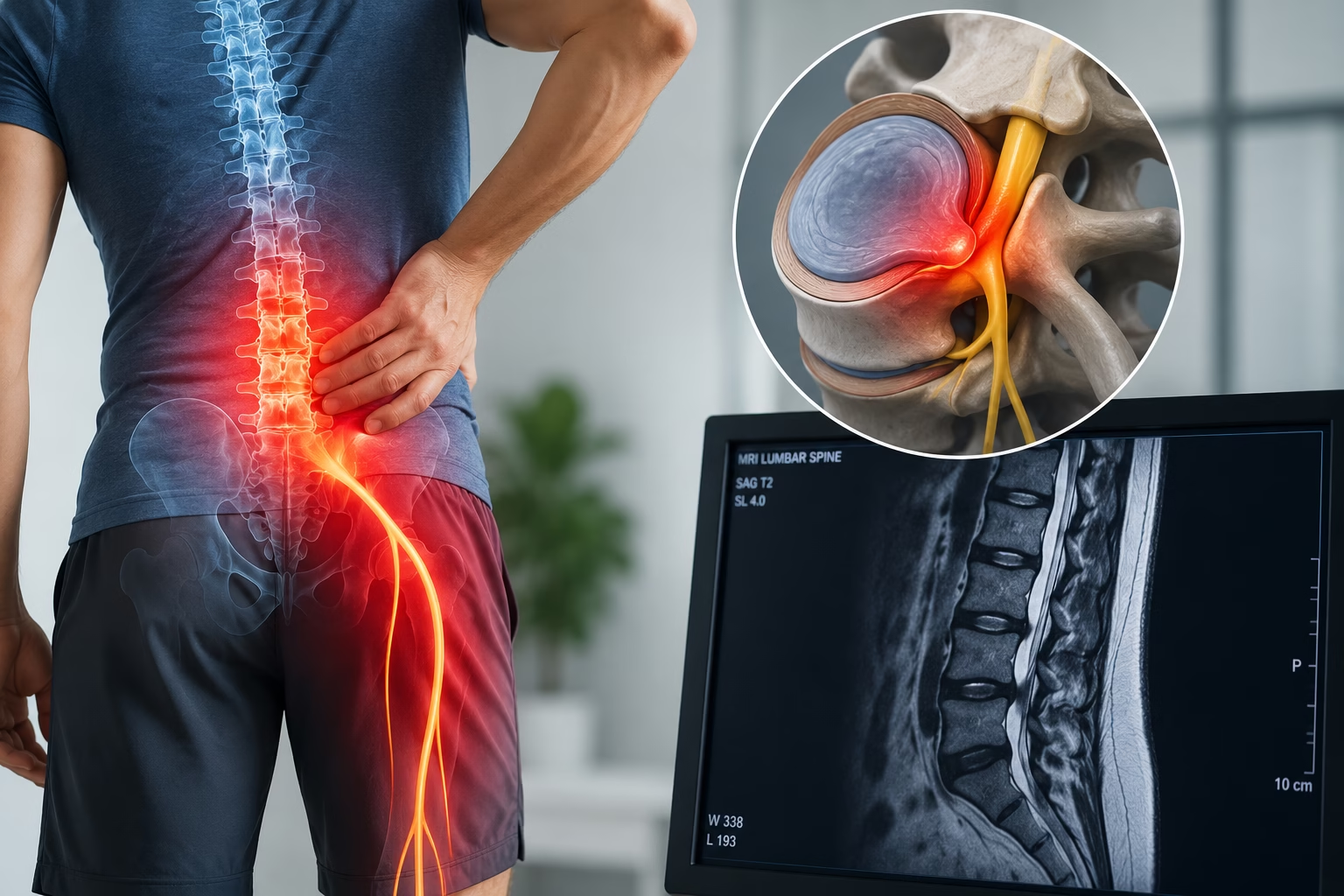
Sciatica can cause sharp, burning, or shooting pain that travels from the lower back into the buttock and down the leg. For some people, it is temporary and improves with conservative care. For others, persistent pain, numbness, tingling, or weakness may indicate irritation or compression of a spinal nerve that needs further evaluation.
If your pain is persistent, travels down your leg, or is accompanied by numbness or weakness, contact MVR Diagnostic Clinic to discuss whether spinal imaging such as an MRI may be appropriate for your symptoms.
Sciatica is a group of symptoms caused by irritation or compression of the sciatic nerve or the nerve roots that form it. The sciatic nerve is the largest nerve in the body. It runs from the lower back through the buttocks and into the leg.
Sciatica typically affects one side of the body. The pain may begin in the lower back or buttock and travel down the back or side of the thigh and leg. The term "sciatica" describes the symptoms rather than one specific disease. Several spinal conditions can irritate the nerves responsible for sciatic pain.
Sciatic symptoms may begin in the lower back or buttock.
Pain can travel down the thigh, leg, and sometimes into the foot or toes.
Irritation or compression of a spinal nerve can cause sciatic symptoms.
Several conditions can place pressure on or irritate the nerves in the lower spine.
A herniated or slipped disc is one of the common causes of sciatica. The discs between the vertebrae act as cushions. If the inner material pushes through a weakened or damaged outer layer, it can irritate a nearby nerve root. This may cause pain that travels from the lower back into the buttock and leg.
Spinal stenosis occurs when spaces within the spine become narrower, potentially putting pressure on the spinal nerves. It becomes more common with age and may cause leg pain, numbness, weakness, or discomfort that becomes worse with standing or walking.
As the spine ages, the discs can lose height and flexibility. These changes may contribute to narrowing around the nerves and can sometimes play a role in sciatica symptoms.
Spondylolisthesis occurs when one vertebra shifts forward or backward relative to another. In some cases, this can narrow the spaces through which nerves pass and contribute to nerve compression.
Trauma from a fall, accident, or other injury can affect the spine and surrounding structures. Depending on the injury, nerve irritation or compression may develop.
Disc material can irritate or compress a nearby spinal nerve.
Narrowing of spaces in the spine can place pressure on spinal nerves.
Age-related disc changes may contribute to narrowing around the nerves.
A vertebra shifting relative to another can sometimes contribute to nerve compression.
Trauma can affect spinal structures and potentially irritate or compress nerves.
Sciatica symptoms can vary from mild discomfort to severe pain.
Common symptoms include:
Sciatica usually affects one side, although symptoms can occasionally occur on both sides depending on the underlying spinal problem.
Sciatic pain often follows the path of the affected nerve.
It may be felt in:
The exact location depends on which nerve root is affected.
Some people mainly experience leg pain rather than significant lower back pain. Others have both back and leg symptoms.
People describe sciatica in different ways.
It may feel like:
Certain movements, prolonged sitting, coughing, or sneezing may make symptoms worse in some people. The pattern of symptoms can provide useful information during a clinical assessment, but symptoms alone cannot always identify the exact cause.
Yes. When a spinal nerve is significantly irritated or compressed, it can affect both sensation and muscle function.
You may notice:
Progressive weakness should not be ignored because it may indicate more significant nerve compression.
Sciatica and general lower back pain are not the same.
Typical back pain may remain around the lower back and may be related to muscles, joints, discs, posture, or other structures.
Sciatica generally involves symptoms that extend from the lower back or buttock into the leg because of irritation or compression involving the sciatic nerve pathway.
If your back pain is accompanied by shooting leg pain, numbness, tingling, or weakness, medical assessment may help determine whether a nerve-related problem is involved.
For a broader look at the causes and diagnosis of back pain, read MVR's Back Pain: Reasons & Diagnosis guide.
| Feature | Sciatica | General Back Pain |
|---|---|---|
| Main Area | Lower back or buttock with pain extending into the leg | Often remains around the lower back |
| Nerve Symptoms | Numbness, tingling, or weakness may occur | Usually does not involve a nerve-related pattern |
| Pain Pattern | May travel down the leg | May remain localized to the back |
| Possible Causes | Disc problems, spinal stenosis, or other nerve compression | Muscle, joint, disc, posture, or other causes |
Diagnosis usually begins with a medical history and physical examination.
A doctor may ask about:
A physical examination may include checking muscle strength, reflexes, sensation, walking ability, and certain movements that can reproduce nerve-related symptoms. Imaging is not required for every case of sciatica. It may be considered when symptoms persist, are severe, worsen, or suggest a more significant underlying condition.
An MRI may be recommended when a doctor needs detailed information about the spine, discs, nerves, or surrounding soft tissues.
It may be considered when:
If your doctor recommends imaging to investigate persistent sciatica, a spine MRI scan can provide detailed images of the discs, nerves, and other structures in the lumbar spine.
Symptoms continue despite an initial period of conservative treatment.
Pain, numbness, or other symptoms become more severe.
New or progressive muscle weakness may require further evaluation.
MRI can provide detailed images of discs and nearby nerve structures.
MRI can help assess narrowing of the spinal canal and nerve pathways.
Imaging may be needed when surgery or another intervention is being considered.
An MRI can provide detailed images of the lumbar spine and surrounding soft tissues.
Depending on the underlying cause, MRI may show:
MRI is particularly useful because it provides detailed images of soft tissues that may not be adequately assessed with an X-ray.
A herniated disc may appear as disc material extending beyond its normal boundaries. The radiologist assesses the disc and its relationship with nearby nerve structures. The report may describe the location of the disc abnormality and whether there is narrowing or nerve compression.
Importantly, not every disc bulge or herniation causes symptoms. MRI findings need to be interpreted alongside your symptoms and physical examination.
MRI can identify structural causes that may be responsible for sciatic symptoms, such as a herniated disc or nerve compression. However, an MRI does not diagnose the symptom of sciatica by itself.
A healthcare professional considers the MRI findings together with your symptoms and examination. Some people can have disc abnormalities on MRI without experiencing pain, while others may have significant symptoms despite relatively subtle imaging findings.
X-rays and MRI provide different types of information.
X-rays are useful for evaluating bones and overall spinal alignment. They can help identify certain fractures, degenerative changes, and structural abnormalities.
However, they do not provide the same level of detail about discs and nerves.
MRI provides detailed images of:
For suspected nerve compression or disc-related sciatica, MRI can provide information that an X-ray cannot.
| Feature | X-Ray | MRI |
|---|---|---|
| Bones | Useful for assessing bones and alignment | Also provides information about bone and bone marrow |
| Discs | Limited assessment | Detailed assessment |
| Nerves | Limited information | Detailed assessment of nerve structures and compression |
| Soft Tissues | Limited detail | Provides detailed soft-tissue images |
Treatment depends on the underlying cause, severity of symptoms, and whether there is nerve weakness or another complication. Many cases are initially managed without surgery.
A physiotherapist may recommend targeted exercises to improve mobility, strength, flexibility, and spinal support. The exercises should be appropriate for the underlying condition and individual symptoms.
Doctors may recommend medication to manage pain and inflammation. The appropriate medicine depends on your medical history and other factors. It is important not to take prescription or high-dose medication without medical advice.
Depending on the cause and severity of symptoms, temporarily modifying activities that aggravate the pain may help. However, prolonged bed rest is generally not recommended for uncomplicated back pain and sciatica.
For selected patients with persistent symptoms, a doctor may consider an injection around an irritated nerve or other targeted treatment. Whether this is appropriate depends on the diagnosis and response to other treatments.
Surgery is not required for most people with sciatica. It may be considered when there is significant or progressive neurological weakness, persistent severe symptoms despite appropriate conservative treatment, or a structural problem that requires surgical correction.
Exercises may help improve mobility, strength, flexibility, and support.
Medication may be recommended by a doctor to help manage pain and inflammation.
Temporarily modifying activities that aggravate symptoms may help recovery.
Selected patients may be considered for targeted injections.
Surgery may be considered in selected cases involving significant neurological problems or persistent severe symptoms.
The recovery period varies significantly. Some people improve within a few weeks with conservative treatment, while others experience symptoms for longer.
Recovery depends on the underlying cause, severity of nerve irritation, general health, and response to treatment. Persistent or worsening symptoms should be reassessed rather than simply waiting for them to disappear.
You should consider medical evaluation if:
Persistent joint and musculoskeletal pain may require more detailed imaging when an underlying structural problem is suspected. MVR's Persistent Joint Pain: When Is an MRI Necessary? guide explains when MRI may be considered for ongoing pain.
Most cases of sciatica are not emergencies. However, certain symptoms require immediate medical assessment.
Seek urgent medical attention if you develop:
These symptoms can indicate serious nerve compression and should not be ignored.
It is not always possible to prevent sciatica because some causes are related to spinal degeneration, disc problems, or injuries.
However, several habits may support spinal health:
These measures cannot guarantee that sciatica will not occur, but they may support overall spine health.
If an MRI identifies a disc problem, nerve compression, or another spinal abnormality, your doctor can compare the findings with your symptoms and examination.
Depending on the results, you may be referred for:
The purpose of imaging is not simply to find an abnormality. It is to help explain the symptoms and guide appropriate treatment.
Sciatica can result from several spinal conditions, and the symptoms can range from mild leg discomfort to significant pain, numbness, or weakness. While many cases improve with conservative treatment, persistent or worsening symptoms may require further evaluation.
MRI can provide detailed images of the lumbar spine, discs, and nerves when a doctor suspects conditions such as disc herniation or nerve compression. MVR offers dedicated spine MRI imaging, including lumbar spine MRI for sciatica and nerve compression.
If your sciatica is persistent, worsening, or associated with numbness or weakness, contact MVR Diagnostic Clinic to discuss your symptoms and whether an MRI may be appropriate.
Contact MVR Diagnostic ClinicA herniated disc is one of the common causes of sciatica. Other causes include spinal stenosis, degenerative spinal changes, spondylolisthesis, and certain spinal injuries.
MRI is particularly useful when a doctor needs detailed images of the spinal discs, nerves, and other soft tissues. It is not required for every case of sciatica, and the decision depends on symptoms and clinical findings.
Yes, some cases improve with time and conservative treatment. However, persistent, worsening, or neurological symptoms should be assessed by a healthcare professional.
Severe or prolonged nerve compression can potentially cause lasting neurological problems. Progressive weakness, significant numbness, or bladder and bowel changes require urgent medical evaluation.
There is no single waiting period that applies to everyone. MRI may be recommended earlier when there are neurological deficits, red-flag symptoms, significant trauma, or other concerning findings. For uncomplicated symptoms, doctors may initially recommend conservative treatment and reassessment.
WhatsApp us