

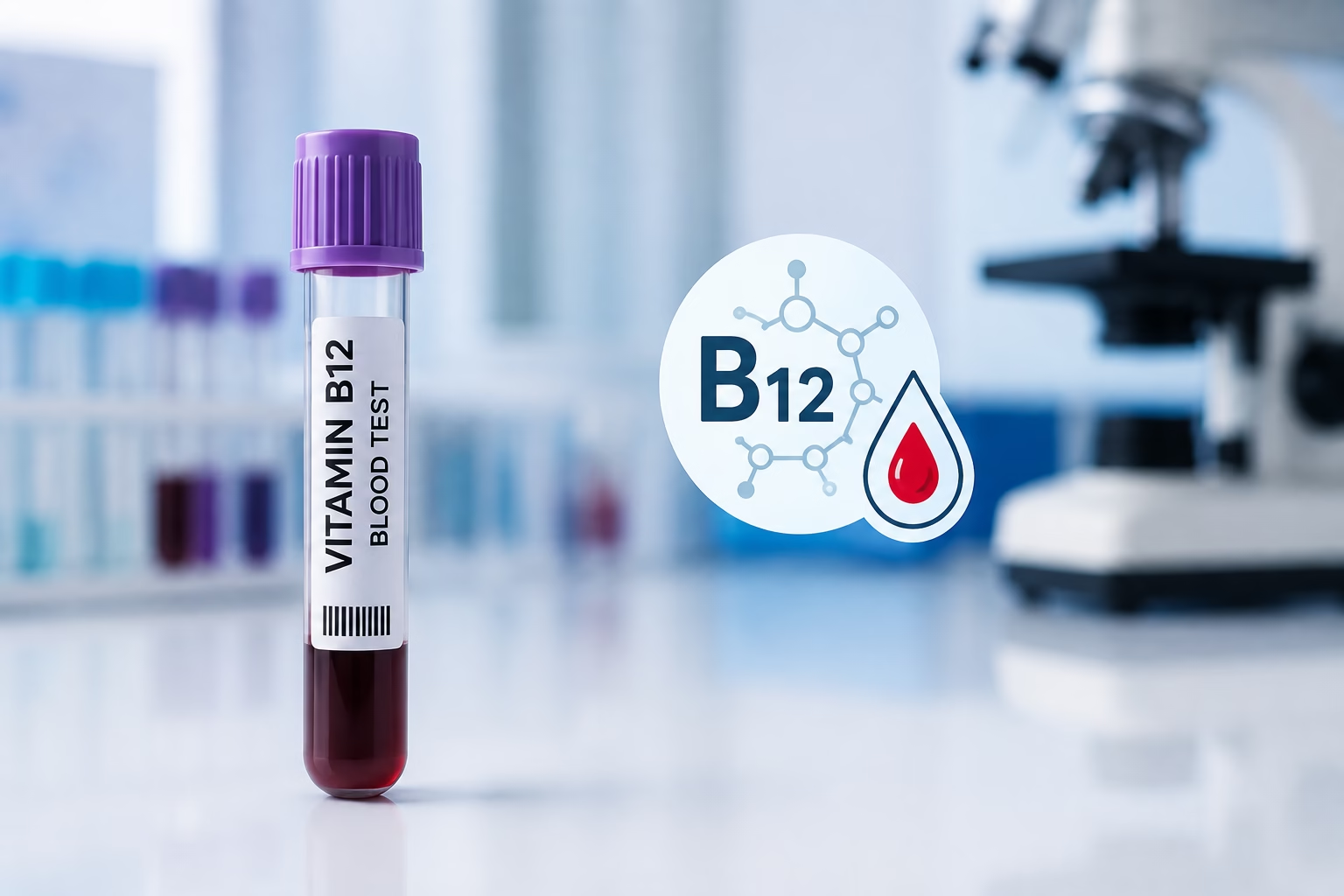
Feeling tired, weak, dizzy, or experiencing tingling in your hands and feet can have many possible causes. One of them is vitamin B12 deficiency, which can affect red blood cell production and the nervous system. Because the symptoms can overlap with anemia and other health conditions, a vitamin B12 blood test can help determine whether your B12 level is low.
If you are experiencing persistent symptoms or want to check your vitamin levels, contact MVR Diagnostic Clinic to discuss your requirements and book an appropriate blood test.
Vitamin B12 is an essential nutrient that the body needs for healthy red blood cells, DNA production, and normal nerve function.
The body cannot produce vitamin B12 on its own, so it must be obtained through food or supplements. Vitamin B12 is naturally found in foods such as meat, fish, eggs, milk, and other animal-derived foods, while some plant-based foods are fortified with the vitamin.
When the body does not receive enough B12 or cannot absorb it properly, deficiency can develop.
B12 deficiency can eventually contribute to megaloblastic anemia and neurological problems. Importantly, nerve-related symptoms can occur even when anemia is not present.
Vitamin B12 supports normal red blood cell production.
It plays an important role in maintaining normal nervous system function.
Vitamin B12 is required for normal DNA production in the body.
Vitamin B12 deficiency is not always caused by simply eating too little B12. Problems with absorption are also an important cause.
People who follow a strict vegetarian or vegan diet may have a higher risk because naturally occurring vitamin B12 is mainly found in animal-derived foods.
However, dietary deficiency is only one possible cause.
The digestive system needs to absorb vitamin B12 effectively. Conditions affecting the stomach or small intestine can interfere with this process.
Examples include:
Intrinsic factor is a protein produced in the stomach that helps the body absorb vitamin B12. Problems producing or using intrinsic factor can therefore lead to deficiency.
Long-term use of some medicines can affect vitamin B12 absorption.
These include certain medicines used for diabetes, such as metformin, and some medicines used to reduce stomach acid. The risk depends on the medication, dose, duration, and individual circumstances.
Surgery involving the stomach or small intestine can sometimes affect the body's ability to absorb vitamin B12.
This can be particularly relevant after certain weight-loss procedures or other surgeries involving parts of the digestive system.
Vitamin B12 is naturally present mainly in animal-based foods. Including a variety of B12-containing foods in your diet can help support adequate intake, although people with absorption problems may still develop a deficiency even when their diet contains enough B12.
Good dietary sources of vitamin B12 include:
For people following a vegetarian or vegan diet, naturally occurring B12 can be more difficult to obtain. Fortified foods or supplements may therefore be recommended depending on individual dietary needs.
Vitamin B12 deficiency can develop gradually, and some people may have no obvious symptoms initially.
Common symptoms can include:
Vitamin B12 deficiency can also affect the nervous system. Possible neurological symptoms include:
Some neurological complications can become long-lasting if a deficiency remains untreated.
Persistent tiredness and weakness may occur, particularly when anemia develops.
Tingling, numbness, balance problems, and difficulty walking can occur.
Memory and concentration difficulties may occur in some people.
Pale skin, dizziness, headaches, and shortness of breath may occur with anemia.
A sore or smooth tongue and loss of appetite may occur.
Heart palpitations, mood changes, and vision changes may occur.
Yes, vitamin B12 deficiency can contribute to fatigue and weakness, particularly when it causes anemia.
However, fatigue is a very common symptom and can result from many other conditions, including iron deficiency, thyroid disorders, sleep problems, infections, chronic illnesses, and other nutritional deficiencies.
This means fatigue alone cannot confirm vitamin B12 deficiency.
If your tiredness is persistent or accompanied by weakness, dizziness, pale skin, or neurological symptoms, discussing appropriate blood testing with a healthcare professional may be useful.
For another possible cause of persistent fatigue and weakness, you can read MVR's guide to Persistent Fatigue and Weakness: Anemia Profile Test .
Some people have a higher likelihood of developing vitamin B12 deficiency.
Risk factors can include:
Having a risk factor does not necessarily mean that you have a deficiency. Testing should be considered alongside symptoms and clinical history. NICE recommends considering testing when a person has symptoms or signs suggestive of B12 deficiency together with relevant risk factors.
A vitamin B12 blood test measures the amount of vitamin B12 in your blood.
It is one of the tests that may be used when vitamin B12 deficiency is suspected.
Depending on your symptoms and medical history, your doctor may also recommend other tests. These can include a complete blood count to look for anemia or changes in red blood cells and, in some situations, additional markers such as methylmalonic acid or homocysteine.
There is no single test that provides the answer in every situation.
A serum vitamin B12 test is commonly used as an initial assessment.
The interpretation depends on the laboratory's reference range and the individual's symptoms and clinical situation. Different laboratories may use different methods and reference intervals.
A CBC can help identify anemia and changes in red blood cells that may occur with B12 deficiency.
However, B12 deficiency can sometimes occur without obvious anemia, so a normal CBC does not necessarily rule it out.
Methylmalonic acid, or MMA, may be useful when the B12 result is borderline or does not clearly match the clinical picture.
NICE notes that total B12 or active B12 can be used as initial tests, while additional biomarkers may be considered in situations where the diagnosis remains uncertain.
Homocysteine can also be affected by vitamin B12 status. However, it can be influenced by other factors, so it is not interpreted in isolation.
Commonly used as an initial assessment of B12 status.
Can help identify anemia and red blood cell changes.
May provide additional information when the B12 result is uncertain.
Can be affected by B12 status but is interpreted alongside other findings.
There is no single universal number that applies to every laboratory.
Reference ranges can vary depending on the testing method and laboratory. A result that appears borderline may also need to be interpreted alongside symptoms and other blood tests.
For example, NIH guidance notes that many laboratories consider serum B12 values below approximately 200 to 250 pg/mL to be subnormal, but laboratory-specific ranges and the clinical situation matter.
If your report shows a low or borderline B12 result, do not self-diagnose based on the number alone. Your healthcare provider can determine whether additional testing is needed.
Yes.
Vitamin B12 is necessary for normal red blood cell production. A significant deficiency can result in megaloblastic anemia, where red blood cells become abnormally large and do not develop normally.
This can cause symptoms such as:
However, not everyone with B12 deficiency develops anemia.
This is one reason why persistent fatigue should not automatically be assumed to be caused by anemia. A broader evaluation may be needed.
You may want to discuss B12 testing with a healthcare professional if you have symptoms such as:
Testing may also be considered if you have risk factors for deficiency, such as a restrictive diet, gastrointestinal disease, previous gastrointestinal surgery, or long-term use of certain medications.
The test requires a blood sample collected from a vein, usually from the arm.
The sample is sent to the laboratory for analysis. Depending on the reason for testing, your doctor may request B12 alone or combine it with other blood tests.
MVR provides laboratory blood testing using professional sample collection and laboratory processing. Its current blood-test service includes vitamin B12 testing among its preventive health investigations.
Fasting requirements can depend on whether vitamin B12 is being tested alone or as part of a broader blood-test panel.
If other tests are being performed at the same appointment, such as glucose or lipid testing, fasting may be recommended for those tests.
It is best to confirm the preparation requirements with your healthcare provider or diagnostic centre before your appointment.
Do not stop regular medication or supplements without medical advice.
If you are already taking vitamin B12 supplements, tell your healthcare provider before testing.
NICE recommends taking diagnostic blood samples before starting B12 replacement when clinically appropriate because supplementation can affect test results.
If you are already taking a B12 supplement, tell the healthcare professional what you are taking, including the dose and form.
If testing confirms vitamin B12 deficiency, the next step is to determine why the level is low.
Your doctor may investigate:
Treatment depends on the cause and severity.
Some people can improve their B12 levels through oral supplementation, while others may require injections, particularly when deficiency is severe or absorption is impaired.
Treatment should therefore be based on medical assessment rather than taking high-dose supplements without understanding the underlying cause.
Treatment depends on why the deficiency developed.
If the deficiency is related to inadequate dietary intake, your doctor or dietitian may recommend increasing B12-rich foods or using an appropriate supplement.
When the body cannot absorb B12 effectively, treatment may require a different approach.
Some people with significant absorption problems may require vitamin B12 injections or long-term replacement.
More significant deficiency, particularly when neurological symptoms are present, requires prompt medical assessment and treatment.
The goal is not simply to increase the blood level but to correct the deficiency and prevent complications.
Dietary changes or an appropriate supplement may be recommended.
A different vitamin B12 replacement approach may be required.
Prompt medical assessment and treatment may be needed.
Long-term B12 deficiency can affect both blood cells and the nervous system.
Possible complications include anemia and neurological problems such as numbness, tingling, balance difficulties, and cognitive changes. Some neurological damage can become permanent if treatment is significantly delayed.
This does not mean that every low B12 result will cause complications. Early evaluation and appropriate treatment can help reduce the risk.
A general health screening may include vitamin testing, but the exact tests included depend on the package.
If you want a broader assessment rather than testing only one nutrient, a full body checkup may include multiple blood tests that assess different aspects of health.
If you specifically have symptoms or risk factors suggesting B12 deficiency, ask your healthcare provider whether a dedicated vitamin B12 or vitamin profile test would be more appropriate.
MVR Diagnostic Clinic provides laboratory testing for vitamin B12 as part of its broader range of blood investigations.
Its laboratory service includes vitamin B12, vitamin D, iron profile, CBC, thyroid testing, liver and kidney function testing, diabetes testing, and other health investigations. MVR also states that routine blood-test results are generally available within 12 to 24 hours, depending on the test.
If you are experiencing persistent fatigue, weakness, numbness, or other symptoms that may be associated with a nutritional deficiency, a healthcare professional can help determine which tests are appropriate.
Do not ignore persistent or unexplained symptoms, particularly if they involve the nervous system.
Speak with a healthcare professional if you experience:
Vitamin B12 deficiency can cause much more than tiredness. It may affect red blood cell production, energy levels, concentration, and nerve function. At the same time, many of these symptoms can have other causes, so testing is important before assuming that B12 is the problem.
If you have symptoms or risk factors for vitamin B12 deficiency, contact MVR Diagnostic Clinic in Dubai to discuss your testing requirements and book an appointment.
Contact MVR Diagnostic ClinicCommon symptoms include fatigue, weakness, dizziness, pale skin, shortness of breath, and headaches. Neurological symptoms can include numbness, tingling, balance problems, memory difficulties, and concentration problems.
A serum vitamin B12 test is commonly used as an initial test. Depending on the result and clinical situation, a healthcare professional may also recommend a CBC, active B12, methylmalonic acid, or homocysteine testing.
Fasting may not always be necessary when B12 is tested alone, but requirements can vary when other blood tests are performed at the same time. Confirm your preparation instructions with the diagnostic centre before testing.
Yes. B12 deficiency can contribute to fatigue and weakness, particularly when it causes anemia. However, these symptoms have many possible causes, so a blood test may be needed to identify the reason.
Yes. Treatment depends on the cause and severity of the deficiency. Depending on the individual situation, treatment may involve oral vitamin B12 supplements or injections.
WhatsApp us