

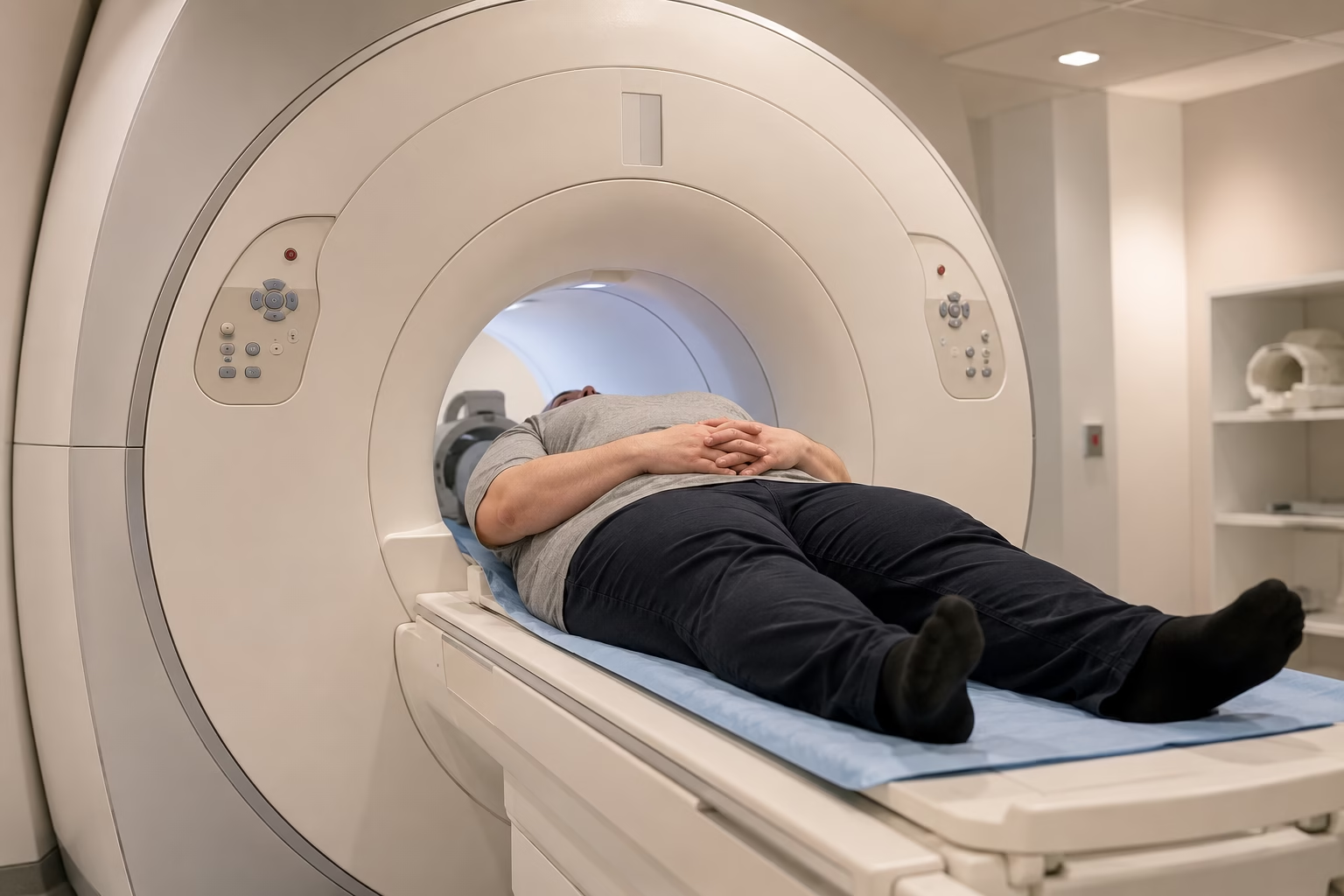
Many people feel anxious before booking an MRI because they’re unsure whether they’ll fit comfortably inside the scanner. This concern is especially common among people with larger body sizes or those who experience claustrophobia. Fortunately, MRI technology has advanced significantly over the years, making scans more accessible and comfortable for a wider range of patients.
Modern imaging centres now offer wide-bore MRI systems that provide a more spacious scanning experience without compromising image quality. If you’re worried about MRI weight limits, scanner size, or whether you’re eligible for an MRI, understanding how these systems work can help ease your concerns. Read on to learn what to expect and how the right MRI scanner can make your examination more comfortable.
Yes. Many people with obesity can safely undergo an MRI scan. Being overweight does not automatically prevent you from having an MRI. Instead, the imaging team considers several factors to determine which scanner is most suitable for your examination.
These factors include:
Modern diagnostic centres often have MRI systems designed to accommodate a broader range of patients, making it possible for many larger individuals to complete their examinations successfully.
If you’re unsure whether a particular MRI scanner is suitable for you, it’s always best to discuss your height, weight, and any comfort concerns when scheduling your appointment. This allows the imaging centre to prepare the most appropriate scanner for your needs.
Patients who are new to MRI may also find it helpful to understand how the examination works before their appointment.
Related guide: MRI preparation guide: how to prepare for an MRI Scan
One of the most common questions patients ask is whether MRI machines have a weight limit.
The answer is yes, but there is no single weight limit that applies to every MRI scanner. Different manufacturers and MRI models have different table capacities and bore sizes. These specifications vary depending on the equipment available at each imaging centre.
Rather than focusing on a specific number, healthcare providers evaluate whether the scanner can safely and comfortably accommodate the patient while producing high-quality images.
For this reason, it’s important to mention your approximate weight and body size when booking your appointment. Sharing this information in advance allows the radiology team to determine which MRI system is best suited for your examination and helps avoid delays on the day of your scan.
Remember, weight capacity is only one consideration. The size of the scanner opening and the area of the body being examined are equally important when planning an MRI.
A wide-bore MRI is a modern MRI system designed with a larger opening than many conventional MRI scanners. While traditional scanners have a narrower tunnel, wide-bore systems provide additional space around the patient, helping create a more comfortable scanning experience.
The extra room can make a significant difference for patients who:
Wide-bore MRI systems are suitable for many routine and advanced MRI examinations and provide excellent diagnostic image quality while improving patient comfort.
At MVR Diagnostic Clinic, patients benefit from advanced 1.5 Tesla Siemens Wide-Bore MRI technology featuring a 70 cm wide bore, offering a more spacious environment compared with many conventional MRI systems. This design helps improve comfort for larger patients as well as those who feel uneasy in confined spaces.
If you’re unfamiliar with the different types of MRI technology, our guide on 1.5 Tesla MRI vs 3 Tesla MRI explains how various MRI systems compare and when each may be recommended.
Benefits of Wide-Bore MRI
Wide-bore MRI systems are designed to improve the patient experience without sacrificing diagnostic performance. Although every patient’s situation is unique, the wider design offers several practical advantages.
More Spacious Design
The wider opening provides additional space around the body, helping many patients feel less restricted during the examination.
Greater Patient Comfort
A more comfortable scanning environment can make it easier to remain still throughout the procedure, which is important for obtaining clear, high-quality images.
Reduced Anxiety
Many patients feel less anxious in a wide-bore MRI compared with a traditional narrow-bore scanner. While it may not completely eliminate feelings of claustrophobia, the additional space often makes the experience more manageable.
Improved Positioning
Some MRI examinations require specific positioning to obtain detailed images. A wider scanner can provide greater flexibility, allowing technologists to position patients more comfortably while maintaining image quality.
High-Quality Diagnostic Images
Modern wide-bore MRI systems deliver excellent image quality for a wide range of examinations, helping radiologists accurately evaluate bones, joints, muscles, nerves, organs, blood vessels, and other soft tissues.
Suitable for Many Larger Body Types
Wide-bore MRI scanners are designed to accommodate many patients who may find standard MRI systems less comfortable. Before the examination, the imaging team assesses each patient’s individual requirements to determine the most appropriate scanner for safe and effective imaging.
For patients who feel anxious about enclosed spaces, learning more about MRI preparation can also help reduce stress before the appointment.
If you’re unable to comfortably fit inside a standard MRI scanner, it doesn’t necessarily mean you can’t have the examination. Today’s imaging centres often have alternative options that allow many larger patients to undergo MRI safely and comfortably.
Depending on your individual requirements, the radiology team may recommend:
Every patient is different. Factors such as height, weight, body shape, and the part of the body being examined all influence which scanner is most appropriate.
If you have concerns about fitting into an MRI scanner, mention them when booking your appointment. Providing this information beforehand allows the imaging team to plan your scan and minimise delays on the day of your visit.
Yes. Many people with claustrophobia successfully complete MRI examinations every day. Feeling anxious about being inside the scanner is common, and there are several ways to make the experience more comfortable.
Depending on your needs, your healthcare provider may recommend:
Wide-Bore MRI
A wide-bore MRI offers a larger opening than many traditional scanners, helping some patients feel less confined during the examination.
Relaxation Techniques
Simple breathing exercises, guided relaxation, or closing your eyes before entering the scanner may help reduce anxiety.
Communication with the MRI Technologist
Throughout the scan, you can communicate with the MRI technologist using the built-in intercom. Knowing that someone is monitoring you throughout the examination often provides reassurance.
Sedation When Appropriate
For patients with severe claustrophobia, mild sedation may be considered if recommended by the referring doctor and arranged in advance. This option is evaluated on an individual basis and may not be necessary for most patients.
If you’re worried about your first MRI, understanding what happens before, during, and after the scan can help reduce uncertainty.
Preparing for an MRI is usually straightforward, but following a few simple steps can help ensure your examination goes smoothly.
Before your appointment:
If contrast material is required, your healthcare provider will explain any additional preparation that may be needed.
Although MRI is considered a safe imaging technique for many patients, some situations require additional evaluation before the examination can be performed.
Your healthcare provider or radiology team will review your medical history to determine whether any special precautions are needed.
Additional assessment may be required if you have:
It’s important to remember that many modern medical implants are MRI-conditional, meaning they can be safely scanned under specific conditions. Rather than assuming an MRI is not possible, your radiology team will assess your individual situation and determine the safest approach.
Providing complete information about your medical history before the appointment helps ensure both your safety and the quality of the examination.
Choosing the right diagnostic centre is just as important as choosing the right MRI scanner. At MVR Diagnostic Clinic, patient comfort, safety, and diagnostic accuracy are prioritised throughout every stage of the imaging process.
Our MRI services are designed to provide a smooth and reassuring experience for patients of different body types and medical needs.
Advanced MRI Technology
MVR Diagnostic Clinic is equipped with a 1.5 Tesla Siemens Wide-Bore MRI featuring a 70 cm wide bore, providing a more spacious environment for many patients while delivering high-quality diagnostic images.
Experienced MRI Technologists
Our skilled MRI technologists guide patients throughout the examination, answer questions, and help ensure a comfortable scanning experience.
Comfortable Scanning Environment
The wide-bore design helps reduce feelings of confinement for many patients, including those with larger body sizes or mild claustrophobia.
Radiologist-Reviewed Reports
Every MRI examination is interpreted by experienced radiologists to support accurate diagnosis and treatment planning.
Convenient Appointment Scheduling
Flexible appointment options help patients access MRI services with minimal waiting times.
Personalised Support
Whether you’re concerned about scanner size, claustrophobia, or a medical implant, our team will assess your individual requirements and help determine the most appropriate imaging approach.
Having a larger body size or feeling anxious about enclosed spaces shouldn’t stop you from getting the medical imaging you need. Advances in MRI technology, including wide-bore systems, have made examinations more comfortable and accessible for many patients while maintaining excellent image quality.
If you’re unsure whether a standard MRI scanner is suitable for you, speaking with the imaging team before your appointment can help ensure the right equipment is prepared for your visit.
Need an MRI but concerned about comfort or scanner size? Contact MVR Diagnostic Clinic before your appointment. Our experienced team can help determine the most suitable MRI option based on your individual needs and guide you through every step of the process.
Can obese people fit in an MRI scanner?
Yes. Many people with obesity can safely undergo an MRI. Suitability depends on the scanner’s bore size, table capacity, body size, and the area being examined.
What is the weight limit for an MRI?
Weight limits vary depending on the MRI manufacturer and model. Contact the imaging centre before your appointment so they can determine the most appropriate scanner for your needs.
What is a wide-bore MRI?
A wide-bore MRI has a larger opening than many conventional MRI scanners, providing more space and greater comfort for many patients, including those with larger body sizes or mild claustrophobia.
Is a wide-bore MRI as accurate as a standard MRI?
Yes. Modern wide-bore MRI systems provide excellent diagnostic image quality for many routine and advanced MRI examinations.
What if I don’t fit into a regular MRI machine?
Your imaging centre may recommend a wide-bore MRI or another suitable imaging system after assessing your individual requirements.
Can claustrophobic patients have an MRI?
Yes. Many patients with claustrophobia successfully complete MRI examinations using wide-bore scanners, relaxation techniques, communication with the technologist, or sedation when clinically appropriate.
How do I know if I’m eligible for an MRI?
Your healthcare provider and the radiology team will review your medical history, implants, body size, and the type of examination required to determine the safest imaging option.
Can I request a wide-bore MRI when booking?
Yes. If you’re concerned about comfort, claustrophobia, or scanner size, mention it when scheduling your appointment so the imaging centre can assess whether a wide-bore MRI is appropriate for you.
WhatsApp us