

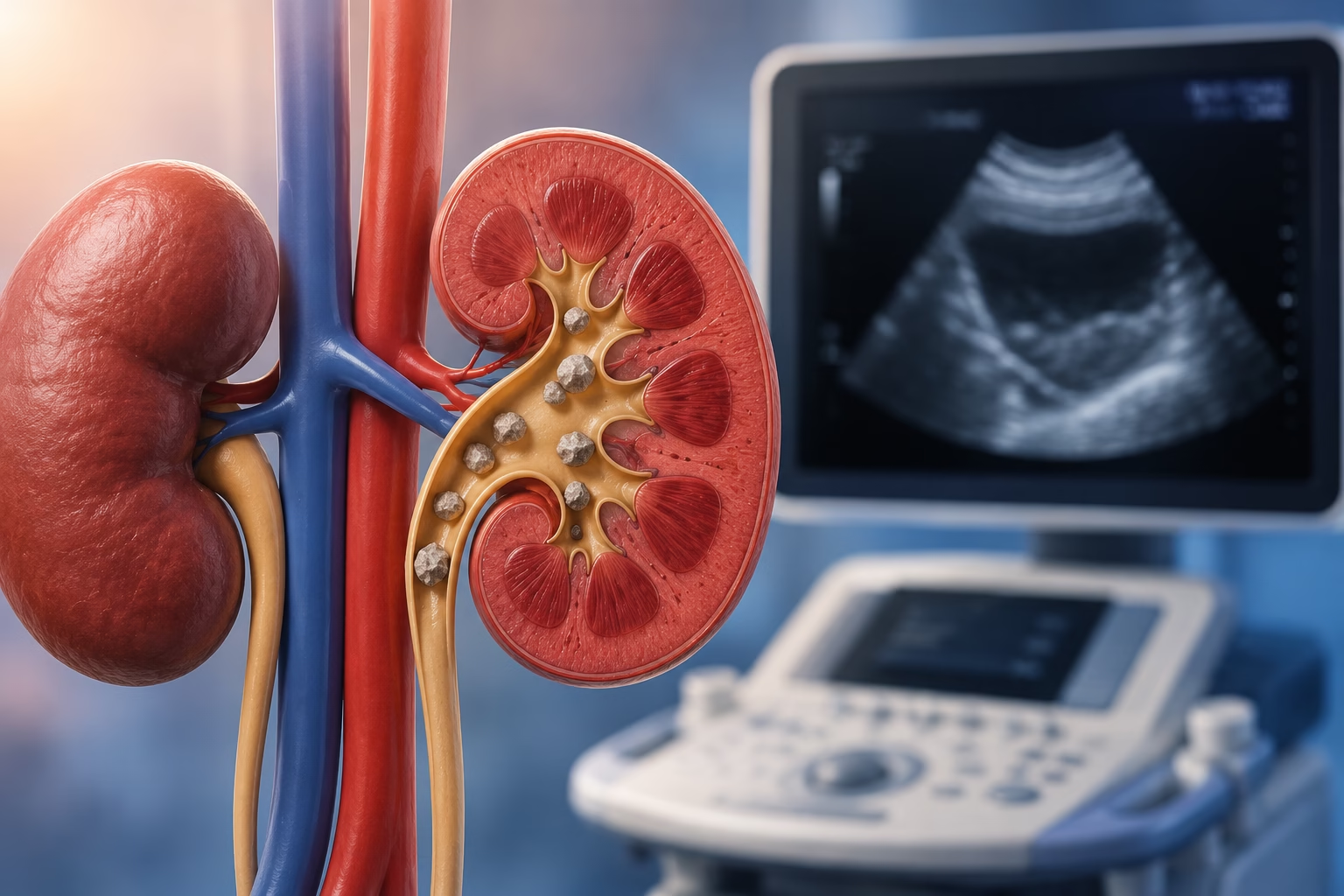
Kidney stones can cause anything from mild discomfort to sudden, severe pain in the back, side, or lower abdomen. Some stones pass naturally without treatment, while larger stones can block the urinary tract and require medical attention. If you have persistent side or back pain, blood in your urine, painful urination, or symptoms that may suggest a kidney stone, contact MVR Diagnostic Clinic to discuss your symptoms and the appropriate imaging test.
Need kidney stone imaging in Dubai?
Contact MVR Diagnostic ClinicDiscuss your symptoms and book the appropriate scan.
Kidney stones are hard, solid deposits that form inside the kidneys when certain minerals and salts in the urine become concentrated and crystallize.
They can vary considerably in size. Some are tiny enough to pass through the urinary tract without causing significant symptoms, while larger stones can become lodged and interfere with urine flow. Kidney stones can develop in one or both kidneys and may move from the kidney into the ureter, the narrow tube that carries urine to the bladder.
Kidney stones can form when there is an imbalance between substances in the urine that promote stone formation and those that help prevent it.
Common factors include:
The type of kidney stone also matters because different stones can have different causes.
Calcium stones are the most common type of kidney stone. They are usually made of calcium oxalate, although calcium phosphate stones can also occur. Diet, fluid intake, certain metabolic conditions, and other factors can contribute to their formation.
Uric acid stones can form when urine contains too much uric acid and is persistently acidic. They may be associated with conditions that increase uric acid levels or with diets high in certain animal proteins.
Struvite stones are associated with certain urinary tract infections. They can sometimes grow quickly and become relatively large.
Cystine stones are much less common and occur because of an inherited condition that causes excessive cystine to be released into the urine.
A small kidney stone may cause no symptoms at all and may be discovered incidentally during imaging. When a stone moves into the ureter or obstructs urine flow, symptoms can become much more noticeable.
Common symptoms include:
The intensity of kidney stone pain does not necessarily depend only on the size of the stone. A smaller stone can sometimes cause significant pain if it becomes lodged in a narrow part of the urinary tract.
Kidney stone pain commonly starts in the side or back below the ribs. As the stone moves through the ureter, the pain may shift toward the lower abdomen, pelvis, or groin. The pain may also come in waves rather than remaining constant. Some people find it difficult to sit still because of the intensity of the discomfort.
However, not every case of flank or back pain is caused by a kidney stone. Muscle problems, urinary infections, and other abdominal or urinary conditions can produce similar symptoms.
Yes. A kidney stone can irritate or damage the lining of the urinary tract as it moves, which can result in blood in the urine. The blood may be visible, making the urine appear pink, red, or brown, or it may only be detectable through urine testing.
Blood in the urine should not automatically be assumed to be caused by a kidney stone. Other urinary conditions can also cause hematuria, so persistent or unexplained blood in the urine should be medically evaluated.
Yes. Severe pain from a kidney stone can trigger nausea and vomiting. Some people experience digestive symptoms along with intense flank or abdominal pain.
However, vomiting can also occur with urinary infections or other abdominal conditions. If vomiting is persistent or you cannot keep fluids down, medical assessment is important because dehydration can make the situation worse.
A kidney stone itself does not always cause a fever. However, a fever together with kidney stone symptoms can be a warning sign of a urinary tract infection, particularly if urine flow is blocked. This combination can require urgent medical assessment.
Seek prompt medical care if you have symptoms such as:
An infected, obstructed urinary system can become a serious medical problem and should not be managed at home without medical advice.
Doctors usually consider your symptoms, medical history, physical examination, urine tests, blood tests, and imaging findings when evaluating suspected kidney stones.
Imaging can help determine:
The most appropriate imaging test depends on factors such as your symptoms, age, medical history, pregnancy status, and the clinical question being investigated.
Yes. Ultrasound can detect many kidney stones and can also identify changes that may occur because of obstruction.
An ultrasound examination can assess the kidneys and urinary tract without exposing the patient to ionizing radiation. It may show a stone directly and can also identify findings such as swelling of the kidney caused by impaired urine drainage.
Ultrasound scan service is used to evaluate the kidneys and urinary tract for kidney stones, obstruction, infection, fluid retention, and other abnormalities.
However, ultrasound does not detect every stone. Small stones or stones located in parts of the urinary tract that are difficult to visualize may be missed.
On ultrasound, a kidney stone may appear as a bright or highly reflective focus within the kidney. A stone can also produce a characteristic shadow behind it, which may help the sonographer identify the finding.
Ultrasound may additionally show hydronephrosis, which means swelling of the kidney due to impaired urine drainage. This can occur when a stone blocks the urinary tract.
The appearance depends on the size and location of the stone, as well as the quality of the examination.
Ultrasound can help identify signs of urinary obstruction. For example, when a stone blocks the flow of urine, urine can accumulate within the kidney and cause dilation of the collecting system. This may appear as hydronephrosis on ultrasound.
Both ultrasound and CT can be used when kidney stones are suspected, but they provide different types of information.
| Ultrasound | CT Scan |
|---|---|
| Does not use ionizing radiation | Can provide more detailed information about the location and size of stones |
| Can detect many kidney stones | Can identify stones that may not be visible on ultrasound |
| Can show kidney swelling and urinary obstruction | Can provide a more detailed view of the urinary tract |
| Can assess the kidneys and bladder | Non-contrast CT of the urinary tract, often called CT KUB, is commonly used when detailed stone assessment is required |
| May be particularly useful when radiation exposure should be minimized | May be considered when ultrasound does not provide enough information |
CT service lists KUB CT as an imaging option for detecting kidney and bladder stones. The decision between ultrasound and CT should be made according to the patient's symptoms and clinical situation rather than assuming that one test is always better.
Ultrasound may be considered when a healthcare professional needs to evaluate symptoms such as:
Ultrasound is also useful when avoiding radiation is an important consideration.
If your doctor has recommended an ultrasound for suspected kidney stones, Ultrasound KUB specifically evaluates the kidneys, ureters, and bladder and can support assessment of urinary tract abnormalities.
A CT scan may be considered when:
CT can provide a more detailed view of the urinary tract and can detect stones that may be difficult to see on ultrasound.
Imaging is only one part of kidney stone evaluation. Your doctor may also recommend:
A urine test can check for blood, signs of infection, crystals, and other abnormalities.
Blood testing can help assess kidney function and measure substances such as calcium and uric acid when appropriate.
If a stone is passed or removed, laboratory analysis can identify its composition. Knowing the stone type can help doctors recommend strategies to reduce the risk of future stones.
Treatment depends on the stone's size, location, symptoms, whether urine flow is blocked, whether infection is present, and the patient's overall health.
For small stones that are expected to pass naturally, adequate fluid intake may be recommended if your doctor considers it safe. However, forcing large amounts of water during severe obstruction is not an appropriate substitute for medical treatment.
Pain medication may be recommended to control symptoms while the stone passes or while further treatment is arranged. The specific medication should be selected according to your medical history and your doctor's advice.
In selected cases, doctors may prescribe medication to help facilitate passage of a stone through the ureter. This depends on the stone's location and other clinical factors.
Larger stones, stones that do not pass naturally, or stones causing significant obstruction may require a procedure. Treatment options can include:
The appropriate approach depends on the individual stone and the patient's circumstances.
Some small kidney stones can pass naturally without a procedure. The likelihood of spontaneous passage depends on factors such as the stone's size and location.
A doctor may recommend observation and follow-up when the stone is likely to pass safely. Larger stones or stones causing complications may require active treatment.
Once you have had a kidney stone, prevention becomes particularly important because stones can recur. General measures may include:
There is no single diet that works for every type of kidney stone. If you have recurrent stones, identifying the stone composition and discussing prevention with a healthcare professional can be helpful.
Some kidney stone symptoms require prompt medical attention. Seek urgent medical care if you have severe pain accompanied by:
An obstructing stone combined with infection can become a medical emergency. Do not rely on home treatment if you develop fever or feel significantly unwell while experiencing symptoms suggestive of a kidney stone.
If you develop sudden flank pain, blood in your urine, painful urination, or other symptoms associated with kidney stones, speak with a healthcare professional rather than assuming that the symptoms are caused by a stone.
The right imaging test can help determine whether a stone is present and whether it is affecting urine flow. Need kidney stone imaging in Dubai?
Contact MVR Diagnostic Clinic to discuss your symptoms and book the appropriate scan.
Contact MVR Diagnostic Clinic View Ultrasound ServicesYes. Ultrasound can detect many kidney stones and can also show signs of urinary obstruction, such as swelling of the kidney. However, some small or difficult-to-visualize stones may not be detected.
Both have advantages. Ultrasound does not use radiation and can identify many stones and signs of obstruction. CT can provide more detailed information about the size and location of stones and can detect stones that ultrasound may miss. The appropriate test depends on the clinical situation.
Yes. A stone moving through the urinary tract can irritate the lining and cause blood in the urine. However, blood in the urine can have other causes and should be evaluated if it persists or is unexplained.
Severe pain accompanied by fever, chills, persistent vomiting, difficulty passing urine, or very little urine can indicate a complication such as infection or urinary obstruction. These symptoms require prompt medical evaluation.
Some small stones can pass naturally. The likelihood depends on the stone's size and location. Your doctor may recommend observation, medication, follow-up imaging, or a procedure depending on the individual case.
WhatsApp us