

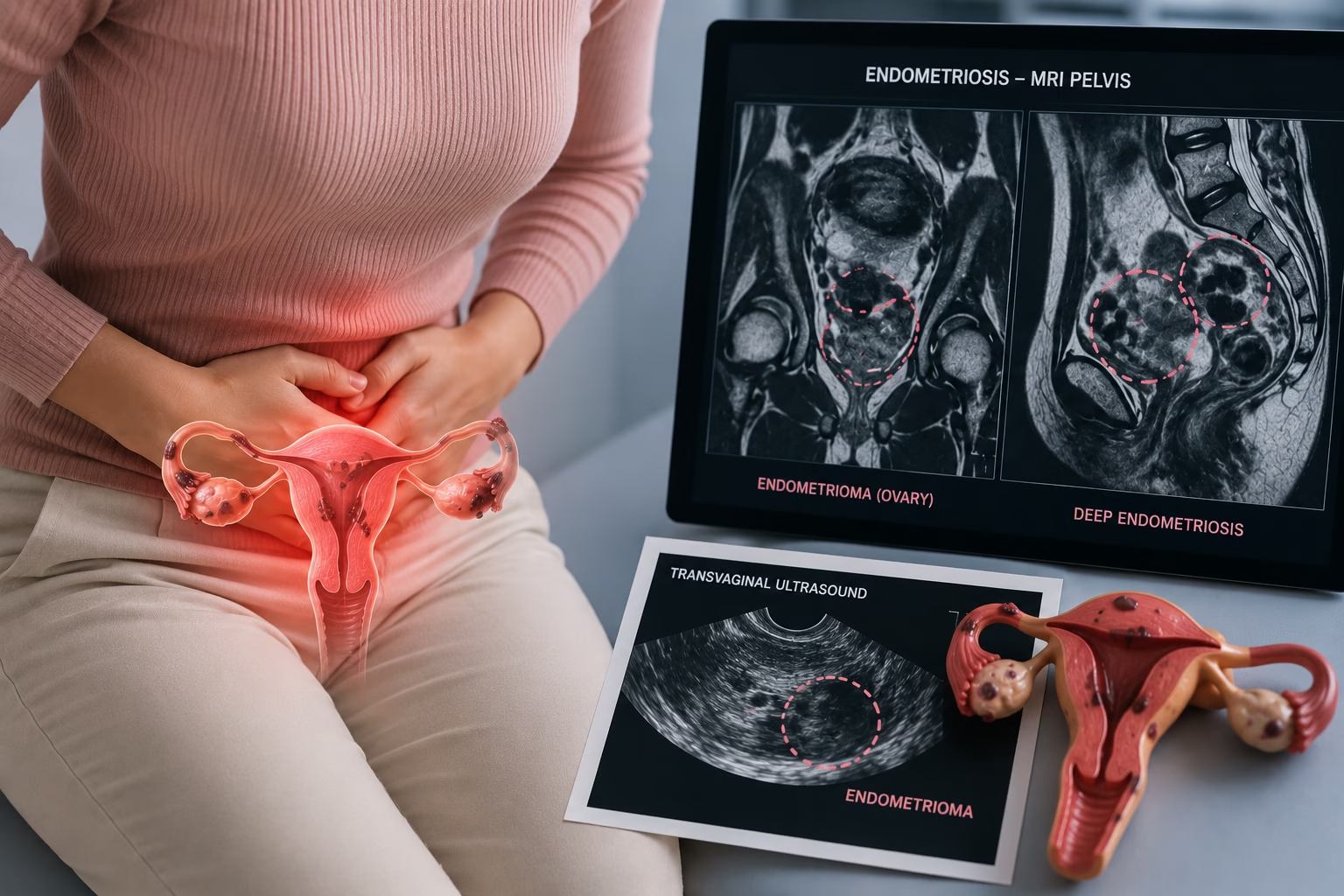
Endometriosis can cause severe period pain, pelvic pain, painful intercourse, bowel or bladder symptoms, and difficulty conceiving, but some people have few or no obvious symptoms. Because its symptoms can overlap with other gynecological conditions, getting the right evaluation is important.
If you have persistent pelvic pain, painful periods, or symptoms that are affecting your daily life, contact MVR Diagnostic Clinic to discuss whether a pelvic imaging test such as a transvaginal ultrasound may be appropriate.
Endometriosis is a chronic condition in which tissue similar to the lining of the uterus grows outside the uterus. These areas can occur around the ovaries, fallopian tubes, pelvic lining, bowel, bladder, and other pelvic structures. The tissue can respond to hormonal changes during the menstrual cycle, which may contribute to inflammation, pain, and the formation of scar tissue or adhesions.
Endometriosis can affect people differently. Some have significant pain with relatively limited disease, while others may have extensive disease with fewer symptoms.
The exact cause of endometriosis is not fully understood. Several theories have been proposed, but no single explanation accounts for every case.
Factors that may be associated with endometriosis include:
Having one of these factors does not mean that you will develop endometriosis. Researchers continue to study how genetics, hormones, immune responses, and other biological factors may contribute to the condition.
Symptoms can vary considerably from one person to another.
Common symptoms include:
Some people with endometriosis have no symptoms and may only discover the condition during an investigation for infertility or another pelvic concern.
No. Some menstrual discomfort can be normal, but pain that is severe, worsening, or interfering with school, work, exercise, sleep, relationships, or everyday activities should not simply be dismissed as a normal period symptom. Endometriosis is one possible cause of significant menstrual pain, but other conditions can cause similar symptoms.
If your periods have become unusually painful or your menstrual pattern has changed, MVR's guide to 8 Types of Abnormal Menstruation provides more information about menstrual changes that may need evaluation.
Endometriosis can be associated with difficulty becoming pregnant. The condition may affect the ovaries, fallopian tubes, pelvic anatomy, or surrounding tissues. Inflammation and adhesions can also interfere with normal reproductive function.
However, having endometriosis does not mean that pregnancy is impossible. Fertility outcomes vary depending on factors such as age, disease severity, ovarian function, tubal health, and other fertility-related conditions.
If you are experiencing difficulty conceiving alongside pelvic pain or painful periods, discuss your symptoms with a gynecologist or fertility specialist.
Endometriosis can occur in different locations and can vary in depth and extent.
Superficial endometriosis involves lesions on the surface of pelvic tissues. These small lesions can be difficult to detect on imaging, particularly when they are very small or located in areas that are difficult to visualize.
When endometriosis affects an ovary, it can result in an endometrioma, sometimes called a chocolate cyst. Endometriomas can often be identified with transvaginal ultrasound and may also be evaluated with MRI.
Deep endometriosis involves lesions that extend more deeply into pelvic tissues. It can affect structures such as the bowel, bladder, uterosacral ligaments, vagina, or other pelvic tissues.
Specialist ultrasound and MRI can be useful for mapping the location and extent of deep endometriosis. NICE recommends that specialist ultrasound or MRI be considered for suspected deep endometriosis, with imaging planned and interpreted by professionals experienced in gynecological imaging.
There is no single test that can diagnose every case of endometriosis. Diagnosis usually involves a combination of:
Current guidelines recommend using imaging such as ultrasound or MRI as part of the diagnostic work-up. However, a normal imaging result does not completely rule out endometriosis, particularly superficial disease.
This is important because a person can have genuine endometriosis-related symptoms even when an ultrasound or MRI does not show obvious disease.
Yes, ultrasound can detect certain forms of endometriosis, particularly when performed by an experienced practitioner using an appropriate technique.
Transvaginal ultrasound can be useful for identifying ovarian endometriomas and assessing certain forms of deep endometriosis. It can also evaluate the uterus, ovaries, pelvic structures, and other abnormalities that may contribute to pelvic symptoms.
Transvaginal ultrasound specifically evaluates the uterus, endometrium, ovaries, and surrounding pelvic structures and lists endometriosis-related findings among the conditions that may be assessed.
Depending on the type and location of disease, ultrasound may show:
However, ultrasound cannot reliably identify every type of endometriosis. A normal scan does not necessarily exclude superficial endometriosis.
The appearance depends on where the endometriosis is located. An ovarian endometrioma may have a characteristic appearance on ultrasound, often showing relatively homogeneous internal echoes.
Deep endometriosis can have different appearances depending on which pelvic structures are affected. An experienced sonographer may also assess the relationship and movement of pelvic organs as part of a specialist examination. The ultrasound findings should always be interpreted together with symptoms and clinical history.
MRI may be recommended when more detailed assessment of the pelvis is needed.
It can be particularly useful when:
MRI provides detailed images of pelvic soft tissues and can help doctors assess the location and extent of deep endometriosis. ESHRE recommends imaging with ultrasound or MRI during the diagnostic work-up while noting that negative imaging does not exclude all forms of endometriosis.
MVR provides pelvic MRI as part of its MRI services, which includes pelvic imaging for selected gynecological and pelvic conditions.
MRI findings depend on the location and type of endometriosis.
MRI may help identify:
MRI can also help determine the extent of disease and its relationship with surrounding structures. However, MRI is not a perfect test. Small superficial lesions may remain undetected, so a normal MRI does not automatically rule out endometriosis.
Both ultrasound and MRI can have an important role, but they are not interchangeable in every situation.
| Feature | Transvaginal Ultrasound | MRI |
|---|---|---|
| Ovarian endometrioma | Useful | Useful |
| Deep endometriosis | Useful, especially with specialist expertise | Useful |
| Superficial endometriosis | May be missed | May also be missed |
| Pelvic organ assessment | Detailed real-time imaging | Detailed soft-tissue imaging |
| Radiation | No | No |
| Availability | Generally more accessible | Usually used when additional detail is needed |
| Surgical planning | Can help | Can provide detailed disease mapping |
The choice depends on the symptoms, suspected location of disease, previous imaging, and the clinical question. Specialist expertise is important for both ultrasound and MRI interpretation.
Currently, there is no routine blood test that can reliably diagnose endometriosis on its own. Various biomarkers have been studied, including CA-125, but current ESHRE guidance does not recommend using biomarkers as a standalone diagnostic test for endometriosis.
Blood tests may still be ordered for other reasons, such as investigating anemia associated with heavy menstrual bleeding or assessing other possible causes of symptoms.
Laparoscopy is a minimally invasive surgical procedure that allows a surgeon to directly examine the pelvic cavity. Current guidelines have changed the way laparoscopy is used in the diagnostic pathway.
Imaging and clinical assessment can often be used first, and laparoscopy may be considered when imaging is negative but symptoms remain significant, when empirical treatment has not been successful or is inappropriate, or when surgical treatment is otherwise indicated. During laparoscopy, visible lesions can be assessed and tissue may be obtained for histological examination when appropriate.
Treatment depends on the severity of symptoms, location and extent of disease, age, fertility plans, previous treatments, and personal preferences. There is no single treatment that is suitable for everyone.
Pain medications may be recommended to manage symptoms. Your doctor can advise which medicines are appropriate based on your health history and other medications.
Hormonal treatment may be used to reduce or suppress menstrual-cycle-related symptoms. Depending on the individual situation, options may include hormonal contraceptives or progestogen-based treatments. The choice depends on symptoms, medical history, side effects, fertility plans, and personal preferences.
Surgery may be considered for selected patients, particularly when symptoms remain significant despite medical treatment, when there are certain endometriotic cysts or deep lesions, or when surgery is needed for another clinical reason. The benefits and risks should be discussed with a specialist experienced in managing endometriosis.
For people experiencing infertility associated with endometriosis, treatment may involve specialist fertility assessment. The appropriate approach depends on age, ovarian reserve, tubal function, disease severity, previous treatment, and other fertility factors.
Yes. Endometriosis is a chronic condition and symptoms can return after treatment. The likelihood of recurrence varies between individuals and depends on factors such as the extent of disease, treatment approach, and whether hormonal suppression is used afterward. Long-term follow-up may therefore be appropriate for some patients.
The impact varies. Some people have relatively stable symptoms, while others can experience persistent or worsening pelvic pain, menstrual problems, adhesions, ovarian endometriomas, or fertility difficulties.
Persistent symptoms can also affect sleep, physical activity, work, relationships, and overall quality of life. Early evaluation does not necessarily mean that surgery will be required. It can help identify the likely cause of symptoms and determine an appropriate management plan.
Consider speaking with a healthcare professional if you experience:
You should also seek medical assessment if your symptoms are new, significantly worsening, or different from your usual menstrual pattern.
Pelvic imaging may be recommended when symptoms suggest a gynecological condition that needs further evaluation.
A doctor may recommend ultrasound when investigating:
If your doctor believes more detailed imaging is needed, MRI may be considered depending on the suspected location and extent of disease.
Not always. This is one of the most important things to understand about endometriosis. A normal ultrasound does not automatically mean that endometriosis is absent. Some forms, particularly small superficial lesions, can be difficult to identify with imaging.
However, a specialist ultrasound can identify many ovarian and deep endometriosis findings and may provide useful information about the extent of disease. If symptoms continue despite normal imaging, discuss the next step with your doctor rather than assuming that the symptoms have no medical explanation.
Endometriosis can affect the way a person experiences menstruation. Severe period pain, heavy bleeding, spotting, or changes in the usual menstrual pattern may occur. However, abnormal periods have many possible causes, including hormonal conditions, fibroids, polyps, PCOS, thyroid problems, and other gynecological conditions.
MVR's 8 Types of Abnormal Menstruation guide explains different menstrual changes and when further evaluation may be appropriate.
An ovarian endometrioma is a cyst associated with endometriosis that develops in an ovary. Transvaginal ultrasound is commonly used to assess suspected ovarian endometriomas. MRI may provide additional information when the disease is complex or when more detailed pelvic mapping is needed. It is important to distinguish an endometrioma from other types of ovarian cysts because the management approach can differ.
Our guide to Ovarian Cyst: Early Detection, Ultrasound & Care explains how ultrasound can be used to assess ovarian cysts and their characteristics.
Endometriosis can be difficult to diagnose because its symptoms overlap with several other gynecological conditions, and not every lesion can be detected on imaging.
Transvaginal ultrasound is useful for evaluating ovarian endometriomas and certain forms of deep endometriosis, while MRI can provide detailed information about the extent and location of deeper pelvic disease. A normal scan does not completely exclude endometriosis, so persistent symptoms should always be discussed with a healthcare professional.
If you have severe period pain, persistent pelvic pain, painful intercourse, abnormal bleeding, or fertility concerns, contact MVR Diagnostic Clinic to discuss your symptoms and whether a transvaginal ultrasound or other pelvic imaging may be appropriate.
Common symptoms include severe period pain, chronic pelvic pain, pain during or after intercourse, painful bowel movements, painful urination during menstruation, heavy or irregular bleeding, fatigue, and difficulty becoming pregnant.
Yes, ultrasound can detect some forms of endometriosis, particularly ovarian endometriomas and certain types of deep endometriosis. However, a normal ultrasound does not rule out all endometriosis, especially superficial disease.
Neither test is always better. Specialist transvaginal ultrasound can be highly useful for ovarian and certain deep endometriosis findings, while MRI can provide detailed pelvic mapping, particularly when deep disease is suspected. The appropriate test depends on the clinical situation and expertise available.
No single blood test can reliably diagnose endometriosis. Biomarkers such as CA-125 are not recommended as standalone diagnostic tests for the condition.
Yes. Treatment may include pain management, hormonal treatment, surgery in selected cases, and fertility treatment when needed. The best approach depends on symptoms, disease extent, fertility plans, and individual circumstances.
Endometriosis can be associated with difficulty becoming pregnant, but it does not mean that pregnancy is impossible. Fertility outcomes vary depending on factors such as age, ovarian function, tubal health, and the extent of endometriosis.
WhatsApp us