

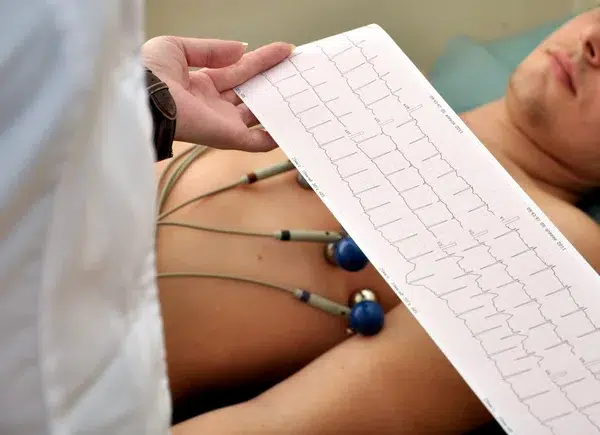
Chest pain, sudden dizziness, or fast and irregular heartbeats should never be ignored, and an ECG test is often the first and fastest way doctors check whether your heart rhythm is normal or dangerous. This simple test can quickly detect electrical problems in the heart and guide urgent treatment decisions. Read on to know when an ECG check up is truly needed, how the test works, and what it costs in the UAE.
An ECG test, also called an electrocardiogram, records the electrical activity of the heart. Every heartbeat starts with an electrical signal. The ECG captures these signals and shows them as waves on a screen or paper. Doctors use this information to check whether the heart is beating in a regular pattern and at a safe speed.
The ECG test is non invasive, painless, and quick. It is performed in hospitals, clinics, and diagnostic centres. It does not pass electricity into the body. It only records the heart’s natural electrical signals through small sensors placed on the skin.
An ECG test is commonly requested when a person reports chest pain, dizziness, fainting, or palpitations. It is also used during routine heart screening, before surgery, and while monitoring people with known heart disease.
An ECG test provides important information, such as:
Doctors use these signals to decide if more testing or urgent treatment is needed.
Chest pain, dizziness, and palpitations are some of the most common reasons for requesting an ECG test. These symptoms may be caused by many conditions, and an ECG helps rule out dangerous heart rhythm problems early.
The ECG test is often the first test performed when a patient arrives at a clinic or emergency department with heart related complaints. It supports fast decision making and safe patient care.
Chest pain can be related to muscles, digestion, stress, or heart problems. An ECG test is essential to quickly look for electrical changes that may appear during or after a heart attack.
Doctors use the ECG to:
However, an ECG cannot always confirm blocked arteries. It works as a fast screening tool that guides further evaluation.
Dizziness and fainting may occur when the heart beats too slowly, too fast, or irregularly. An ECG helps detect electrical problems that reduce blood flow to the brain.
The ECG is useful to identify:
When dizziness happens repeatedly, an ECG is an important first step before moving to advanced heart monitoring.
Palpitations feel like fluttering, pounding, or racing heartbeats. Many palpitations are harmless, but some are linked to abnormal heart rhythms.
An ECG test can show:
If palpitations occur during the ECG recording, the test becomes highly helpful for diagnosis.
An ECG check up is needed whenever symptoms suggest that the heart rhythm or electrical activity may be abnormal. Doctors consider both symptoms and medical history before ordering the test.
An ECG is usually recommended when a person experiences:
An ECG check up is also used before starting some heart medications to ensure that the electrical activity of the heart is safe for treatment.
Some people are advised to undergo ECG testing even when they do not feel any symptoms. This helps detect silent rhythm problems and supports early prevention.
People who may benefit from screening ECG include:
Although routine ECG screening is not necessary for everyone, doctors may recommend it for patients with elevated cardiovascular risk.
The ECG test procedure is simple and safe. It usually takes place in a quiet room while the patient lies comfortably on a bed.
Preparation is minimal and easy.
Patients are usually advised to:
Fasting is not required for a standard resting ECG test.
During the ECG test, small adhesive electrodes are placed on the chest, arms, and legs. These electrodes are connected to the ECG machine using thin wires.
The patient is asked to:
No electric current is sent into the body. The electrodes only capture the natural electrical signals produced by the heart.
The actual ECG recording usually takes less than one minute. The total visit time, including preparation and electrode placement, generally takes about ten to fifteen minutes.
An ECG test can identify many important heart related conditions when the abnormal rhythm is present during recording.
It can detect:
These findings help doctors decide whether further testing, monitoring, or treatment is required.
An ECG test has limitations and should not be considered a complete heart evaluation on its own.
It cannot:
A normal ECG result does not always mean that the heart is completely healthy. Doctors often combine ECG findings with other tests.
The ECG test plays a different role compared to other heart investigations.
An ECG test focuses on electrical activity and rhythm. An echocardiogram shows heart structure and pumping function. A treadmill test evaluates heart response during exercise. A Holter monitor records heart rhythm continuously over one or two days.
Doctors select the right test based on symptoms, clinical history, and initial ECG findings.
ECG testing is widely available across hospitals and diagnostic centres in Dubai and other UAE cities. The cost is generally affordable and accessible.
In most private clinics and diagnostic centres, realistic price ranges are:
Prices may vary depending on facility type and clinical setting.
Several factors influence the final ECG test cost:
Package based screening services may offer reduced pricing.
The ECG test is one of the safest heart tests available. It does not use radiation and does not expose the body to any electrical current.
It is suitable for:
There are no known long term risks associated with routine ECG testing.
ECG testing and interpretation follow internationally accepted clinical practices and quality protocols. Proper electrode placement, standard lead positioning, and trained medical review are essential for accurate results.
Clinical practice and interpretation training are supported by professional bodies such as the American Heart Association and major academic medical institutions such as the Mayo Clinic.
These professional standards help ensure that ECG reports are reliable, clinically meaningful, and consistent across healthcare settings.
An ECG can detect electrical changes associated with an ongoing or recent heart attack. It supports rapid emergency decisions. However, some heart attacks may show normal ECG patterns initially and still require blood tests and imaging.
Yes, an ECG can be normal even when heart disease is present. Structural problems, early artery disease, or intermittent rhythm disorders may not appear during a short ECG recording.
An ECG may detect palpitations if the abnormal rhythm occurs during the test. If palpitations happen occasionally, longer monitoring such as a Holter monitor may be required.
Anxiety can increase heart rate and cause temporary rhythm changes. These changes may appear on ECG, but they do not always represent underlying heart disease.
A standard ECG captures only a short snapshot of heart activity. Many rhythm problems occur intermittently.
This happens because:
In such cases, extended rhythm monitoring becomes necessary.
ECG recordings are reviewed by trained physicians or cardiologists. The specialist checks waveform patterns, rhythm regularity, and electrical conduction intervals.
The results are then correlated with:
Final clinical decisions are made by the treating doctor based on the complete medical picture.
An ECG test plays a vital role in early detection of heart rhythm problems and electrical abnormalities. For patients with chest pain, dizziness, and palpitations, it offers a fast, safe, and reliable first assessment. While it does not replace advanced cardiac tests, it guides doctors toward the right next steps in diagnosis and treatment. Knowing when an ECG check up is needed, how the test is performed, and what realistic costs are in the UAE helps patients approach heart care with confidence and timely medical support.
MVR provides trusted and advanced diagnostic care for ECG and heart screening services in Dubai, using high quality technology and skilled medical professionals. Patients benefit from accurate results, comfortable testing environments, and careful clinical review. MVR also offers affordable screening and diagnostic packages designed for both routine heart checks and symptom based evaluations. With a strong focus on patient safety, reliability, and clinical excellence, MVR supports timely detection and better heart care decisions across all age groups.
WhatsApp us