

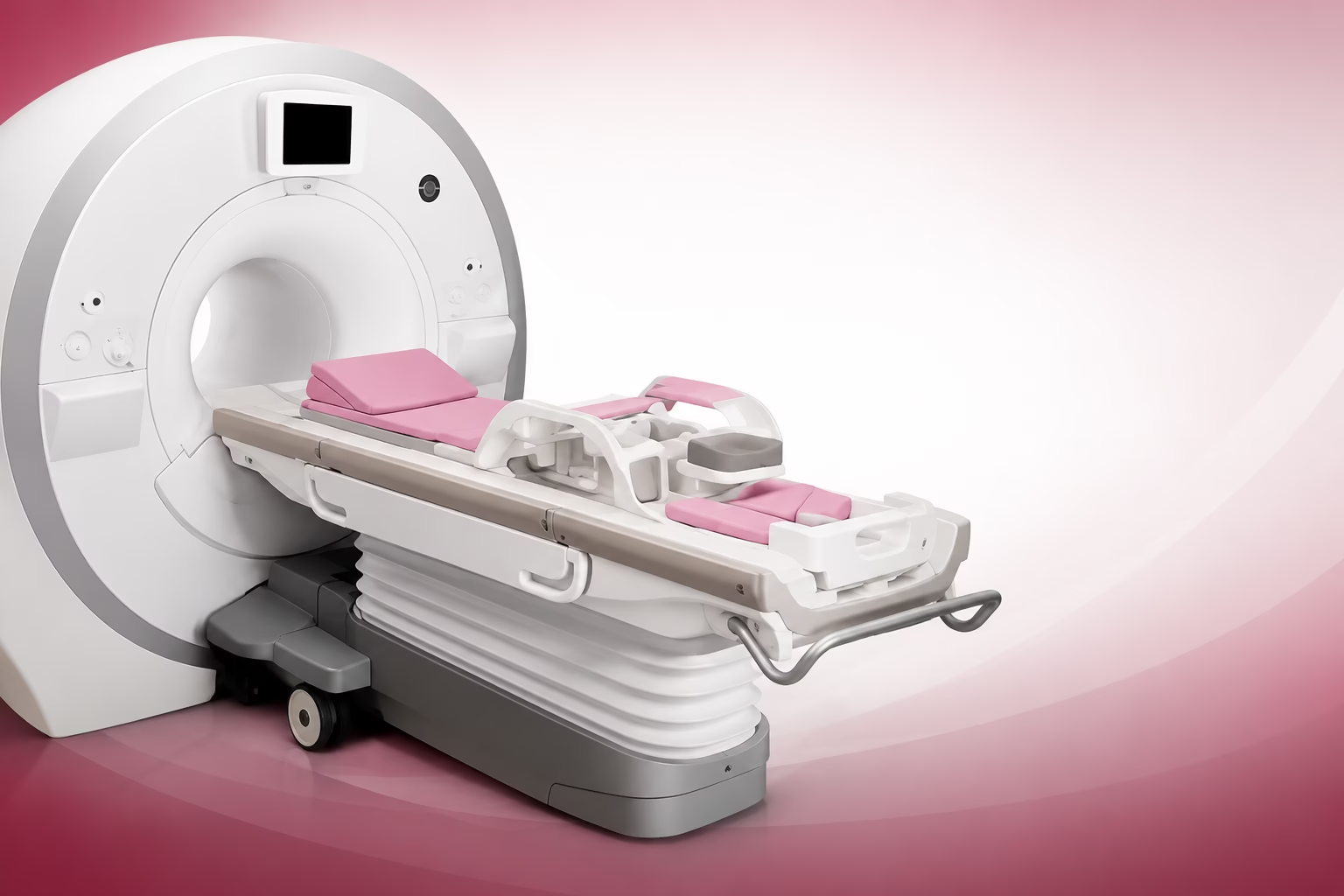
Breast MRI scan helps doctors evaluate breast tissue with greater clarity, especially when mammograms or ultrasound need additional support. From detecting hidden abnormalities to assessing dense breast tissue and implants, this advanced imaging test plays an important role in breast cancer screening and diagnosis. Read on to learn how breast MRI works, when doctors recommend it, what it can detect, and what happens during the procedure.
What Is a Breast MRI Scan?
Breast MRI is an advanced imaging test that uses magnetic fields, radio waves, and contrast material to create highly detailed breast images. It helps detect abnormalities that may not appear clearly on mammograms or ultrasound, especially in women with dense breast tissue, implants, or increased breast cancer risk.
How Breast MRI Creates Detailed Breast Images
Breast MRI uses magnetic fields and radio waves to produce layered breast images from multiple angles. The scan evaluates tissue enhancement, blood flow activity, and contrast uptake patterns, helping radiologists detect hidden lesions and early stage abnormalities with greater clarity than standard breast imaging methods.
Difference Between Breast MRI and Mammogram
Mammograms use low dose radiation to detect structural breast changes, while breast MRI evaluates soft tissue details using magnetic imaging. Breast MRI provides better visualization in dense breast tissue and may identify abnormalities missed during mammography or breast ultrasound examinations.
When Doctors Recommend a Breast MRI
Doctors recommend breast MRI when more detailed breast imaging is needed for cancer screening, diagnosis, implant evaluation, or treatment planning beyond routine mammography and ultrasound examinations.
Breast MRI for High Risk Breast Cancer Screening
Breast MRI is commonly advised for women with strong family history, BRCA gene mutations, or dense breast tissue. It helps detect early abnormalities that may remain hidden during routine mammogram screening in high risk patients.
Breast MRI After Abnormal Mammogram Findings
Doctors may recommend breast MRI after suspicious mammogram or ultrasound findings to examine tissue enhancement and lesion activity more clearly. The scan also helps evaluate cancer staging, lymph node involvement, and chemotherapy treatment response.
Breast MRI for Breast Implants and Tissue Evaluation
Breast MRI helps detect implant rupture, silicone leakage, scar tissue, and recurrent tumors after surgery. It also provides detailed breast tissue evaluation when physical examination or standard imaging results require additional diagnostic clarification.
What Conditions Can a Breast MRI Detect
Breast MRI detects tissue enhancement patterns, vascular activity, and hidden abnormalities inside breast tissue, helping radiologists evaluate suspicious lesions with greater diagnostic detail.
Breast tumors: Detects suspicious masses and abnormal tissue growth patterns.
Invasive breast cancer: Identifies cancer spreading into nearby breast tissue areas.
Non invasive lesions: Helps evaluate early abnormal cellular tissue changes.
Abnormal blood vessel activity: Shows increased vascular activity around suspicious tissue areas.
Implant rupture: Detects silicone leakage and implant structure abnormalities clearly.
Scar tissue versus recurrent tumor: Differentiates post surgery scarring from active tumor recurrence.
Hidden lesions in dense tissue: Detects abnormalities difficult visible on mammograms.
Lymph node involvement: Evaluates nearby lymph nodes for possible cancer spread.
Breast MRI Procedure and Preparation
Breast MRI preparation includes simple safety instructions, contrast evaluation, and proper positioning to help produce accurate breast imaging results during the scanning procedure.
How to Prepare Before the Scan
• Avoid eating before contrast enhanced breast MRI
• Remove jewelry and metallic personal belongings completely
• Inform doctor about implants or medical devices
• Share allergy history before contrast injection procedure
• Wear comfortable clothing for easier MRI preparation process
• Inform staff about claustrophobia related discomfort concerns
What Happens During the MRI Scan
• Patient lies face down on MRI table
• Breasts positioned inside dedicated breast imaging openings
• IV contrast administered before image acquisition begins
• MRI machine captures layered breast tissue images
• Loud tapping noises occur during scanning procedure
• Radiologist reviews breast MRI images after completion
Breast MRI With Dedicated Breast Coil Technology
• Dedicated breast coil improves breast image signal quality
• Helps produce clearer tissue enhancement visualization results
• Supports accurate lesion characterization and comparative breast imaging
• Maintains proper breast positioning during image acquisition process
• Improves detection of small hidden breast abnormalities
• Enhances breast symmetry assessment during bilateral imaging studies
Unilateral vs Bilateral Breast MRI
Unilateral breast MRI refers to imaging of one breast only. Doctors may recommend single breast imaging when symptoms, suspicious lumps, implant concerns, or localized abnormalities affect one side. This targeted evaluation helps assess tissue enhancement, lesion activity, and specific breast changes more accurately during focused diagnostic imaging.
Bilateral breast MRI evaluates both breasts during the same scan session. It is commonly used for high risk breast cancer screening, implant assessment, cancer staging, and comparative imaging. Bilateral breast MRI helps radiologists assess breast symmetry, hidden lesions, tissue enhancement patterns, and possible abnormalities affecting both breasts simultaneously.
Breast MRI During Menstrual Cycle
The timing of a breast MRI during the menstrual cycle can affect image quality and breast tissue appearance. Doctors often recommend scheduling the scan during specific days of the menstrual cycle, usually between days 7 and 14, because hormonal changes are lower during this period. This helps reduce background breast tissue enhancement and improves the accuracy of breast MRI interpretation.
For premenopausal women, breast tissue may appear more active before menstruation due to hormonal fluctuations, which can sometimes affect lesion visibility and contrast uptake patterns. Proper scheduling helps radiologists evaluate breast tissue changes more clearly and improve diagnostic accuracy.
MRI Scan for Breast Implants
Breast MRI is one of the most reliable imaging methods for evaluating breast implants and surrounding tissue. The scan helps detect implant rupture, silicone leakage, scar tissue formation, and implant related complications that may not be visible during physical examination or mammography.
MRI scan for breast implants provides detailed soft tissue imaging without radiation exposure. It also helps assess implant integrity and surrounding breast tissue health more accurately, especially in patients with silicone implants or previous breast surgery.
Breast MRI With and Without Contrast
Breast MRI can be performed with or without contrast material depending on the clinical requirement. Contrast enhanced breast MRI is more commonly used because the contrast dye helps highlight abnormal blood flow and tissue enhancement patterns linked to suspicious breast lesions or cancerous tissue.
Breast MRI without contrast may be used in selected situations, such as implant evaluation or when contrast administration is not advisable. However, contrast enhanced imaging generally provides greater diagnostic detail for detecting breast tumors, tissue enhancement changes, and early stage abnormalities.
Advanced Breast Imaging for Early Detection
Breast MRI scan plays an important role in modern breast cancer screening and diagnostic imaging by providing highly detailed views of breast tissue, blood flow activity, and hidden abnormalities. From evaluating dense breast tissue to assessing implants and suspicious lesions, this advanced imaging method supports accurate diagnosis and treatment planning. Early breast imaging evaluation can help doctors identify abnormalities sooner and guide safer, faster clinical decisions for better long term breast health management.
Trusted Breast MRI Scan in Dubai
MVR provides trusted and advanced breast MRI scan services in Dubai using high quality imaging technology and experienced medical professionals for accurate breast evaluation and diagnosis. With dedicated breast coil MRI technology, patients receive clearer breast tissue imaging, improved lesion detection, and reliable diagnostic support in a comfortable environment. MVR focuses on patient safety, accurate reporting, and affordable breast screening packages, helping patients access advanced breast imaging services with confidence, convenience, and expert radiology care across Dubai.
FAQs
1. Is a breast MRI better than a mammogram?
Breast MRI provides more detailed soft tissue imaging, especially in dense breasts, but mammograms remain important for routine breast cancer screening and calcification detection.
2. Why is contrast injection used during breast MRI?
Contrast dye highlights abnormal blood vessel activity and tissue enhancement patterns, helping radiologists identify suspicious breast lesions and hidden abnormalities more accurately.
3. Can breast MRI detect cancer missed on ultrasound?
Yes, breast MRI may detect hidden breast abnormalities or early cancers not clearly visible during ultrasound or mammogram imaging, especially within dense breast tissue.
4. How long does a breast MRI scan take?
Most breast MRI scans take around 30 to 60 minutes, depending on imaging protocol, contrast administration, and whether unilateral or bilateral breast imaging is performed.
5. Is breast MRI painful or uncomfortable?
Breast MRI is generally painless, although patients may experience mild discomfort from remaining still, MRI machine noise, or enclosed scanning space conditions.
6. What is a dedicated breast coil in MRI?
A dedicated breast coil is a specialized MRI device improving breast image quality, tissue visualization, lesion characterization, and comparative imaging accuracy during breast MRI scanning.
7. When do doctors recommend bilateral breast MRI?
Doctors recommend bilateral breast MRI for high risk screening, cancer staging, implant evaluation, breast symmetry assessment, and detecting abnormalities affecting both breasts simultaneously.