
Pregnancy scans are time-based medical checks that show if your baby is growing safely at each stage. Each scan answers a different question, from confirming pregnancy to planning delivery. Missing the right scan can delay detection of serious problems. This guide lists every pregnancy scan week by week with purpose, timing, method, and cost. Read on to know exactly which scan you need and why.
Each pregnancy ultrasound is scheduled based on fetal development stages, and every scan listed below is explained in detail in the following sections. This timeline gives a clear overview of when each scan is done and what to expect next, helping you track your pregnancy journey step by step while understanding the purpose of each scan.
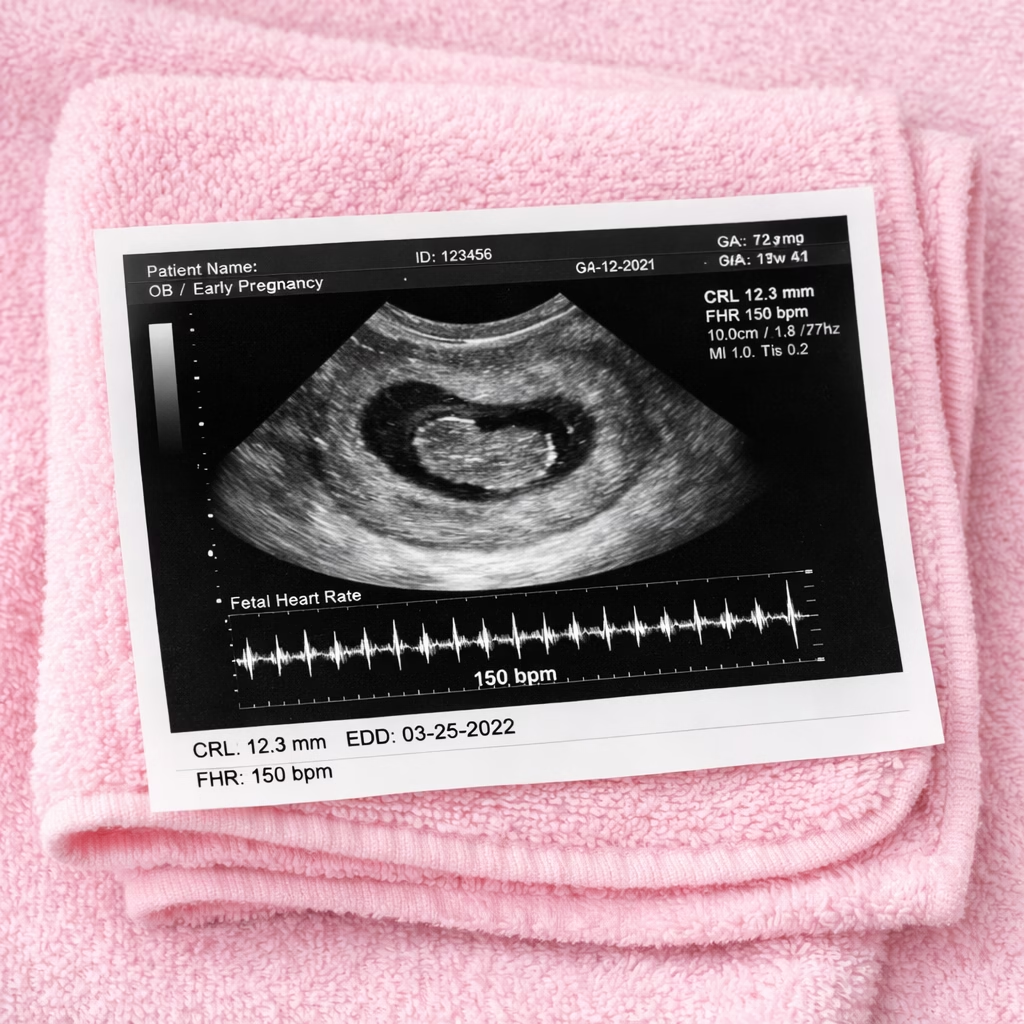
The early pregnancy scan confirms that the pregnancy is located inside the uterus and progressing normally. It is the first step in the pregnancy ultrasound timeline, helping establish a clear baseline, detect a heartbeat, identify embryos, and accurately calculate the due date.
When it is done: 6 to 9 weeks
What it finds: Gestational sac, yolk sac, fetal pole, heartbeat, number of embryos, and an accurate due date using crown rump length
Method used: Transvaginal scan in very early weeks, abdominal scan if pregnancy is slightly advanced
Cost: 450 AED
The nuchal translucency scan is an early screening scan that evaluates the risk of chromosomal conditions. It focuses on measuring fluid accumulation behind the neck and checking early fetal development markers, helping assess genetic risk levels during the first trimester.
When it is done: 11 to 14 weeks
What it finds: Nuchal translucency thickness, nasal bone, early anatomy, and risk indicators for chromosomal abnormalities
Method used: Abdominal ultrasound
Cost: 500 AED
The anomaly scan is the most detailed structural scan during pregnancy. It provides a full assessment of the baby’s organs and detects major physical abnormalities, while also evaluating placenta position and amniotic fluid levels for a complete fetal health overview.
When it is done: 18 to 22 weeks
What it finds: Brain, spine, heart, kidneys, limbs, facial structure, placenta position, and amniotic fluid levels
Method used: Abdominal ultrasound
Cost: 600 AED
Fetal echocardiography is a specialized scan that focuses only on the baby’s heart. It is recommended when there is a higher risk of heart related conditions, helping detect structural defects, blood flow issues, and rhythm abnormalities during pregnancy.
When it is done: 20 to 24 weeks
What it finds: Heart chambers, valves, blood flow, rhythm abnormalities, and congenital heart defects
Method used: Specialized cardiac ultrasound
Cost: 600 AED
To understand its safety, explore our guide on fetal echo during pregnancy and what expecting mothers should know.
The growth scan checks whether the baby is growing according to expected milestones. It helps monitor overall development, assess fetal size and weight, and evaluate amniotic fluid levels, ensuring the pregnancy is progressing normally without early signs of complications.
When it is done: 24 to 28 weeks
What it finds: Baby’s size, estimated weight, growth pattern, and amniotic fluid levels
Method used: Abdominal ultrasound
Cost: 600 AED
To better plan your pregnancy expenses, explore Growth Scan Cost in Dubai: What’s Included for a detailed breakdown of pricing and services included in this scan
This scan evaluates the baby’s overall condition in the third trimester. It focuses on movement, growth, and the environment inside the womb, while also assessing placenta condition and amniotic fluid levels to ensure continued healthy development.
When it is done: 28 to 32 weeks
What it finds: Fetal movement, weight, amniotic fluid, and placenta condition
Method used: Abdominal ultrasound
Cost: 600 AED
The Doppler scan is used to measure blood circulation between the mother and baby. It is especially important in monitoring high risk pregnancies, helping detect placental insufficiency, reduced blood flow, and potential fetal distress during later pregnancy stages.
When it is done: 28 to 36 weeks
What it finds: Blood flow in umbilical artery, fetal brain circulation, and placental efficiency
Method used: Doppler ultrasound
Cost: 600 AED
For a more comprehensive understanding, explore Doppler Scan in Pregnancy: Benefits, Procedure, and Safety to learn about how the scan works, its advantages, and what to expect
The final scan is done close to delivery to confirm if the baby is in the correct position and ready for birth. It supports final delivery planning by checking placenta placement, amniotic fluid levels, and identifying breech or other positioning concerns.
When it is done: 36 to 40 weeks
What it finds: Baby’s position, placenta placement, and amniotic fluid levels
Method used: Abdominal ultrasound
Cost: 600 AED
Pregnancy scans play a vital role in tracking fetal development and ensuring both mother and baby remain safe throughout pregnancy. They help detect potential complications early, guide medical decisions, and provide reassurance by confirming that growth, movement, and internal conditions are progressing normally at each stage.
The anomaly scan is considered the most important because it provides a detailed evaluation of the baby’s organs and structure, helping detect major abnormalities early. The nuchal translucency scan plays a key role in first-trimester screening for chromosomal risks, while Doppler scans become critical in later stages to monitor blood flow and detect fetal distress, especially in high-risk pregnancies where close monitoring is essential for safe outcomes.
For a more detailed overview of different scan types and what each stage involves, explore Pregnancy Scans Explained: Types, Timing, and What to Expect to better understand the purpose and expectations of each scan.
Proper preparation before each pregnancy scan helps improve image clarity, reduces repeat scans, and ensures accurate results. While not all scans require strict preparation, following simple guidelines can make the process smoother and more comfortable.
Dating Scan: A full bladder may be required for early abdominal scans, while transvaginal scans do not need it. You can eat normally, wear loose clothing, and expect the scan to take around 10 to 20 minutes.
Nuchal Translucency Scan: A moderately full bladder may improve image clarity, though not always required. Eating is allowed, wear comfortable clothing, and the scan typically takes 20 to 30 minutes for accurate screening measurements.
Anomaly Scan: No full bladder is needed at this stage. You can eat normally, wear loose clothing, and expect a longer scan time of around 30 to 45 minutes due to detailed organ evaluation.
Fetal Echocardiography: No bladder preparation is required. Eating is allowed, wear comfortable clothing, and the scan usually takes 30 to 45 minutes to assess the baby’s heart structure and function in detail.
Growth Scan: No bladder preparation is needed. You can eat before the scan, wear loose clothing, and the procedure typically takes 15 to 25 minutes depending on fetal position and movement.
Growth and Well Being Scan: No bladder preparation is required. You can eat normally, wear comfortable clothing, and the scan usually takes around 20 to 30 minutes to assess fetal condition and environment.
Fetal Doppler Scan: No bladder preparation is needed. Eating is allowed, wear loose clothing, and the scan takes about 20 to 30 minutes to evaluate blood flow between mother and baby.
Positioning or Final Scan: No bladder preparation is required at this stage. You can eat normally before the scan, wear comfortable clothing, and the scan takes around 15 to 20 minutes to confirm baby position and delivery readiness.
Missing a scheduled pregnancy scan does not always mean something is wrong, but it can delay important checks that monitor your baby’s development and detect potential complications. Each scan is timed for a specific reason, so skipping one may reduce early detection of issues.
If you miss a scan, doctors usually recommend doing it as soon as possible or adjusting the scan plan based on your current pregnancy stage.
Following a proper pregnancy scan week by week schedule helps track fetal development, detect risks early, and ensure safe delivery planning. Each scan has a specific purpose, from confirming early pregnancy to assessing growth and positioning before birth. Staying consistent with recommended scans allows timely medical decisions, reduces complications, and provides reassurance throughout the pregnancy journey for both mother and baby.
MVR offers trusted pregnancy ultrasound services in Dubai with advanced diagnostic technology and experienced medical professionals. Each scan is performed with precision to ensure accurate results while maintaining patient comfort. With affordable pregnancy screening packages available, MVR makes essential diagnostic care accessible, helping expectant mothers receive reliable monitoring and confident care throughout every stage of pregnancy.
When should I get my first pregnancy scan
The first pregnancy scan is usually recommended between 6 to 8 weeks. It helps confirm pregnancy location, detect the fetal heartbeat, and establish an accurate due date for proper pregnancy tracking.
Can a pregnancy scan detect all abnormalities
No, a pregnancy scan cannot detect every condition. The anomaly scan identifies most major structural abnormalities, but some genetic or minor conditions may require additional tests for confirmation.
Is transvaginal ultrasound safe in early pregnancy
Yes, transvaginal ultrasound is safe in early pregnancy. It provides clearer and more detailed images during early weeks when abdominal scans may not show enough information.
What happens if no heartbeat is seen in early scan
If no heartbeat is seen at around 6 weeks, it may be too early. Doctors usually recommend repeating the scan after one week to confirm normal development.
How many scans are normal during pregnancy
Most pregnancies require around 3 to 6 scans. The number may increase depending on health conditions, pregnancy risks, and medical recommendations at different stages.
Why is Doppler scan done during pregnancy
Doppler scan is done to measure blood flow between mother and baby. It helps detect fetal distress and placental issues, especially in high risk or complicated pregnancies.
WhatsApp us