

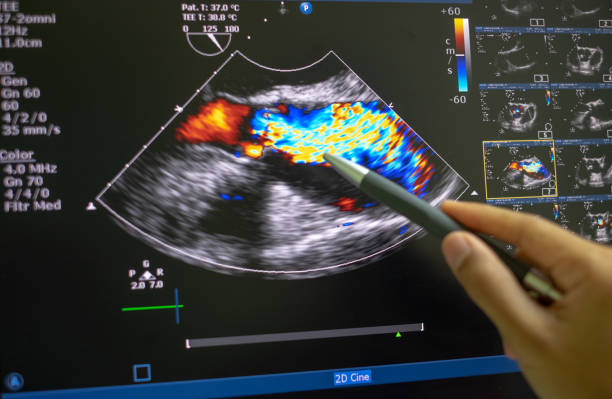
Blocked arteries and poor circulation often stay hidden until serious damage begins inside the body. A vascular ultrasound can show blood flow problems early, without pain, radiation, or hospital admission. This guide explains who should get tested, what this scan checks, and how doctors use the results for safe treatment decisions. Read on to know when a vascular Doppler test is recommended and how it helps detect circulation problems before they become serious.
A vascular ultrasound scan is a safe and non invasive test used to check how blood moves through your arteries and veins. It uses sound waves to create live images of blood flow inside your body. This test is also known as a vascular Doppler ultrasound or a duplex ultrasound scan.
Doctors usually request this scan when they suspect blocked arteries, narrowed blood vessels, blood clots, or poor circulation in the legs, arms, neck, or other parts of the body.
The scan focuses on two main areas:
A duplex ultrasound combines two techniques. One creates an image of the blood vessel, and the other measures how blood flows through that vessel.
Because of this, vascular ultrasound is widely used for early detection of circulation problems. It is painless, quick, and suitable for people of all age groups.
Blocked arteries develop when fatty deposits, called plaque, build up inside the blood vessel wall. Over time, the vessel becomes narrow and stiff. When blood flow is reduced, tissues do not receive enough oxygen and nutrients.
Poor circulation does not always mean there is one large blockage. It may also occur when several small vessels become narrow or when blood flow becomes slow and weak.
Clinically, doctors divide circulation problems into two main types:
Arterial blockage is often linked with leg pain during walking, cold feet, weak pulses, and slow wound healing. Venous problems usually cause swelling, heaviness in the legs, skin colour changes, and visible veins.
If these conditions are not detected early, they may slowly progress and lead to complications such as ulcers, infections, stroke, or limb damage. A vascular ultrasound scan helps identify these problems before they become severe.
Many people ignore early symptoms because they start gently and may come and go. A vascular Doppler test is commonly advised when a person experiences the following signs:
These symptoms often point to reduced blood circulation in the limbs. A blood flow ultrasound can confirm whether the arteries are narrowed or blocked.
Some people develop artery disease without any early warning symptoms. Doctors usually advise vascular screening for individuals who have known risk factors such as:
In such patients, a vascular ultrasound scan can detect early changes in blood flow even before pain or wounds appear. This allows doctors to start preventive treatment at the right time.
People who have already had heart disease or a stroke remain at higher risk for further artery blockages.
A vascular Doppler scan is often used to monitor:
This follow up helps doctors confirm whether the blood vessels remain open and whether any additional treatment is needed.
Poor circulation is one of the main causes of wounds that do not heal properly.
When a patient has a foot ulcer or skin breakdown, doctors usually request an arterial Doppler ultrasound to check whether enough blood is reaching the affected area.
The scan helps the care team decide whether:
Without checking blood flow, wound treatment alone may not work.
Vascular ultrasound is also used before certain operations to assess circulation and map blood vessels.
It is commonly done for:
This preoperative vascular ultrasound helps improve safety during surgery.
A vascular ultrasound scan can assess different parts of the vascular system, depending on symptoms and clinical needs.
The most commonly examined vessels include:
Doctors select the region based on where symptoms are present and what condition is suspected.
This test is used to identify several circulation related conditions, including:
A Doppler test for deep vein thrombosis is especially important when a patient develops sudden leg swelling, pain, or warmth.
By clearly showing blood flow patterns, vascular ultrasound supports early diagnosis and faster treatment decisions.
The vascular Doppler procedure is simple and comfortable for most patients.
The usual steps are:
During the scan, you may hear soft whooshing sounds. These sounds represent the movement of blood inside the vessels.
Most vascular ultrasound scans take between 30 and 60 minutes. There is no recovery time, and you can return to normal activities immediately after the test.
Vascular ultrasound is one of the safest medical imaging tests. It does not use radiation and usually does not require injections.
The accuracy of the scan depends on several factors:
When performed by trained professionals, duplex ultrasound provides reliable information about:
In some cases, very deep vessels or heavy calcium deposits inside arteries may limit how much detail can be seen.
In many situations, doctors choose vascular Doppler ultrasound as the first test.
This is mainly because:
CT angiography or MR angiography may be used later if more detailed vessel mapping is required. However, for early screening of blocked arteries and poor circulation, ultrasound is often the preferred option.
After the vascular ultrasound report is available, doctors combine the findings with the patient’s symptoms and medical history.
The results may lead to:
The scan also helps doctors confirm whether symptoms are caused by circulation problems or by other conditions such as nerve or joint disorders.
Although vascular ultrasound is very effective, it cannot answer every clinical question.
Doctors may request further imaging when:
In such cases, CT angiography or MR angiography may provide additional detail that ultrasound cannot show clearly.
Preparation is usually simple.
Most patients only need to:
For some abdominal vessel studies, short fasting may be requested. Your healthcare provider will inform you in advance if this is required.
Q1. Do I need a vascular ultrasound if I have leg pain while walking?
Yes. Leg pain during walking that improves with rest is a common sign of reduced blood flow. A vascular Doppler ultrasound can confirm whether blocked arteries are the cause.
Q2. Can vascular ultrasound detect early blocked arteries before symptoms start?
Yes. Duplex ultrasound can identify early narrowing and reduced blood flow before pain or ulcers appear.
Q3. Is vascular Doppler enough to diagnose poor circulation, or will I still need a CT scan?
In many patients, vascular ultrasound is sufficient. Additional scans are only needed in more complex situations.
Q4. How accurate is vascular ultrasound for leg and carotid arteries?
When performed by trained professionals, it provides reliable information for both leg arteries and carotid arteries.
Q5. Should diabetics get routine vascular screening?
People with diabetes have a higher risk of circulation problems. Screening is often recommended when symptoms or foot changes are present.
Q6. Can this scan detect blood clots in the legs?
Yes. Venous Doppler ultrasound is the main test used to detect deep vein thrombosis.
Q7. How often should vascular ultrasound be repeated?
The interval depends on the severity of disease and the treatment plan. Your doctor will decide the most suitable follow up schedule.
Q8. What happens if reduced blood flow is found in the scan?
Your doctor may adjust medications, suggest lifestyle changes, refer you to a specialist, or request further imaging.
Q9. Is vascular ultrasound suitable for elderly patients?
Yes. It is safe and commonly used in older adults.
Q10. Do I need a doctor’s referral for a vascular Doppler test?
In most healthcare settings, a referral is required to ensure the correct vessels are examined.
Vascular ultrasound plays an important role in detecting blocked arteries and poor circulation before serious complications develop. It offers a safe and accurate way to examine blood flow in both arteries and veins. For people with symptoms, risk factors, or previous heart or stroke history, this test supports timely medical decisions. When performed by trained professionals using high quality equipment, vascular Doppler scanning contributes to better long term vascular health.
MVR offers trusted and advanced ultrasound services in Dubai using high quality diagnostic technology and skilled medical professionals. We focus on accurate results, patient comfort, and clear reporting to support confident medical decisions. Our centre provides affordable screening and diagnostic packages helping patients access early testing without stress. With experienced specialists and modern imaging systems, MVR delivers reliable diagnosis in a safe and reassuring environment.
WhatsApp us