

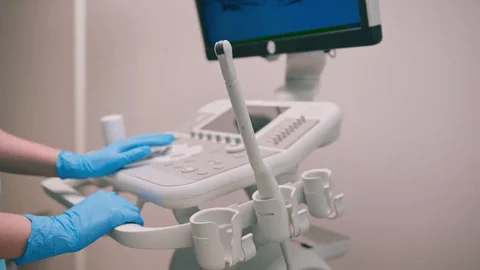
A transvaginal ultrasound is one of the most commonly recommended scans for women’s health and early pregnancy checks. It provides clearer images than external scans by using an internal approach. Many women feel anxious because they do not know what the scan involves or why it is advised. This guide explains how a transvaginal ultrasound works, when doctors recommend it, what to expect during the scan, and how it helps in accurate diagnosis. Read on to know every important detail.
A transvaginal ultrasound is a medical imaging test used to examine the female reproductive organs. It allows doctors to view the uterus, ovaries, cervix, fallopian tubes, and surrounding pelvic structures in detail. This scan is also known as a TVS ultrasound or TVS scan.
Unlike an abdominal pelvic ultrasound that is done over the stomach area, a transvaginal ultrasound is performed internally. Because the scan probe is closer to the organs, it produces clearer and more accurate images. Doctors often prefer this scan when they need detailed information that cannot be seen clearly through the abdomen.
This scan is commonly used in gynecology, fertility care, and early pregnancy evaluation. It plays a key role in detecting conditions early and guiding further treatment or follow up.
A transvaginal ultrasound works by using sound waves to create images of internal pelvic organs. These sound waves are safe and painless, and they do not involve radiation.
The transvaginal ultrasound probe is a slender, smooth medical device designed for internal scanning. Many people refer to it as a transvaginal ultrasound wand or vaginal ultrasound tool.
The probe is covered with a sterile protective sheath and medical gel before use. This ensures hygiene and patient safety. The size of the probe is smaller than most people expect, and it is designed to minimize discomfort during the scan.
Once the probe is gently placed inside the vagina, it sends sound waves toward the pelvic organs. These sound waves bounce back and are converted into images on a screen.
Because the probe is close to the uterus and ovaries, the images are sharper and more detailed than external scans. This makes it easier for doctors to assess organ size, shape, and internal structures accurately.
Doctors choose between transvaginal ultrasound and abdominal pelvic ultrasound based on the clinical need. In some cases, both scans are performed together for better evaluation.
A transvaginal ultrasound is preferred when:
An abdominal pelvic ultrasound may be used first when a broader view of the pelvis is needed. Many reports mention US pelvis TA and transvaginal scans together to provide complete information.
Doctors recommend a TVS scan for many medical reasons related to women’s reproductive health. It helps identify problems early and guides further care.
A transvaginal ultrasound is commonly advised for women facing fertility issues or menstrual irregularities. It helps assess ovulation patterns and ovarian health.
Doctors may recommend this scan for:
Menstrual irregularities can significantly impact fertility—learn more in
Pelvic pain or abnormal symptoms often require detailed imaging. A TVS ultrasound helps identify the cause accurately.
It is used to evaluate:
In early pregnancy, a transvaginal ultrasound provides vital information. It is often more accurate than abdominal scans during the initial weeks.
Doctors use it to:
The procedure is simple and usually completed within a short time. It is performed in a private and comfortable setting.
During the scan:
Medical staff ensure patient comfort and explain each step during the process.
A transvaginal ultrasound is considered very safe. It does not use radiation and does not harm the body.
Most women experience little to no pain. Some may feel mild pressure or slight discomfort, especially if there is pelvic tenderness. The scan should not be painful, and you can always inform the technician if you feel uncomfortable.
This test is also safe during early pregnancy and is commonly used in fertility care.
Preparation for a TVS ultrasound is usually minimal. In many cases, a full bladder is not required, which is different from abdominal scans.
General preparation includes:
Always follow the guidance provided before your appointment.
The TVS ultrasound price can vary depending on several factors. Costs may differ based on location, facility type, and whether additional imaging is required.
Factors that influence cost include:
Patients searching for transvaginal ultrasound near me often compare facilities based on quality and accuracy rather than cost alone.
A transvaginal ultrasound helps identify many gynecological and pregnancy related conditions. It is mainly a screening and evaluation tool.
It can help detect:
The scan supports early detection but does not replace diagnostic procedures if further confirmation is required.
To understand this condition better, explore our guide on ovarian cysts and the benefits of early detection and timely care.
Many myths cause unnecessary fear around this scan. Clearing these doubts helps patients feel more confident.
Common misconceptions include:
These beliefs are incorrect. The procedure is medical, safe, and guided by clinical need.
What is a TVS scan used for
It is used to examine female reproductive organs and early pregnancy.
Is transvaginal ultrasound painful
Most women feel only mild pressure or no discomfort.
How long does a transvaginal ultrasound take
The scan usually takes ten to twenty minutes.
Can TVS ultrasound be done during pregnancy
Yes, it is commonly used in early pregnancy.
What is the difference between TVS and abdominal ultrasound
TVS provides clearer internal images than abdominal scans.
How much does a TVS ultrasound cost
The cost varies based on facility and scan type.
Is TVS ultrasound safe
Yes, it is a safe and radiation free scan.
Can TVS detect ovarian cysts
Yes, it is very effective for detecting ovarian cysts.
Do I need a full bladder for TVS scan
Usually no, unless instructed otherwise.
Can unmarried women undergo transvaginal ultrasound
Yes, marital status does not affect medical recommendations.
After the scan, the report should always be reviewed by a doctor. Self interpretation of ultrasound results can be misleading. A doctor will explain the findings clearly and advise if further tests or follow up care are needed.
Timely consultation ensures correct diagnosis and appropriate treatment planning.
A transvaginal ultrasound is a valuable medical tool that provides accurate insight into women’s reproductive health. It helps doctors detect issues early, monitor fertility, and assess early pregnancy safely. When done by trained professionals, the procedure is comfortable, quick, and reliable. Knowing what to expect helps reduce anxiety and ensures a smoother experience.
MVR provides trusted and advanced transvaginal ultrasound services in Dubai using high quality imaging technology and skilled medical professionals. Every scan is performed with a strong focus on patient comfort, accuracy, and privacy. MVR offers affordable screening and diagnostic packages while maintaining high clinical standards, helping patients receive clear results and reliable guidance for further medical care. Contact MVR today.
WhatsApp us