

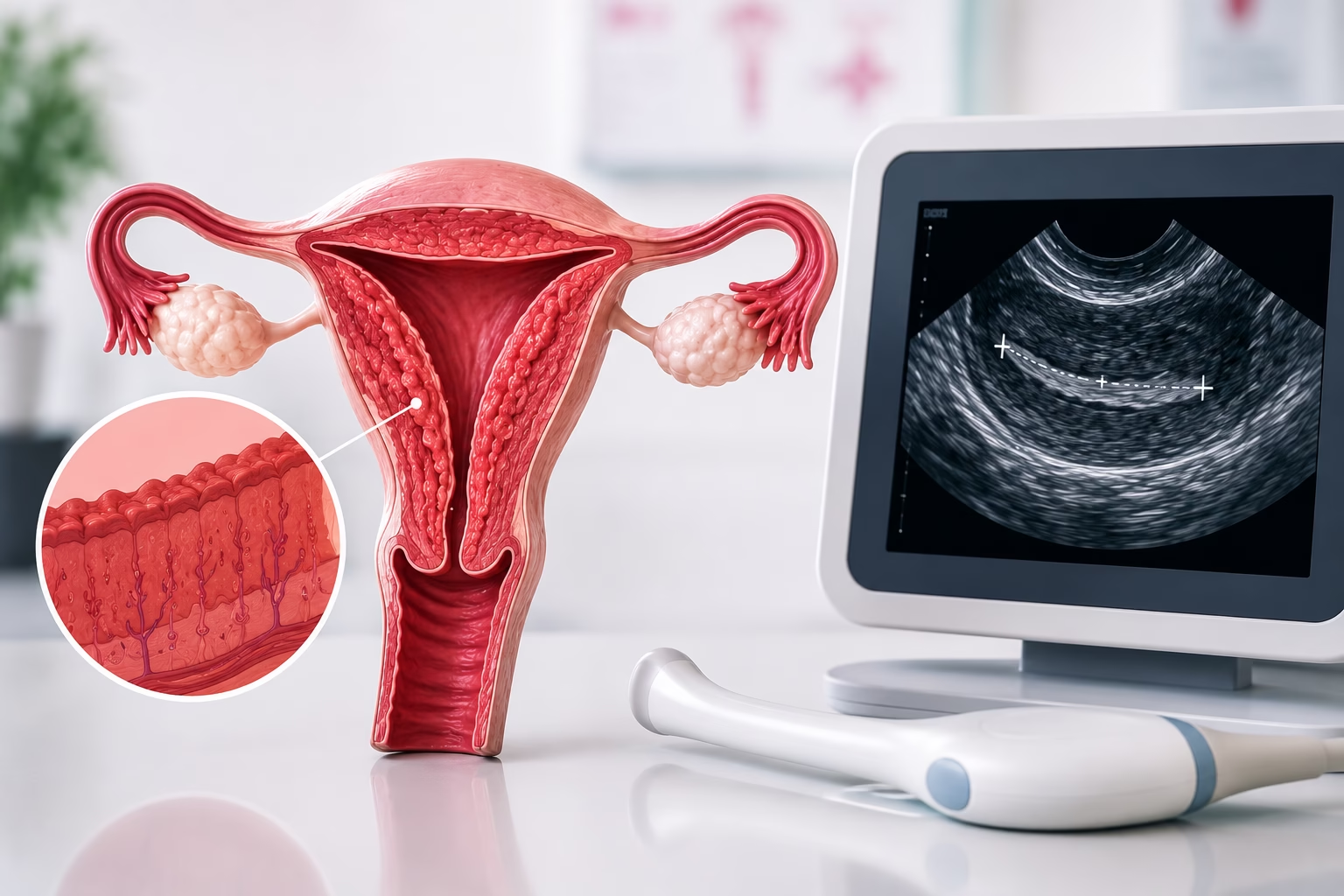
A thickened uterine lining can sound concerning when it appears on an ultrasound report, but it does not automatically mean that something is wrong. The endometrium naturally changes throughout the menstrual cycle, and its appearance can be influenced by hormones, age, cycle timing, and other conditions.
If you have been advised to investigate a thickened uterine lining, contact MVR Diagnostic Clinic to discuss your requirements and book an appointment for appropriate pelvic imaging.
The uterine lining, medically called the endometrium, is the tissue lining the inside of the uterus. It changes throughout the menstrual cycle in response to hormonal changes.
During the first part of the cycle, estrogen stimulates the endometrium to grow. After ovulation, progesterone helps prepare the lining for a possible pregnancy. If pregnancy does not occur, hormone levels fall and the lining is shed during menstruation.
Because the endometrium naturally changes during the month, doctors need to consider the timing of the menstrual cycle when interpreting its thickness. A transvaginal ultrasound can provide a detailed view of the uterus and endometrium when this type of evaluation is needed.
The endometrium is the tissue lining the inside of the uterus.
Estrogen and progesterone influence how the lining develops throughout the menstrual cycle.
Endometrial thickness naturally changes depending on the stage of the menstrual cycle.
A thickened uterine lining means that the endometrium appears thicker than expected for the particular stage of the menstrual cycle or clinical situation.
Sometimes, this is a normal finding. At other times, it can be associated with hormonal changes, irregular ovulation, endometrial polyps, fibroids, or endometrial hyperplasia.
The ultrasound finding alone cannot always tell you why the lining is thick. Your age, menstrual pattern, symptoms, menopausal status, and other findings on the scan all need to be considered.
So, seeing the words "thickened endometrium" on an ultrasound report does not automatically mean that you have a serious disease.
There are several possible reasons why the endometrium may appear thickened.
The endometrium responds to estrogen and progesterone. Changes in the balance of these hormones can affect how the lining develops and sheds.
Hormonal changes are particularly common during periods of irregular menstruation and around perimenopause.
When ovulation does not happen regularly, progesterone may not rise in the usual pattern. As a result, the endometrium may continue to develop and may not shed normally.
Irregular ovulation can occur for several reasons, including PCOS and hormonal changes associated with perimenopause.
Endometrial hyperplasia occurs when the cells of the uterine lining grow excessively.
It is different from endometrial cancer, although some forms of endometrial hyperplasia can increase the risk of developing cancer. Further assessment may therefore be recommended depending on the type of hyperplasia and individual risk factors.
An endometrial polyp is a growth that develops from the lining of the uterus.
Many polyps are benign, but they can sometimes cause spotting, irregular bleeding, or heavier periods. Ultrasound may identify a possible polyp, although additional evaluation may sometimes be needed.
Fibroids are noncancerous growths that develop in or around the uterus.
Depending on their size and location, fibroids can affect the uterine cavity and contribute to heavy or abnormal menstrual bleeding. Ultrasound is commonly used to evaluate the uterus and identify fibroids.
Hormonal fluctuations during perimenopause can make ovulation and menstrual cycles less predictable.
This can lead to changes in how the endometrium develops and sheds. However, new or unusual bleeding should not automatically be dismissed as a normal part of approaching menopause.
Changes in estrogen and progesterone can affect the development and shedding of the endometrium.
Irregular ovulation can affect progesterone levels and the normal shedding of the uterine lining.
Excessive growth of cells in the uterine lining can cause endometrial thickening.
Growths arising from the uterine lining may contribute to spotting or abnormal bleeding.
Fibroids can affect the uterine cavity and contribute to heavy or abnormal menstrual bleeding.
Hormonal fluctuations can make menstrual cycles and ovulation less predictable.
Some women with a thickened endometrium have no symptoms at all. The finding may only be discovered during an ultrasound performed for another reason.
When symptoms are present, they may be related to the underlying cause of the thickening.
Possible symptoms include:
Abnormal vaginal bleeding can have many causes, so these symptoms do not automatically mean that the endometrium is abnormal.
They can be.
If your periods have suddenly become heavier, longer, more frequent, or irregular, your doctor may want to investigate the uterus and endometrium.
It can help to keep track of your menstrual cycle, including when bleeding starts and ends, how heavy it is, whether you experience spotting between periods, and whether your usual cycle has changed.
If you are experiencing unusual menstrual patterns, MVR also has a separate guide explaining 8 types of abnormal menstruation and the menstrual changes that may warrant further evaluation.
Ultrasound is one of the main imaging methods used to assess the uterus and endometrium.
A pelvic ultrasound can examine the uterus, ovaries, and surrounding pelvic structures. A transvaginal ultrasound provides a closer view of the uterus and is commonly used to evaluate the endometrium and ovaries.
During the examination, the endometrial thickness and appearance can be assessed. The scan may also identify other findings that could help explain abnormal bleeding or pelvic symptoms.
If your doctor has recommended this examination, you can learn more about the purpose and procedure of a transvaginal ultrasound before your appointment.
A transvaginal ultrasound can provide detailed images of the uterus, endometrium, ovaries, and surrounding pelvic structures.
Depending on the reason for the examination, it may help assess:
In some situations, transvaginal Doppler scanning may also be performed as part of pelvic ultrasound. Doppler is a specialized ultrasound technique that evaluates blood flow and can provide additional information about vascularity.
The exact type of ultrasound performed depends on the symptoms and what the doctor needs to investigate.
Its thickness and appearance can be assessed.
The size, shape, and structure of the uterus can be evaluated.
Ultrasound can help identify fibroids and assess their location.
Ultrasound may identify possible endometrial polyps.
The ovaries can be assessed for cysts and other abnormalities.
Doppler may provide additional information about blood flow when required.
Yes. The endometrium naturally changes throughout the menstrual cycle. This means that an endometrial measurement needs to be interpreted according to the stage of the cycle.
Your doctor or imaging center may recommend a particular time for the examination depending on your symptoms and the reason for the scan.
For some investigations of the uterine cavity, additional techniques such as sonohysterography may be considered. A baseline transvaginal ultrasound is generally performed first in this type of examination.
No. A thickened endometrium can be a normal finding during certain stages of the menstrual cycle.
The same measurement can have a different significance depending on whether a woman is still having regular periods, is going through perimenopause, or is postmenopausal.
This is why there is no single endometrial thickness number that can be used to diagnose a problem in every woman.
The ultrasound result needs to be interpreted together with your age, cycle timing, symptoms, menopausal status, and medical history.
A thickened lining may need closer investigation when it occurs with persistent or unexplained bleeding.
Your doctor may pay particular attention to:
Abnormal vaginal bleeding can be evaluated using different tests, including pelvic ultrasound, transvaginal ultrasound, hysteroscopy, and endometrial biopsy, depending on the clinical situation.
Bleeding after menopause should particularly be discussed with a healthcare professional rather than being assumed to be normal.
An ultrasound finding is usually only one part of the diagnostic process.
Your doctor may consider:
Depending on the findings, you may be advised to have additional blood tests, follow-up imaging, or a procedure to examine the uterine lining more closely.
Not by itself. Ultrasound can show that the endometrium appears thickened or has an unusual appearance, but it cannot always determine whether the cells themselves are normal.
If endometrial hyperplasia is suspected, your doctor may recommend an endometrial biopsy or another method of obtaining tissue from the uterine lining. Examination of the tissue under a microscope can provide information that imaging alone cannot.
In some situations, sonohysterography may also be recommended. This involves placing saline into the uterine cavity while performing ultrasound to provide a more detailed view of the lining and uterine cavity.
There is no single treatment because treatment depends on the underlying cause.
If hormonal imbalance or certain forms of endometrial hyperplasia are responsible, a doctor may recommend hormonal treatment.
The specific medication and duration depend on the diagnosis and individual circumstances.
If an endometrial polyp is contributing to abnormal bleeding, your gynecologist may recommend monitoring or removal depending on its characteristics and your symptoms.
Treatment for fibroids depends on their size, location, symptoms, and whether they are affecting the uterine cavity or causing significant bleeding.
Some fibroids can simply be monitored, while others may require medication or a procedure.
Treatment depends on the specific type of hyperplasia and whether abnormal or precancerous changes are present.
Some cases may be managed with hormonal treatment and monitoring, while more concerning findings require specialist management.
Depending on the situation, a doctor may recommend:
These procedures can provide more information when ultrasound findings or symptoms require further investigation.
Your doctor may recommend a transvaginal ultrasound if you have:
Transvaginal ultrasound is commonly used to assess the endometrium, uterus, and ovaries and can help investigate abnormal vaginal bleeding and other pelvic symptoms.
A transvaginal ultrasound uses a specialized ultrasound probe to obtain images of the pelvic organs.
You will generally lie on an examination bed. After the probe is covered with a protective sheath and lubricated, it is gently inserted into the vagina. The sonographer or doctor then obtains images of the uterus, endometrium, and ovaries from different angles.
The examination does not use ionizing radiation. Most ultrasound examinations are completed relatively quickly, although the exact duration depends on the type of examination and whether additional imaging is required.
Some women may experience mild pressure or temporary discomfort. If you are uncomfortable, let the healthcare professional know so they can make the examination as comfortable as possible.
A thickened uterine lining does not automatically mean cancer.
There are many possible explanations, including normal menstrual-cycle changes, hormonal imbalance, irregular ovulation, polyps, fibroids, and endometrial hyperplasia.
However, some forms of endometrial hyperplasia can be precancerous, and abnormal vaginal bleeding can be an important symptom of endometrial cancer. A biopsy is generally needed to establish whether cancer is present.
This is why persistent or unusual bleeding should not be ignored.
If your doctor recommends additional testing after an ultrasound, it does not necessarily mean cancer is suspected. It may simply be necessary to determine the exact cause of the ultrasound finding.
Try not to panic based only on the wording of your ultrasound report.
Instead, discuss the result with your gynecologist. Ask what the measurement means in relation to your menstrual cycle, age, symptoms, and menopausal status.
It is also useful to keep previous ultrasound reports available. Comparing current and previous examinations may help your doctor understand whether the finding is new, persistent, or changing.
Arrange a medical evaluation if you experience:
Very heavy bleeding accompanied by dizziness, weakness, shortness of breath, or other concerning symptoms may require prompt medical attention.
A thickened uterine lining can have many explanations. Sometimes it reflects a normal stage of the menstrual cycle. In other cases, it may be associated with hormonal changes, irregular ovulation, polyps, fibroids, or endometrial hyperplasia.
The important thing is not to interpret the ultrasound measurement by itself. Your age, menstrual cycle, symptoms, menopausal status, and medical history all help determine what the finding means.
Contact MVR Diagnostic Clinic to discuss your symptoms and book your scan.
Contact MVR Diagnostic ClinicNo. A thickened endometrium can occur naturally during parts of the menstrual cycle and may also be related to hormonal changes, polyps, fibroids, or endometrial hyperplasia. A thickened lining on ultrasound alone does not diagnose cancer.
Possible causes include normal menstrual-cycle changes, hormonal imbalance, irregular ovulation, endometrial hyperplasia, polyps, fibroids, and hormonal changes during perimenopause. The cause needs to be evaluated in the context of your symptoms and medical history.
Yes. Transvaginal ultrasound is commonly used to view the endometrium and assess its thickness and appearance. It can also help evaluate the uterus and ovaries for other abnormalities.
No. Treatment depends on the cause. Some cases may simply require monitoring, while others may require hormonal treatment, further investigation, or treatment for an underlying condition.
You should discuss the finding with a healthcare professional if you have persistent abnormal bleeding, heavy or prolonged periods, bleeding between periods, or bleeding after menopause. Your doctor can determine whether you need a transvaginal ultrasound, follow-up imaging, biopsy, or another investigation.
WhatsApp us