

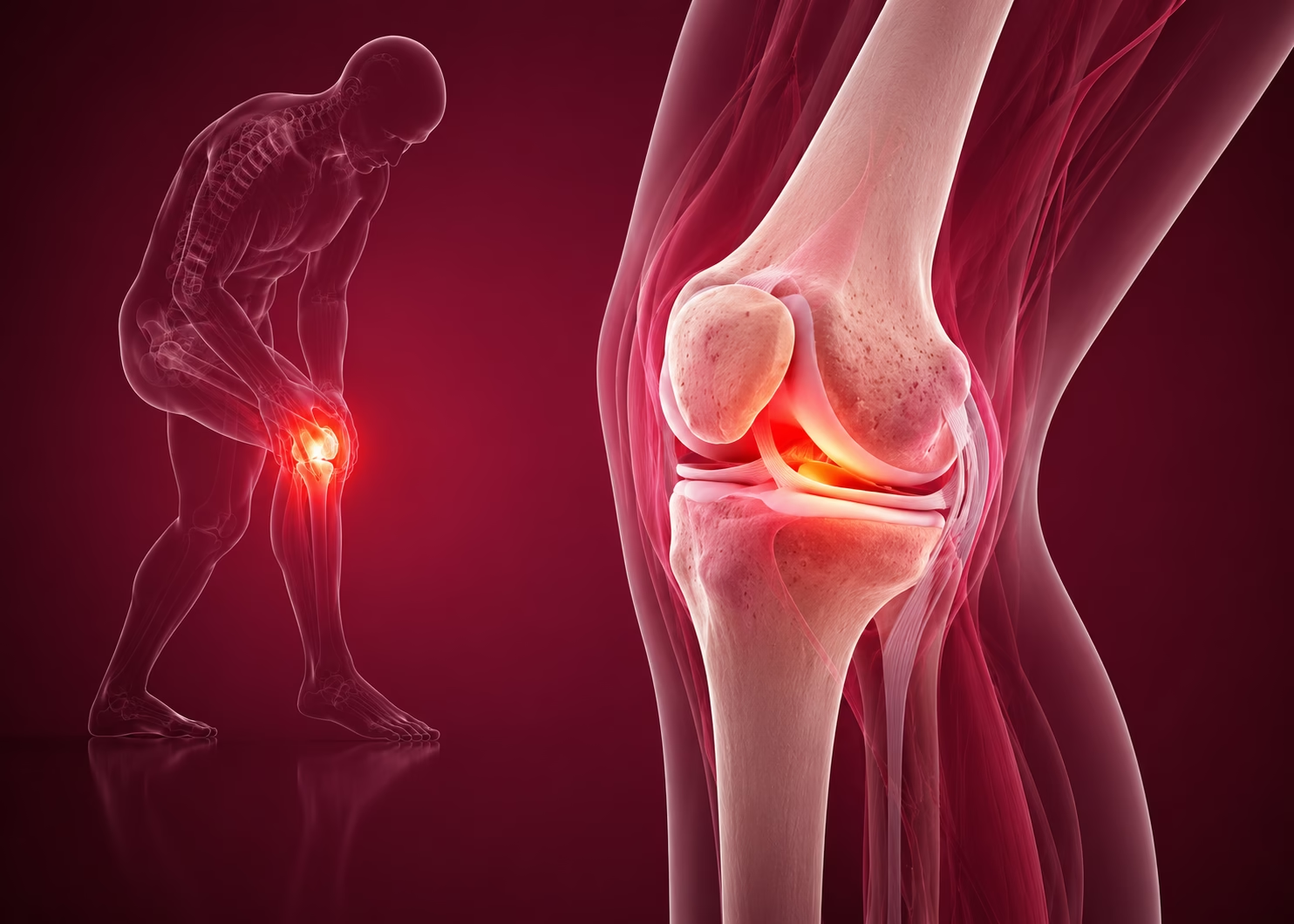
Knee pain, sports injuries, swelling, and difficulty walking often lead doctors to recommend a knee MRI scan. Many patients worry about how long the scan will take, whether the MRI machine feels uncomfortable, and if contrast dye may be needed. Read on to know how long does a knee MRI take, what happens during the MRI knee procedure, and what the scan can detect inside the knee joint.
How Long Does a Knee MRI Take?
A knee MRI scan usually takes around 20 to 45 minutes, depending on the type of imaging needed. The actual knee MRI scan time may be shorter, but total appointment duration also includes preparation, positioning, and review before the scan begins.
Average scan time for most knee MRIs
Most knee MRI scans are completed within 20 to 45 minutes. The full knee MRI appointment duration may take slightly longer because patients need time for registration, changing clothes, knee positioning, and preparation before the MRI knee procedure starts.
Why some scans take longer than others
Some knee MRI scans take longer because contrast dye may be required for better imaging detail. Additional imaging sequences, patient movement during scanning, or complex injury evaluation can also increase the overall knee MRI scan time.
What patients experience during the scan
Patients usually hear loud tapping or knocking sounds during the MRI scan. The knee must stay still for clear images, and technicians communicate through an intercom while monitoring the scan throughout the procedure.
How Long Does a Knee MRI Take Without Contrast?
An MRI without contrast knee imaging is usually faster because no dye injection or additional waiting time is needed. Most non contrast knee MRI scans are completed within 20 to 30 minutes.
Difference between contrast and non contrast MRI
A standard MRI without contrast knee scan focuses on bones, ligaments, cartilage, and soft tissues without using dye injection. Contrast is often unnecessary for common sports injuries, making the imaging process quicker and simpler.
Situations where contrast may be recommended
Doctors may recommend contrast knee MRI scans when checking infections, tumors, inflammatory conditions, or post surgical knee complications. Contrast dye helps improve visibility of blood flow, tissue changes, and certain abnormal areas inside the knee.
Knee MRI with and without contrast comparison
Aspect | MRI Without Contrast | MRI With Contrast |
Scan duration | Usually shorter | Usually longer |
Injection needed | No | Yes |
Preparation | Simple preparation | Additional preparation required |
Waiting time | Minimal | Extra waiting after injection |
Image detail | Standard imaging detail | Enhanced tissue visibility |
Common use | Sports injuries and pain | Infections and complex conditions |
What Does MRI of the Knee Show?
An MRI provides detailed images of knee bones, cartilage, ligaments, tendons, and surrounding soft tissues. MRI for knee pain is commonly used to detect sports injuries, swelling, inflammation, arthritis changes, and joint damage that may not appear clearly on X rays.
ACL and PCL injuries: MRI can detect tears, sprains, and stretching of knee ligaments, including Anterior Cruciate Ligament Injury and posterior cruciate ligament injuries.
Meniscus and cartilage damage: Meniscus tear MRI scans help identify cartilage injuries, surface wear, and joint cushioning damage inside the knee.
Tendon and soft tissue injuries: Knee ligament MRI scans can detect tendon inflammation, tendon tears, and muscle related injuries around the knee joint.
Bone and joint abnormalities: MRI can identify bone marrow swelling, arthritis related changes, stress injuries, fluid buildup, and inflammation inside the knee joint.
Knee Structure | What MRI Can Detect |
ACL/PCL | Tears and sprains |
Meniscus | Cartilage tears |
Tendons | Inflammation or injury |
Bone | Stress injuries and swelling |
Joint space | Arthritis and fluid buildup |
Preparing for a Knee MRI Scan
- Wear loose clothing without metal parts during scan
• Inform doctors about implants or previous knee surgeries
• Follow eating instructions before contrast MRI appointment carefully
• Discuss claustrophobia concerns before entering MRI scanning room
• Stay completely still for clear and accurate images
• Discuss pregnancy safety concerns with doctor before scanning
Knee MRI Results and Next Steps
After the knee MRI scan, a radiologist carefully reviews the images and prepares a detailed orthopedic MRI report. Most knee MRI results are available within a few days, depending on the imaging center and the complexity of the scan findings. The report helps doctors identify ligament injuries, cartilage damage, swelling, arthritis, or other knee related conditions.
Doctors compare MRI knee diagnosis findings with symptoms, physical examination, and medical history before deciding treatment. Some patients may need physiotherapy, medications, or injections, while severe ligament tears or sports injuries may require orthopedic surgery consultation. Accurate diagnosis helps guide the most suitable treatment plan for knee pain and movement problems.
Get Clear Answers for Your Knee Pain
A knee MRI scan gives detailed images that help doctors evaluate ligaments, cartilage, tendons, bones, and joint structures accurately. Knowing how long does a knee MRI take can help patients feel more prepared before the appointment. Whether you need an MRI without contrast knee scan or advanced imaging with contrast, proper diagnosis plays an important role in identifying the cause of knee pain and planning the right treatment for recovery and better mobility.
FAQs
How long are you inside the MRI machine for a knee scan?
How long are you inside the MRI machine for a knee scan, most patients stay inside the machine for around 20 to 45 minutes during imaging.
Is a knee MRI painful?
Is a knee MRI painful, the scan itself is painless, but staying still for long periods may cause mild discomfort in injured knees.
Do all knee MRI scans require contrast dye?
Do all knee MRI scans require contrast dye, no, many sports injuries and routine knee pain evaluations can be completed without contrast injection.
Can MRI detect arthritis in the knee?
Can MRI detect arthritis in the knee, yes, MRI can identify cartilage wear, joint inflammation, fluid buildup, and arthritis related structural changes.
What should I wear for a knee MRI?
What should I wear for a knee MRI, wear comfortable clothing without metal zippers, jewelry, buttons, or accessories before entering the MRI room.
Can I move during a knee MRI scan?
Can I move during a knee MRI scan, movement should be avoided because motion can blur images and may require repeating scan sequences.
How soon will I get knee MRI results?
How soon will I get knee MRI results, most imaging centers provide orthopedic MRI reports within a few days after radiologist review.